
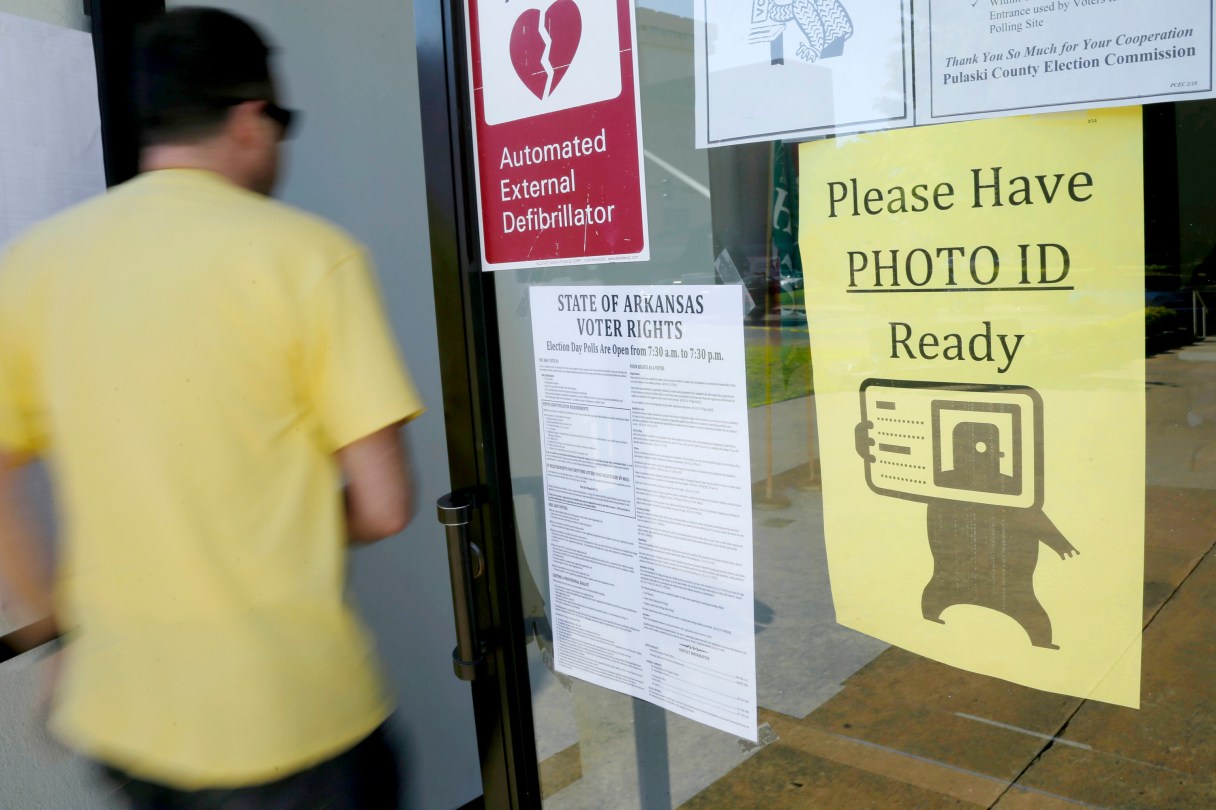
LITTLE ROCK, Ark. (AP) – Arkansas’ highest court on Wednesday struck down a state law that requires voters to show photo identification before casting a ballot, ruling the requirement unconstitutional just days before early voting begins for the Nov. 4 election.
In a decision that could have major implications in the state’s election, the Supreme Court upheld a lower court ruling that determined the law unconstitutionally added a requirement for voting.
The high court noted that the Arkansas Constitution lists specific requirements to vote: that a person be a citizen of both the U.S. and Arkansas, be at least 18 years old, and be lawfully registered. Anything beyond that amounts to a new requirement and is therefore unconstitutional, the court ruled.
“These four qualifications set forth in our state’s constitution simply do not include any proof-of-identity requirement,” the ruling said.
Arkansas is among a handful of states where voter ID requirements have been in limbo. Last week, the U.S. Supreme Court allowed new restrictions to take effect in North Carolina but blocked Wisconsin’s voter ID requirement.