
Friday, November 6, 2026Nov 6

This story is free to read.

AP PHOTOS: Cemetery overcrowding around the world

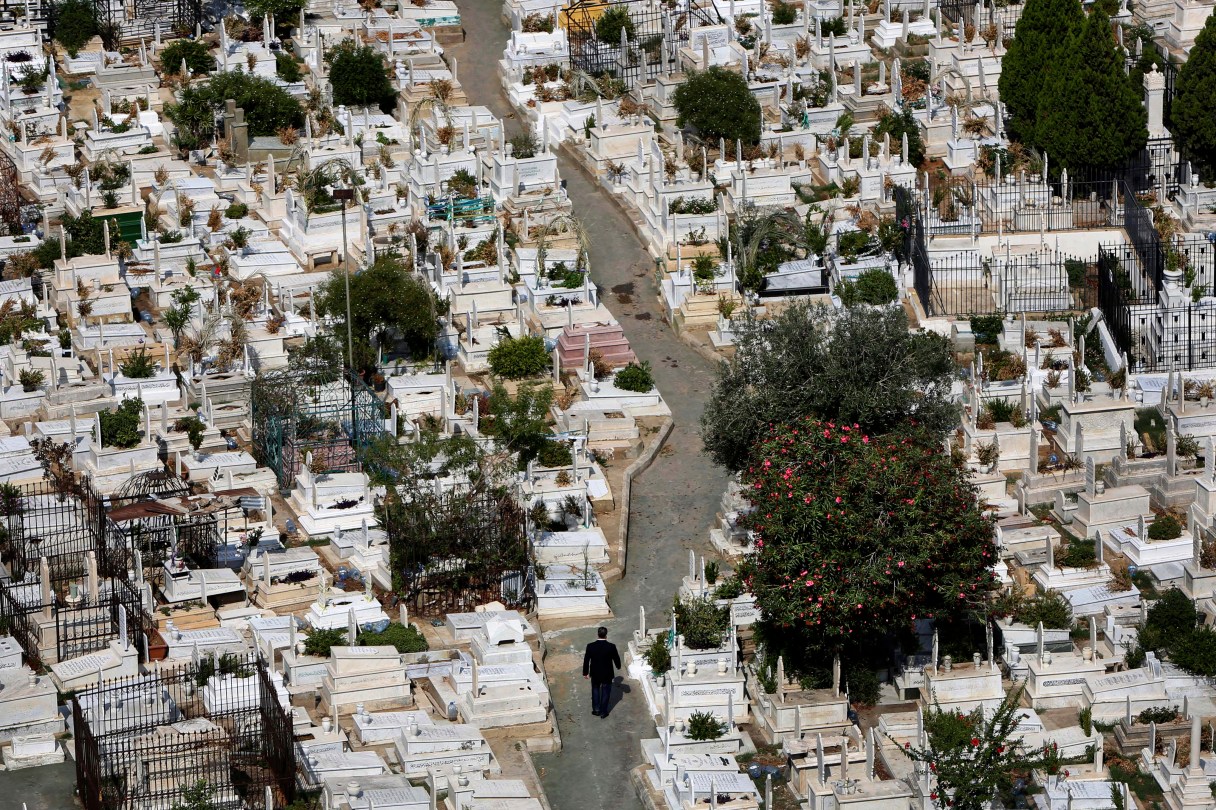
In this Oct. 14, 2014, photo, a Lebanese man, center, walks between graves at the overcrowded Bashoura cemetery for Muslim Sunnis in Beirut, Lebanon. The congested city of more than one million is cramped with cemeteries wedged into residential areas, increasingly forcing families to bury several members of the same family in one grave. Available land plots are extremely scarce and what is left is being used by developers to build luxury officers towers and apartments. (AP Photo/Hussein Malla)
In this Oct. 14, 2014, photo, a Lebanese man, center, walks between graves at the overcrowded Bashoura cemetery for Muslim Sunnis in Beirut, Lebanon. The congested city of more than one million is cramped with cemeteries wedged into residential areas, increasingly forcing families to bury several members of the same family in one grave. Available land plots are extremely scarce and what is left is being used by developers to build luxury officers towers and apartments. (AP Photo/Hussein Malla) In this Oct. 14, 2014, photo, a Lebanese man, center, walks between graves at the overcrowded Bashoura cemetery for Muslim Sunnis in Beirut, Lebanon. The congested city of more than one million is cramped with cemeteries wedged into residential areas, increasingly forcing families to bury several members of the same family in one grave. Available land plots are extremely scarce and what is left is being used by developers to build luxury officers towers and apartments. (AP Photo/Hussein Malla)

Cemetery overcrowding is an issue that resonates around the world, particularly in its most cramped cities and among religions that forbid or discourage cremation. The reality of relying on finite land resources to cope with the endless stream of the dying has brought about creative solutions.

One space-saving option is to put graves on top of each other, separated by a concrete divider, and have a shared headstone. This is common among couples and even whole families. A second option is stacking the dead above ground into niches built into walls, a bit like in a morgue, but adorned with headstones. A third, revolutionary option is to be buried in a building where each floor resembles a traditional cemetery.

Cemetery towers have been proposed for Paris and Mumbai. In Mexico City, there is another big project in the works: the Tower for the Dead, which will combine a vertical necropolis and an 820-foot-deep (250-meter-deep) subterranean complex. Currently in Mexico City, families are forced to exhume and remove their relatives’ remains after a period of years. Unclaimed remains may be reburied as unmarked loose bones beneath the fresh grave, or piled with others on exposed altars.

___

Follow AP photographers and editors on Twitter: https://twitter.com/AP/lists/ap-photographers/members