
Thursday, November 12, 2026Nov 12

Drugmakers bet on Ebola vaccines, treatments

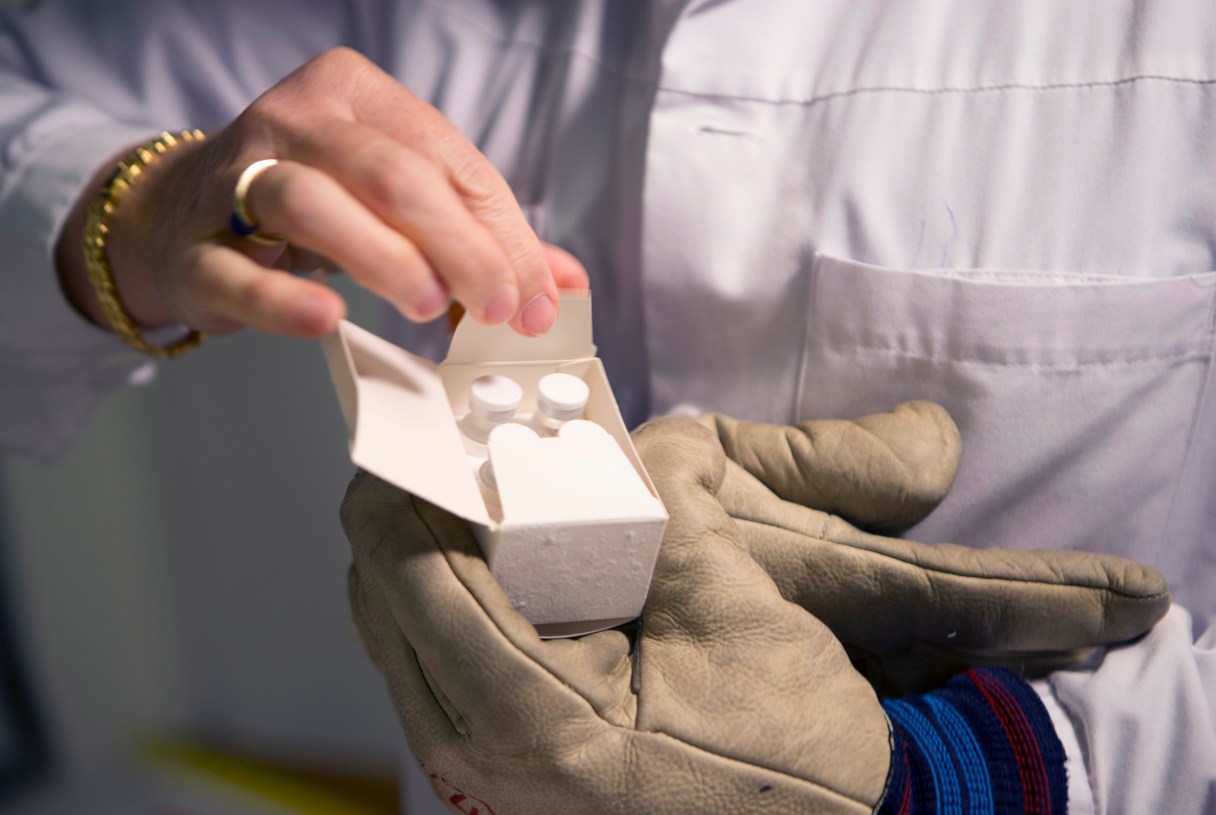
FILE - In this Wednesday, Oct. 22, 2014 file picture provided by the World Health Organization (WHO), a package of vials in the first shipment of the experimental vaccine known as VSE-EBOV is opened at the Geneva Cantonal hospital in Geneva. The drug has been sent to the U.S. Walter Reed Army Institute of Research in Maryland for testing on healthy volunteers, with preliminary safety results expected by December. (AP Photo/WHO, Mathilde Missioneiro)  MANDATORY CREDIT
FILE - In this Wednesday, Oct. 22, 2014 file picture provided by the World Health Organization (WHO), a package of vials in the first shipment of the experimental vaccine known as VSE-EBOV is opened at the Geneva Cantonal hospital in Geneva. The drug has been sent to the U.S. Walter Reed Army Institute of Research in Maryland for testing on healthy volunteers, with preliminary safety results expected by December. (AP Photo/WHO, Mathilde Missioneiro) MANDATORY CREDIT FILE - In this Wednesday, Oct. 22, 2014 file picture provided by the World Health Organization (WHO), a package of vials in the first shipment of the experimental vaccine known as VSE-EBOV is opened at the Geneva Cantonal hospital in Geneva. The drug has been sent to the U.S. Walter Reed Army Institute of Research in Maryland for testing on healthy volunteers, with preliminary safety results expected by December. (AP Photo/WHO, Mathilde Missioneiro) MANDATORY CREDIT

Drugmakers are racing to develop vaccines and drugs to address the worst outbreak of Ebola in history. It’s unclear who will pay for their products, but companies are betting that governments and aid groups will foot the bill.

There are no proven drugs or vaccines for Ebola, in large part because the disease is so rare that up until now it’s been hard to attract research funding. And the West African nations hardest hit by the outbreak are unlikely to be able to afford new Ebola vaccines and drugs.

But governments and corporations now are shifting millions of dollars to fight Ebola in the wake of the outbreak that has infected nearly 10,000 people and killed over 4,800. Experts say drugmakers are wagering that international groups and wealthier governments like the U.S. will buy Ebola vaccines and drugs in mass quantities to stockpile them for future use once they’re deemed safe.

“The political bet is that the U.S. and World Health Organization have been so embarrassed and burned by this event that they will be willing to change the way they do business,” said Professor Lawrence Gostin of the Georgetown University Law School, who studies global health issues.

Drugmakers have benefited from stockpiling before. During the bird flu pandemic of 2009, Western governments spent billions to stock up on drugs and vaccines that mostly went unused. Shelf-life varies by product, but can be as little as a year.