
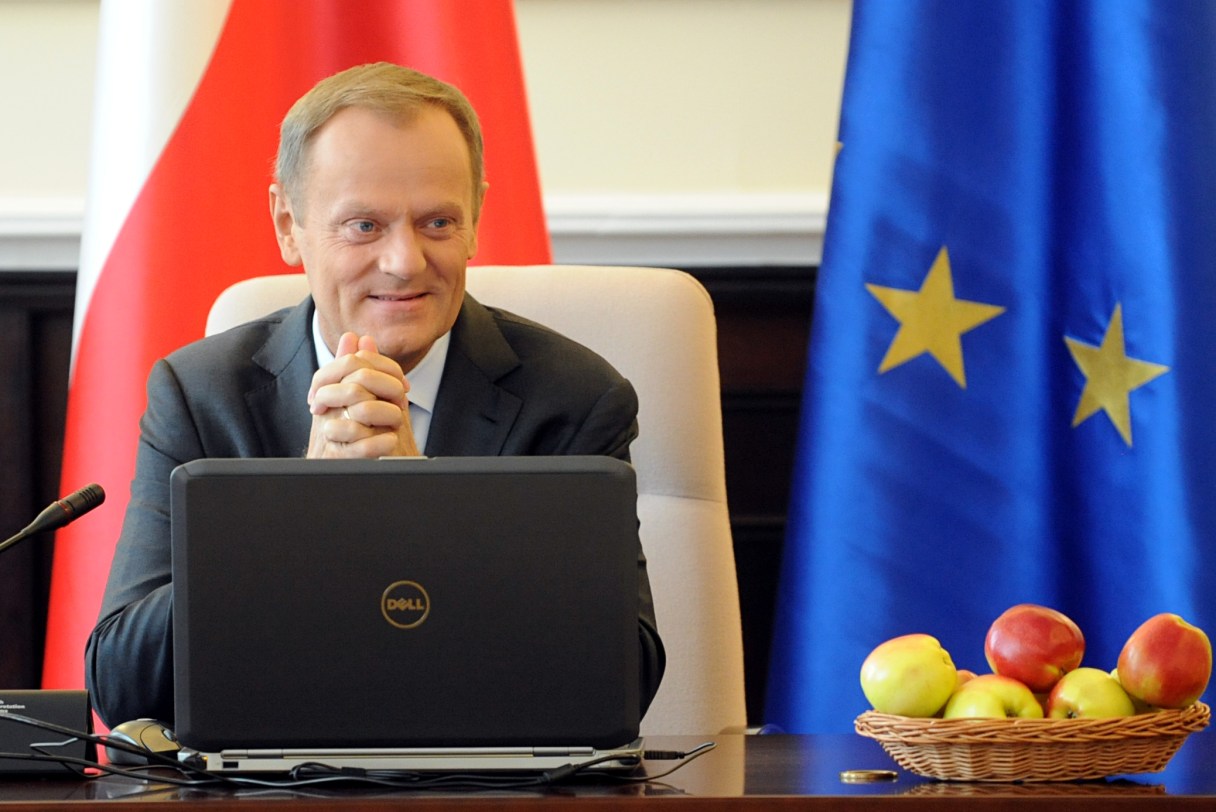
WARSAW, Poland (AP) – Donald Tusk’s English is shaky, his French nonexistent, and his nation – Poland – has only sat at the EU table since 2004.
No matter. European Union leaders instead focused on his talents – a rare political acumen and a pro-European bent – before unanimously naming the Polish prime minister to one of the bloc’s top leadership posts.
Tusk’s selection as European Council president came after he successfully led his country through the economic turbulence of the European debt crisis that devastated much of the continent. It was also a nod to Eastern Europe’s growing clout within the 28-nation EU, which Poland joined 10 years ago after emerging from under Moscow’s control.
The media-friendly Tusk, 57, is the longest-serving prime minister in Poland’s 25 years of democracy. His seven years in office have given Poland’s politics, economy and residents an undisturbed sense of stability. His perfect reading of social moods allowed him to address the needs of Poles even during the debt crisis and while still trying to develop his nation’s fledging market economy.
During the financial crisis, Tusk’s reassurances that the Polish economy had a healthy foundation and his government’s guarantees for saving accounts prevented bank runs. On the maps that he frequently showed, Poland was the sole green-colored island of economic growth against the red sea of Europe’s regressing economies.