
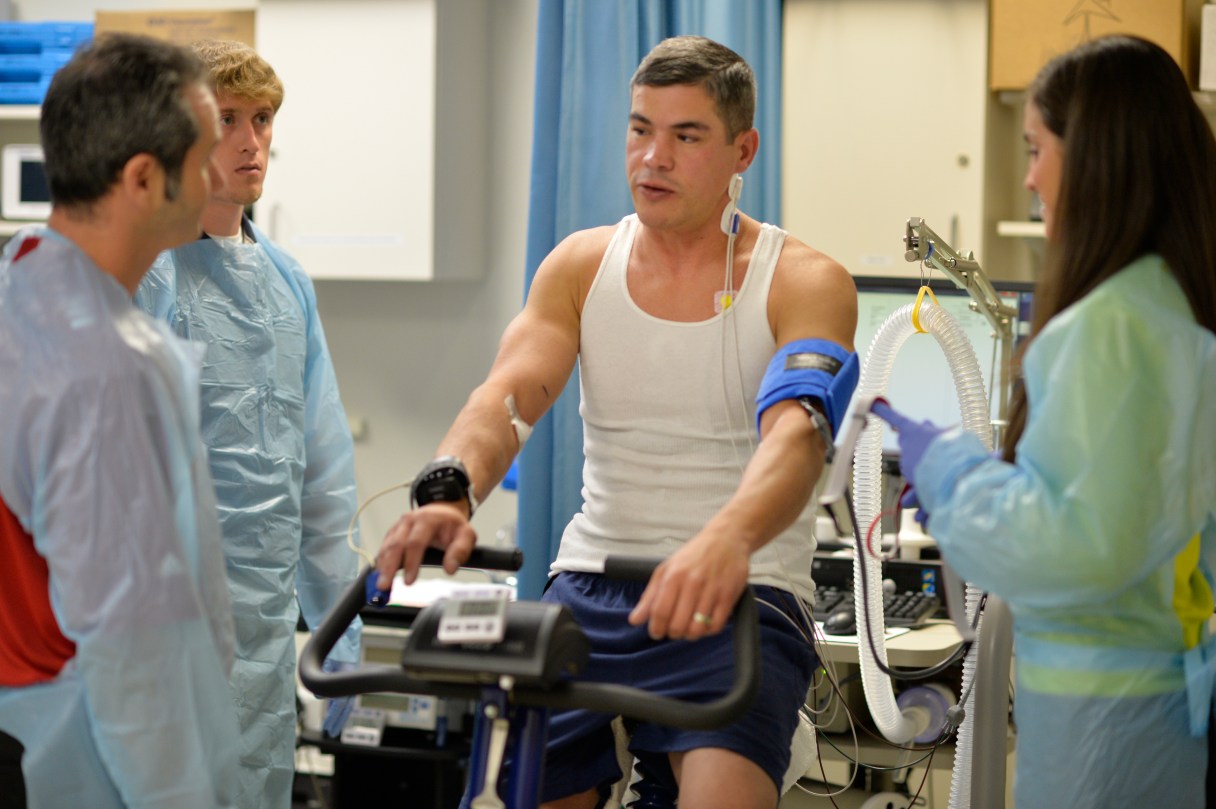
AUGUSTA, Ga. (AP) – Gary White, 43, has a condition that should make exercise more difficult, but you would never know it from watching him pump furiously on an exercise bike in the Laboratory of Integrative Vascular & Exercise Physiology at the Georgia Prevention Institute at Georgia Regents University. Cystic fibrosis has not slowed down the man who runs and polishes off 70 to 100 pushups before work every day.
“I’ve always been exercising, even when I was a kid,” White said. “I just try to be active and not think much about my condition.”
But exercise intolerance is a side effect of cystic fibrosis and GRU researchers are looking to see whether some interventions, from a generic form of Viagra to antioxidants, could help those patients do more.
Cystic fibrosis is a disease caused by a defect in the CFTR gene that helps control the movement of salt and water in and out of cells. Patients are prone to have sticky mucus that builds up in their lungs, traps bacteria and leads to damage. It also affects other organs, including the pancreas, which can lead to nutrition problems.
The GRU team has shown it also affects blood vessels and can lead to less elasticity, even if the lung function is normal, said Dr. Ryan Harris, the director of the lab and an assistant professor of pediatrics.