
Tuesday, November 10, 2026Nov 10

Cobbling coalition for Iraq, Syria no easy task

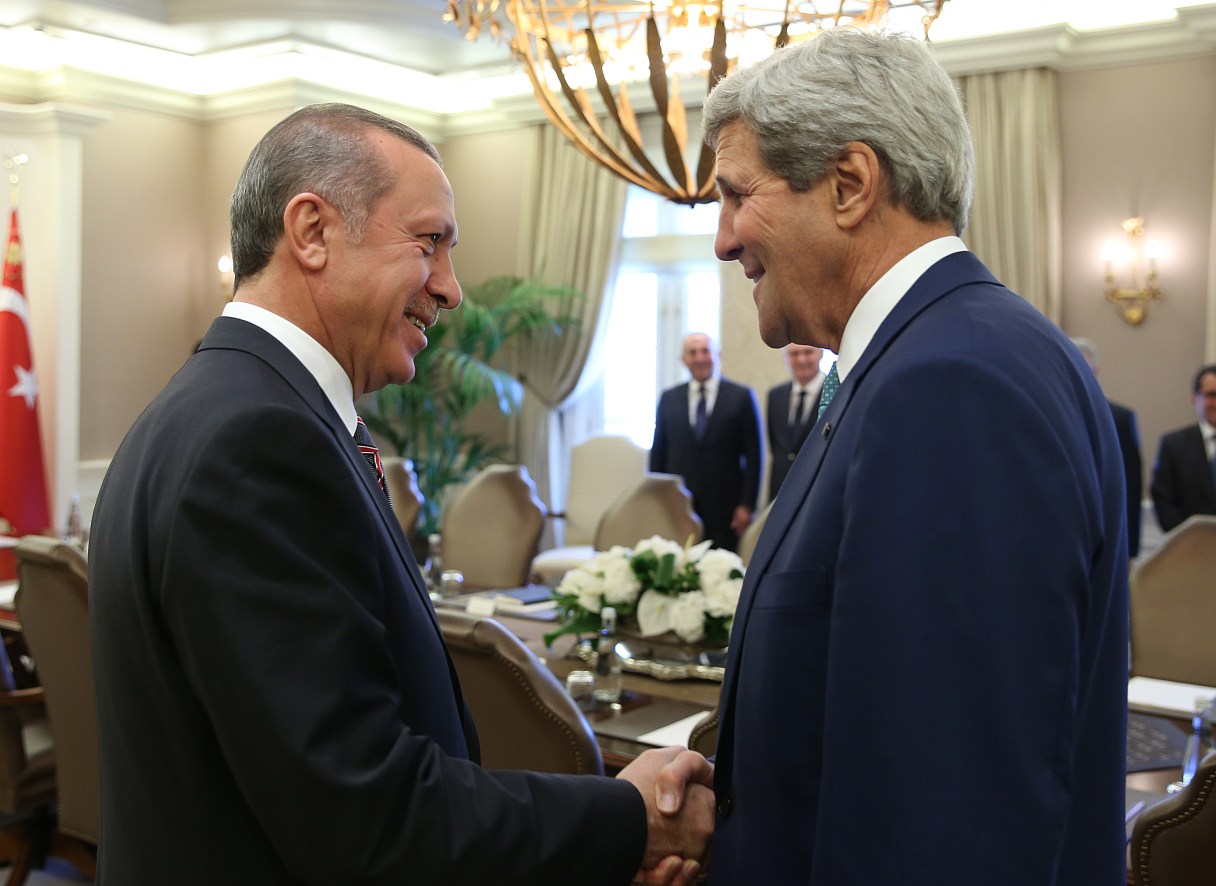
In this photo released by the Turkish Presidency Press Office, Turkish President Recep Tayyip Erdogan, left, and U.S. Secretary of State John Kerry speak before a meeting in Ankara, Turkey, Friday, Sept. 12, 2014. Kerry is in the region to speak with leaders about strategies to address the threat from the Islamic State, a militant extremist group. Secretary of State John Kerry said on Friday that the US would provide an additional $500 million in humanitarian aid to victims of the war in Syria, bringing total American assistance to $2.9 billion since the start of the conflict in 2011. (AP Photo/Turkish Presidency)
In this photo released by the Turkish Presidency Press Office, Turkish President Recep Tayyip Erdogan, left, and U.S. Secretary of State John Kerry speak before a meeting in Ankara, Turkey, Friday, Sept. 12, 2014. Kerry is in the region to speak with leaders about strategies to address the threat from the Islamic State, a militant extremist group. Secretary of State John Kerry said on Friday that the US would provide an additional $500 million in humanitarian aid to victims of the war in Syria, bringing total American assistance to $2.9 billion since the start of the conflict in 2011. (AP Photo/Turkish Presidency) In this photo released by the Turkish Presidency Press Office, Turkish President Recep Tayyip Erdogan, left, and U.S. Secretary of State John Kerry speak before a meeting in Ankara, Turkey, Friday, Sept. 12, 2014. Kerry is in the region to speak with leaders about strategies to address the threat from the Islamic State, a militant extremist group. Secretary of State John Kerry said on Friday that the US would provide an additional $500 million in humanitarian aid to victims of the war in Syria, bringing total American assistance to $2.9 billion since the start of the conflict in 2011. (AP Photo/Turkish Presidency)

ANKARA, Turkey (AP) – Assembling a coalition to fight the militants from the Islamic State group is proving to be a complicated affair.

France is all in, but would like to invite Iran – against the wishes of the United States. The U.S. is pressing Turkey, which has resisted publicly endorsing the global strategy against the extremists, who are holding 49 Turkish hostages.

Many world leaders want to act quickly, before the Islamic State extremists gain more territory. But it’s crucial to reach agreement on what the coalition is doing and why, particularly after bitter diplomatic divisions created by the U.S.-led invasion of Iraq a decade ago.

U.S. Secretary of State John Kerry said as many as 40 countries have offered various levels of support – from humanitarian aid to cracking down on illicit cross-border funding and fighters that are flowing to the insurgents – to providing intelligence and supplies to rebels in Syria and security forces in Iraq.

But after more than a week of meetings with top NATO and Mideast officials, Kerry refused to say Friday precisely how a global campaign that is being pieced together by the U.S. would succeed in destroying the Islamic State group, a Sunni extremist movement that has taken over large parts of Iraq and Syria.