
Tuesday, November 10, 2026Nov 10

Researchers explore shipwrecks near San Francisco

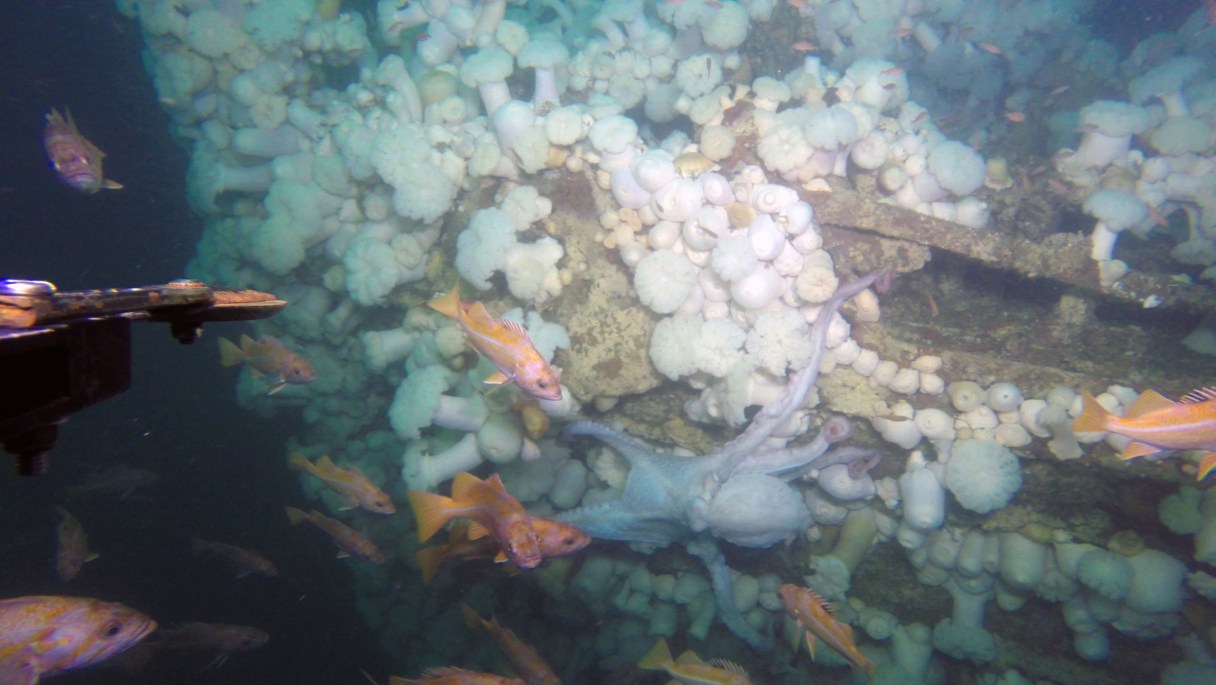
In this Friday, Sept. 12, 2014 photo provided by the National Oceanic and Atmospheric Administration, an octopus swims by a mystery tugboat that was found by the NOAA research vessel Fulmar off the California coast. Federal researchers are exploring more than a dozen underwater sites where they believe ships sank in the treacherous waters outside the Golden Gate in the decades following the Gold Rush. During a five-day expedition, a team from NOAA used sonar and an underwater vehicle to examine and photograph the historic shipwrecks in the Gulf of the Farallones Marine Sanctuary, where more than 300 vessels are believed to have sunk. (AP Photo/NOAA)
In this Friday, Sept. 12, 2014 photo provided by the National Oceanic and Atmospheric Administration, an octopus swims by a mystery tugboat that was found by the NOAA research vessel Fulmar off the California coast. Federal researchers are exploring more than a dozen underwater sites where they believe ships sank in the treacherous waters outside the Golden Gate in the decades following the Gold Rush. During a five-day expedition, a team from NOAA used sonar and an underwater vehicle to examine and photograph the historic shipwrecks in the Gulf of the Farallones Marine Sanctuary, where more than 300 vessels are believed to have sunk. (AP Photo/NOAA) In this Friday, Sept. 12, 2014 photo provided by the National Oceanic and Atmospheric Administration, an octopus swims by a mystery tugboat that was found by the NOAA research vessel Fulmar off the California coast. Federal researchers are exploring more than a dozen underwater sites where they believe ships sank in the treacherous waters outside the Golden Gate in the decades following the Gold Rush. During a five-day expedition, a team from NOAA used sonar and an underwater vehicle to examine and photograph the historic shipwrecks in the Gulf of the Farallones Marine Sanctuary, where more than 300 vessels are believed to have sunk. (AP Photo/NOAA)

GULF OF THE FARALLONES NATIONAL MARINE SANCTUARY (AP) – Federal researchers are exploring several underwater sites where ships sank while navigating in the treacherous waters west of San Francisco in the decades following the Gold Rush.

Over the past week, a team from the National Oceanic and Atmospheric Administration used a remote controlled underwater vehicle, equipped with sonar and video cameras, to examine and record the historic shipwrecks.

The five-day expedition was part of a long-term archaeological survey of the Gulf of the Farallones National Marine Sanctuary, which covers about 1,300 square miles of the Pacific Ocean off the Northern California coast.

NOAA researchers say more than 300 ships have wrecked in the gulf, where heavy fog, strong winds and protruding rocks have bedeviled many vessels heading in and out of the San Francisco Bay – especially before arrival of sonar and other navigational technologies.

“The Gulf of the Farallones is a graveyard of ships,” said James Delgado, NOAA’s maritime heritage director. “Every one of these accidents, every one of these sinkings, has its own dramatic story to tell.”