
LONDON (AP) – The saga of Scottish independence is over, but a new journey of political upheaval is only beginning for the United Kingdom.
Prime Minister David Cameron responded Friday to the passion of the failed Scottish breakaway by promising sweeping new powers to the U.K.’s regions. Scotland’s rebellious spirit and England’s own movement for more autonomy mean that to keep an uneasy marriage intact, each of Britain’s four nations soon may need to live mostly under separate roofs.
Cameron vowed to follow through on campaign promises to spin off key decision-making powers from London to the Scottish capital of Edinburgh, particularly over tax rates and welfare benefits, to keep separatist sentiments at bay. As importantly, he called for a similarly robust reform of the relationship between Parliament in London and Scotland, Wales, Northern Ireland and most significantly its home of England, where 85 percent of the U.K.’s population lives.
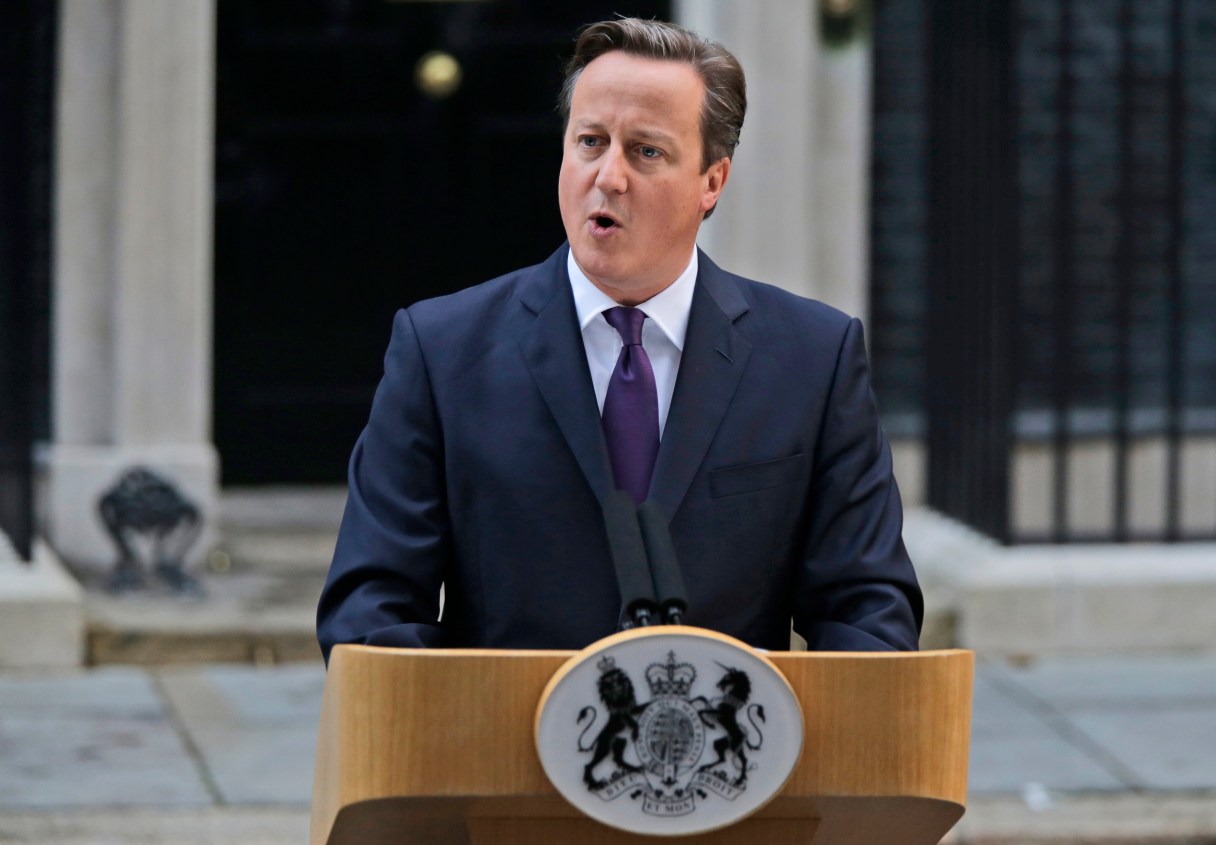
“I have long believed that a crucial part missing from this national discussion is England. We have heard the voice of Scotland, and now the millions of voices of England must also be heard. The question of English votes for English laws … requires a decisive answer,” Cameron said outside No. 10 Downing Street.
The push to reshape the political map of the United Kingdom comes ahead of two key tests of opinion that, depending on how the cards fall, could end in Britain’s exit from the European Union in a promised 2017 referendum. First, U.K. voters must decide by May 2015 whether Cameron and his Euro-skeptic, England-centric Conservative Party remain in power or give way to the center-left Labour Party, the perennial preference of Scottish and Welsh voters.