
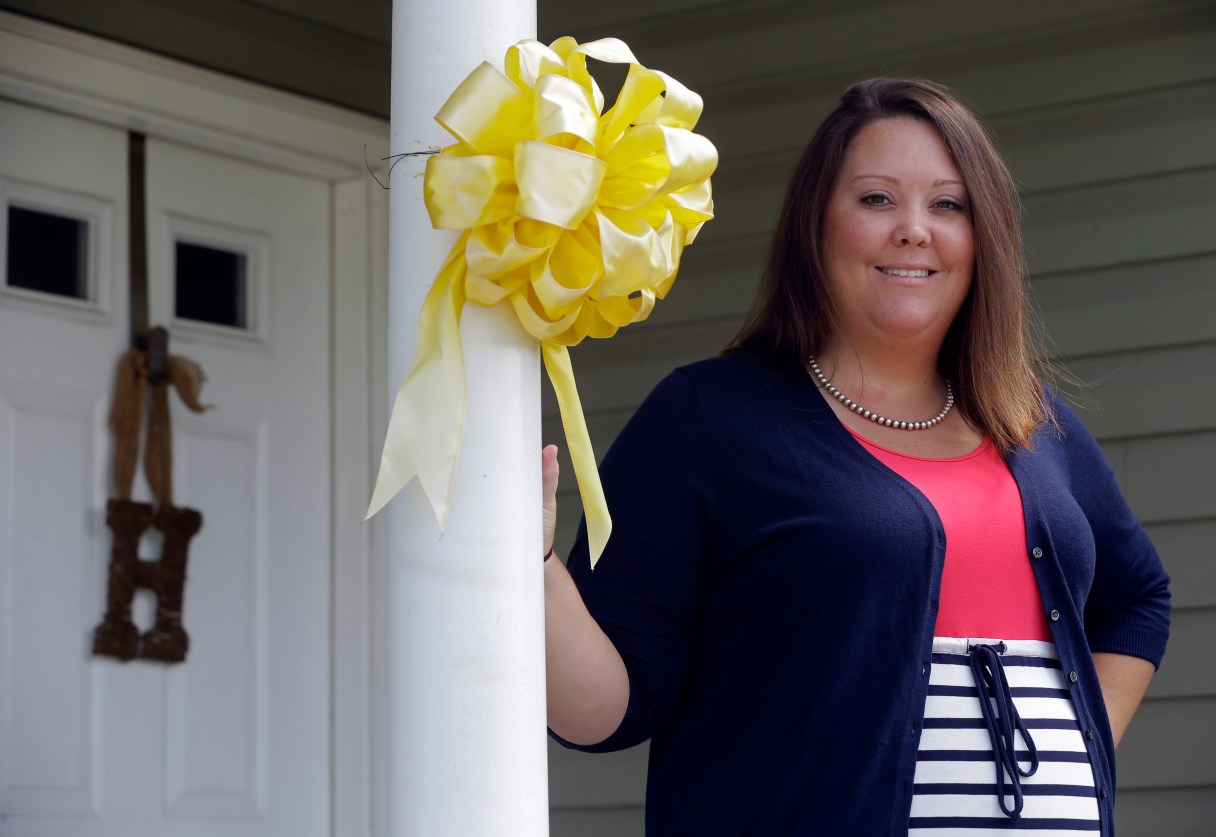
JACKSONVILLE, N.C. (AP) – On the wall over her bunk in Kuwait, Marine Cpl. Nivia Huskey proudly displays a collection of sonogram printouts of the baby boy her pregnant spouse is carrying back home in North Carolina. If all goes as planned, the 28-year-old military policewoman will return to Camp Lejeune in time for a January delivery at an on-base hospital.
But the space on the baby’s birth certificate marked “Father” will be left blank.
Though her wedding in Washington, D.C., to Jessica Painter Huskey is recognized by the federal government, including the military, Cpl. Huskey is assigned to a battalion based in North Carolina, where state law bans same-sex marriage. She is barred from legally adopting her spouse’s biological child, and will have no legal recognition as a parent.
Last year’s U.S. Supreme Court ruling striking down the 1996 Defense of Marriage Act ensured that federal military benefits extend to same-sex partners and their children.
But about two-thirds of active-duty personnel in the U.S. are based in states that don’t recognize gay marriages, leaving thousands of military families missing out on legal rights they would enjoy if Uncle Sam had stationed them elsewhere.