
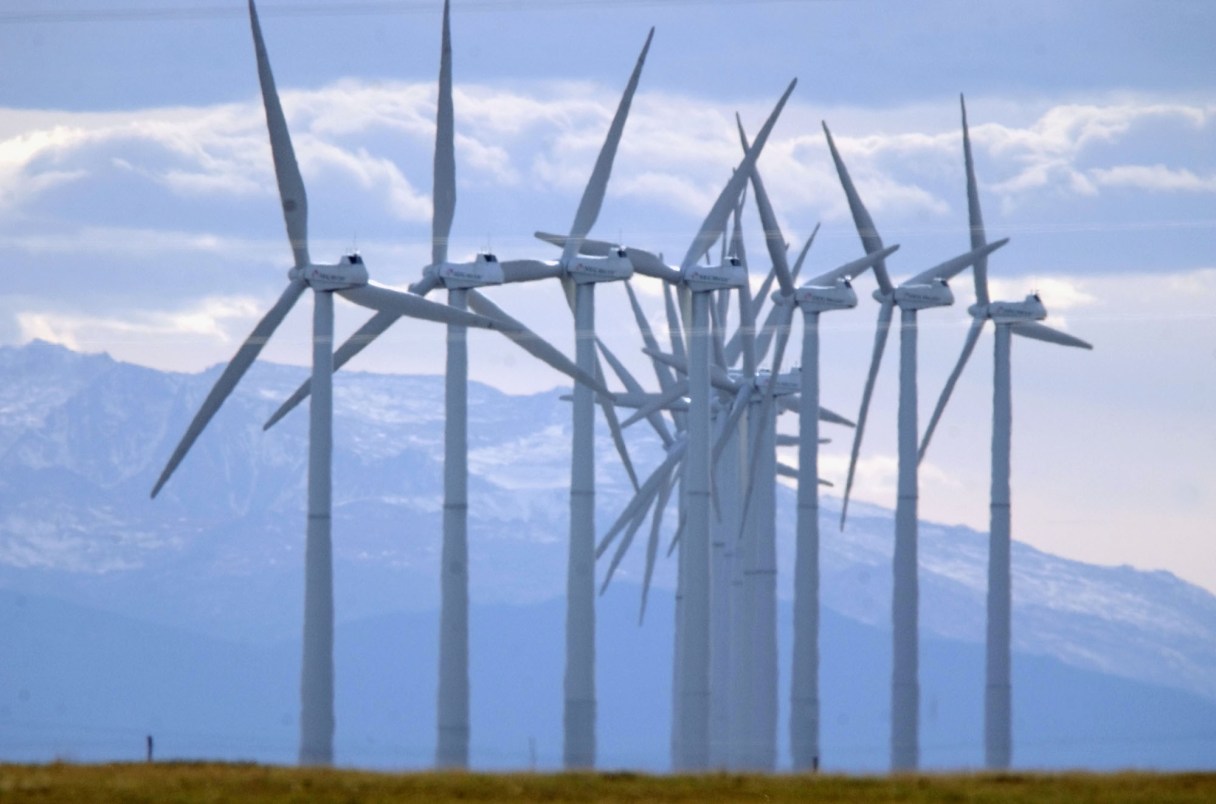
CHEYENNE, Wyo. (AP) – A proposal to export twice as much Wyoming wind power to Los Angeles as the amount of electricity generated by the Hoover Dam includes an engineering feat even more massive than that famous structure: Four chambers, each approaching the size of the Empire State Building, would be carved from an underground salt deposit to hold huge volumes of compressed air.
The caverns in central Utah would serve as a kind of massive battery on a scale never before seen, helping to overcome the fact that – even in Wyoming – wind doesn’t blow all the time.
Air would be pumped into the caverns when power demand is low and wind is high, typically at night. During times of increased demand, the compressed air would be released to drive turbines and feed power to markets in far-away Southern California.
It’s a relatively simple concept proven decades ago on a much smaller scale by utilities in Alabama and Germany. Yet, experts said Wednesday there’s a reason similar projects don’t exist elsewhere: The technology known as “compressed air energy storage” is expensive, particularly when stacked against other power sources such as cheap, natural gas.
“Stored energy technically is wonderful stuff. But it’s primarily the capital costs that get you,” said Brendan Kirby, a private consultant and former senior researcher at the Oak Ridge National Laboratory. “If it made a lot of economic sense, you’d be seeing these projects duplicated.”