
Tuesday, November 10, 2026Nov 10

AP PHOTOS: Powder-covered workers toil in Egypt’s quarries

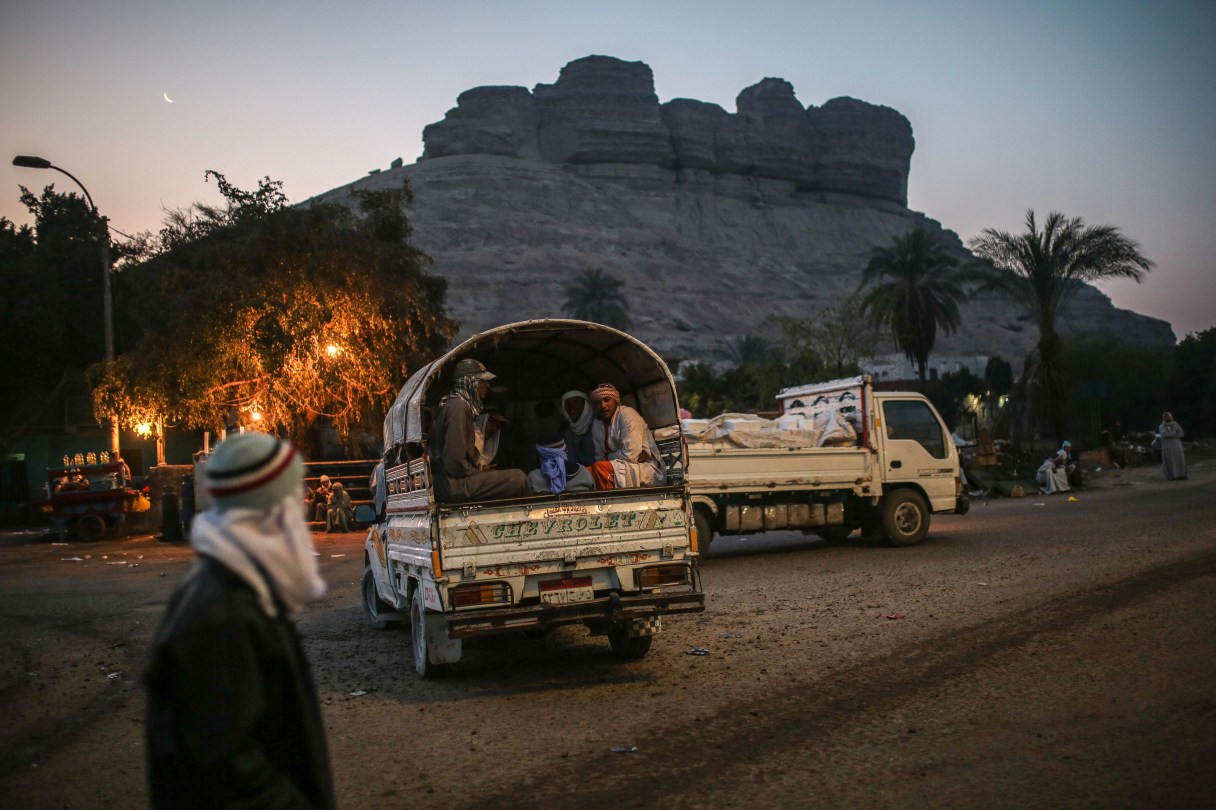
In this Wednesday, March 18, 2015 photo, quarry workers are transported in pickup trucks after dawn from Shurafa village, Minya, southern Egypt. Around 45,000 people, including children, work in an estimated 1,500 quarries, digging out stones that later will be used in construction or powdered to be used by pharmaceutical and ceramic companies.(AP Photo/Mosa'ab Elshamy)
In this Wednesday, March 18, 2015 photo, quarry workers are transported in pickup trucks after dawn from Shurafa village, Minya, southern Egypt. Around 45,000 people, including children, work in an estimated 1,500 quarries, digging out stones that later will be used in construction or powdered to be used by pharmaceutical and ceramic companies.(AP Photo/Mosa'ab Elshamy) In this Wednesday, March 18, 2015 photo, quarry workers are transported in pickup trucks after dawn from Shurafa village, Minya, southern Egypt. Around 45,000 people, including children, work in an estimated 1,500 quarries, digging out stones that later will be used in construction or powdered to be used by pharmaceutical and ceramic companies.(AP Photo/Mosa'ab Elshamy)

MINYA, Egypt (AP) – In the desert of southern Egypt, workers in limestone pits look as though they stepped out of a blizzard, covered in the white powder of the stones that are the economic lifeblood of this region.

The quarries are the main employers in Minya province, some 300 kilometers (180 miles) south of Cairo. Around 45,000 people, including children, work in an estimated 1,500 quarries, digging out stones that later will be used in construction or powdered to be used by pharmaceutical and ceramic companies.

But the work, paying $7 to $13 a day, is backbreaking – and dangerous. Workers have suffered amputations and electrocutions, sometimes dying.

One laborer, 15-year-old Baskharoon Mounir, lost his left arm to a cutting machine in 2013 after working for only a month without safety equipment or training.

“I wish I could go back, even with one arm.” Baskharoon says. “It would be better than staying at home, but when they see me, they do not allow me to work.”