
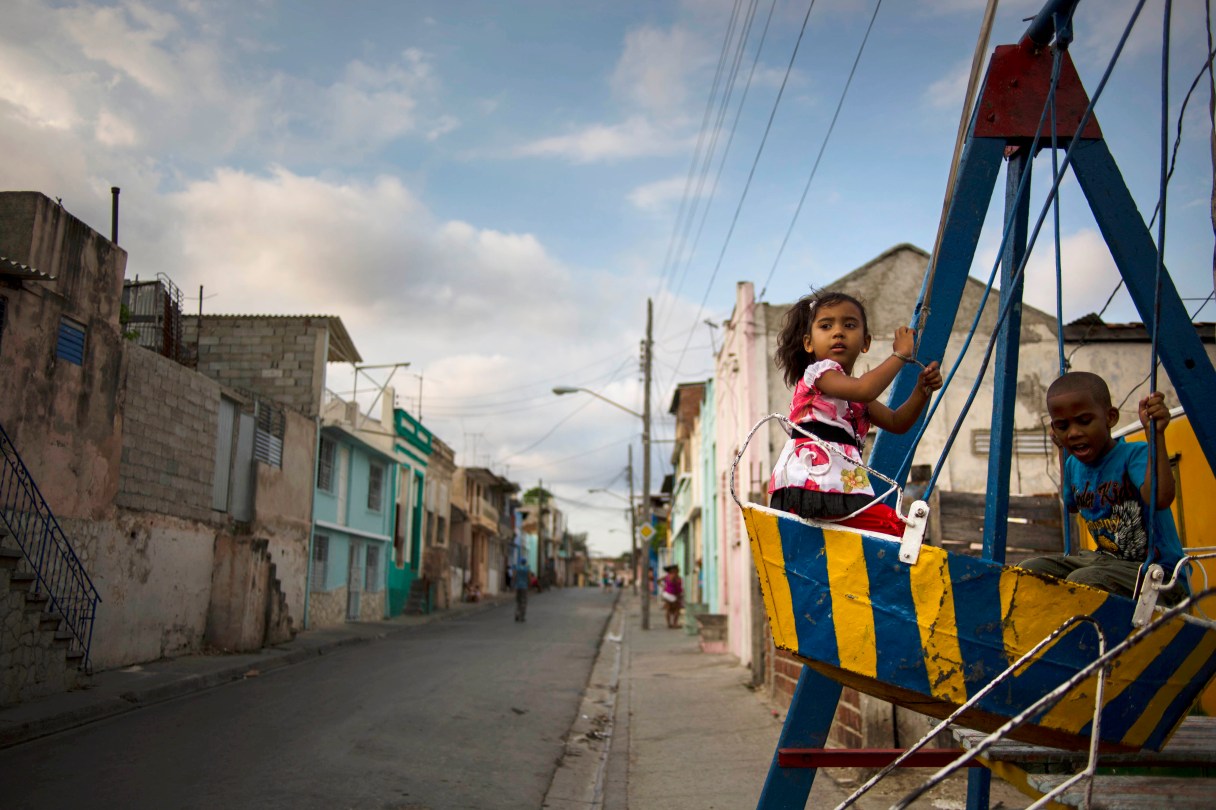
SANTIAGO DE CUBA, Cuba (AP) – Two and a half years after Hurricane Sandy trashed Cuba’s second-largest city, 35-year-old Melba Martinez is still out of work and struggling to feed two children on her state ration book and a daily hustle for extra rice or cooking oil.
“There’s no work, no money,” Martinez said, her voice rising in fury. “How are you going to buy a pair of shoes that cost $20? If you buy them, you don’t eat. If you eat, you go barefoot.”
Down the hill in the pastel-tinted colonial center of Santiago, Josefina Arocha Saco pours thickening, sugary milk through a soft-serve ice cream machine made of an old air-conditioner, a pan from a cafeteria steam table and a handmade metal driveshaft. If enough schoolchildren spend 4 cents on ice-cream, she can cover the costs of her government license and taxes, and make more in private business than she used to earn as a teacher.
“There used to be very little here,” Arocha said. “It’s more open, more free … Now everyone can get a license.”
Far from the tourist boom and foreign investment bounty of Havana, residents of eastern Cuba are struggling with the country’s sputtering economy, some faring better than others in a region that is poorer and more isolated than the bustling capital. While many from Santiago have opened businesses under the economic reforms of the last four years, the city is largely removed from the big-spending foreigners and wealthy Cuban-Americans whose cash is cascading through private businesses, from high-end restaurants to spas and spinning classes, for a growing class of wealthy locals.