
Tuesday, November 10, 2026Nov 10

School districts, parents at odds over breakfast in class

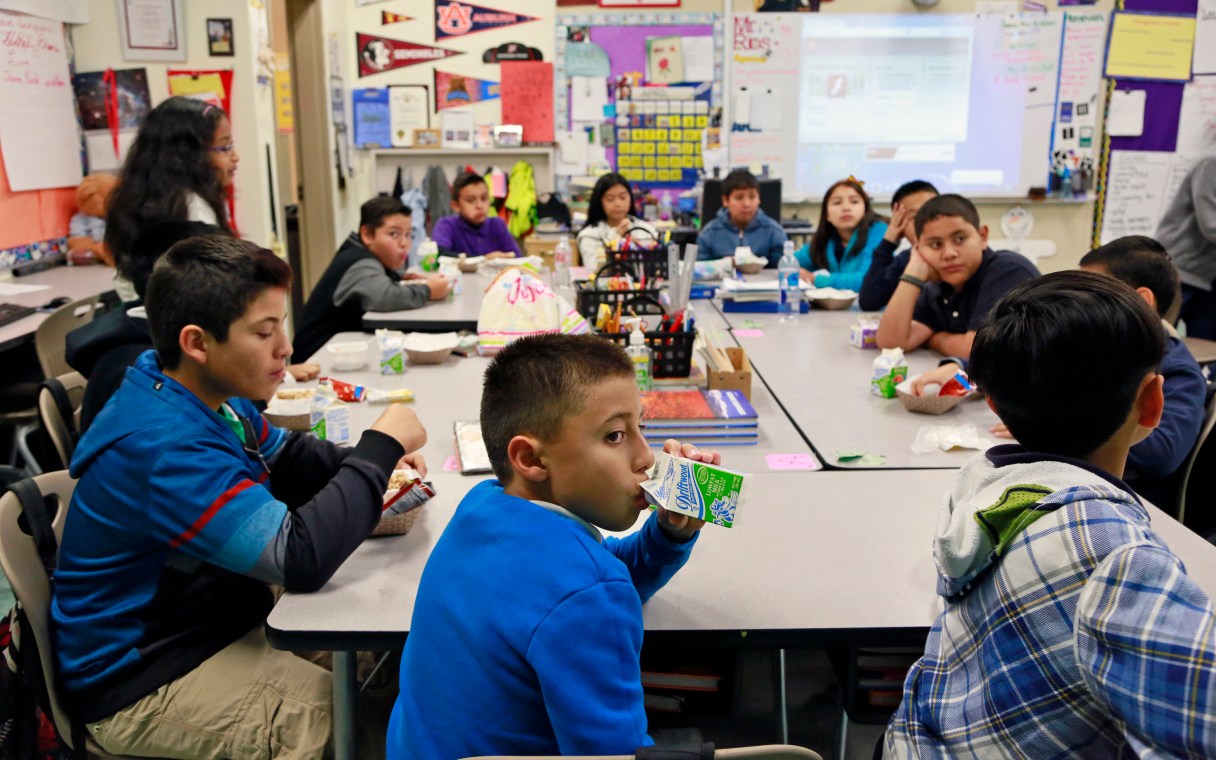
In this Wednesday, April 8, 2015 photo, students are served breakfast at the Stanley Mosk Elementary School in Los Angeles. In this Los Angeles Unified School District program, and in other major urban school districts, breakfast is increasingly being served inside the classroom. The number of breakfasts served in the nation’s schools has doubled in the last two decades, a surge driven largely by a change in how districts deliver the food. Instead of providing low-income students free or reduced-price meals in the cafeteria, they’re increasingly serving all children in the classroom. (AP Photo/Nick Ut)
In this Wednesday, April 8, 2015 photo, students are served breakfast at the Stanley Mosk Elementary School in Los Angeles. In this Los Angeles Unified School District program, and in other major urban school districts, breakfast is increasingly being served inside the classroom. The number of breakfasts served in the nation’s schools has doubled in the last two decades, a surge driven largely by a change in how districts deliver the food. Instead of providing low-income students free or reduced-price meals in the cafeteria, they’re increasingly serving all children in the classroom. (AP Photo/Nick Ut) In this Wednesday, April 8, 2015 photo, students are served breakfast at the Stanley Mosk Elementary School in Los Angeles. In this Los Angeles Unified School District program, and in other major urban school districts, breakfast is increasingly being served inside the classroom. The number of breakfasts served in the nation’s schools has doubled in the last two decades, a surge driven largely by a change in how districts deliver the food. Instead of providing low-income students free or reduced-price meals in the cafeteria, they’re increasingly serving all children in the classroom. (AP Photo/Nick Ut)

LOS ANGELES (AP) – The number of breakfasts served in the nation’s schools has doubled in the last two decades, a surge driven largely by a change in how districts deliver the food.

Instead of providing low-income students free or reduced-price meals in the cafeteria, they’re increasingly serving all children in the classroom. Food policy advocates say the change increases equity, however, it’s fueled a backlash from parents and teachers. They contend that it takes up class time that should be devoted to learning and wastes food by serving it to kids who don’t want or need it.

Lilian Ramos, a mother of two elementary school children in a working-class Los Angeles neighborhood, said she takes offense at the district’s assumption that she hasn’t fed her children: She serves them a traditional Mexican breakfast each day.

“They say if kids don’t eat they won’t learn,” Ramos said. “The truth is that many of our kids come to school already having eaten. They come here to study.”

The Los Angeles Unified School District, the nation’s second-largest with about 650,000 K-12 students, has been aggressively expanding its program, and by the end of the school year, will be serving breakfast in class at nearly every school. That growth mirrors an increase nationwide. Since 1994, the number of breakfasts served has climbed from about 1 billion annually to 2.3 billion, according to the U.S. Department of Agriculture.