
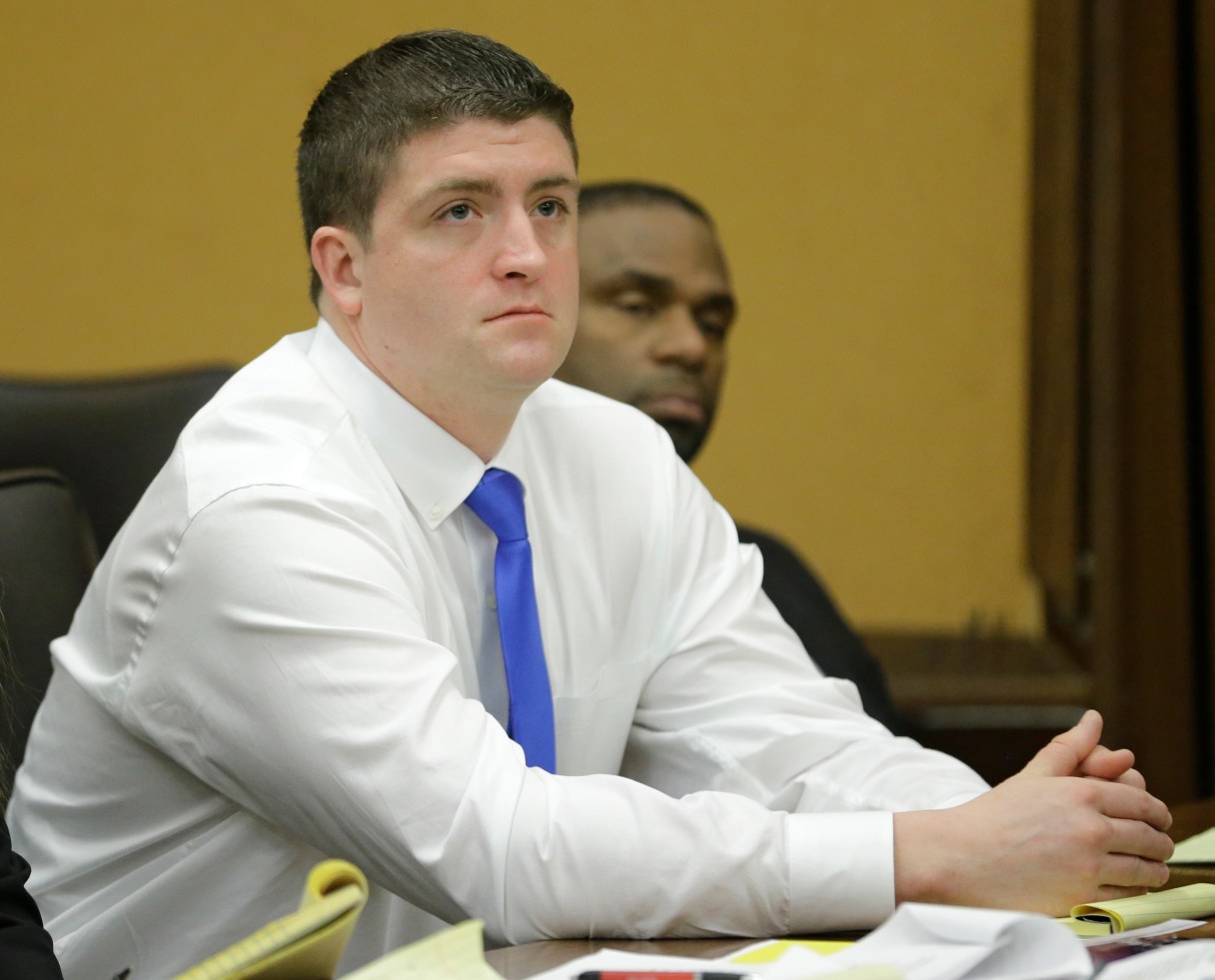
CLEVELAND (AP) – The circumstances of a police shooting trial unfolding in a Cleveland courtroom share similarities to a high-speed chase and fatal shooting in Tennessee as well as the matters of law on which the Cleveland case will be decided: When does a threat to officers’ lives end?
Friday marked the completion of the second week of trial for a Cleveland police officer charged with voluntary manslaughter in the deaths of two unarmed motorists after a high-speed chase in November 2012.
Patrolman Michael Brelo fired 49 of the 137 rounds the night driver Timothy Russell and passenger Malissa Williams were killed, prosecutors say, with the last 15 rounds fired down through the windshield while standing on the hood of Russell’s beat-up Chevy Malibu.
A judge – not a jury – will decide whether Brelo, 31, killed Russell and Williams while under the influence of sudden rage or passion, the legal definition of voluntary manslaughter in Ohio. But Judge John P. O’Donnell must also decide whether prosecutors proved it was Brelo alone who killed Russell and Williams.
Thirteen officers fired at Russell’s car that night but only Brelo was charged criminally because, prosecutors contend, Brelo fired his final rounds when Russell and Williams were alive but incapacitated and no longer a threat. Deputy coroners have testified they cannot definitively say which shots killed the pair or which officers fired them.