
Friday, November 13, 2026Nov 13

Arizona sheriff drops tough-talking persona on the stand

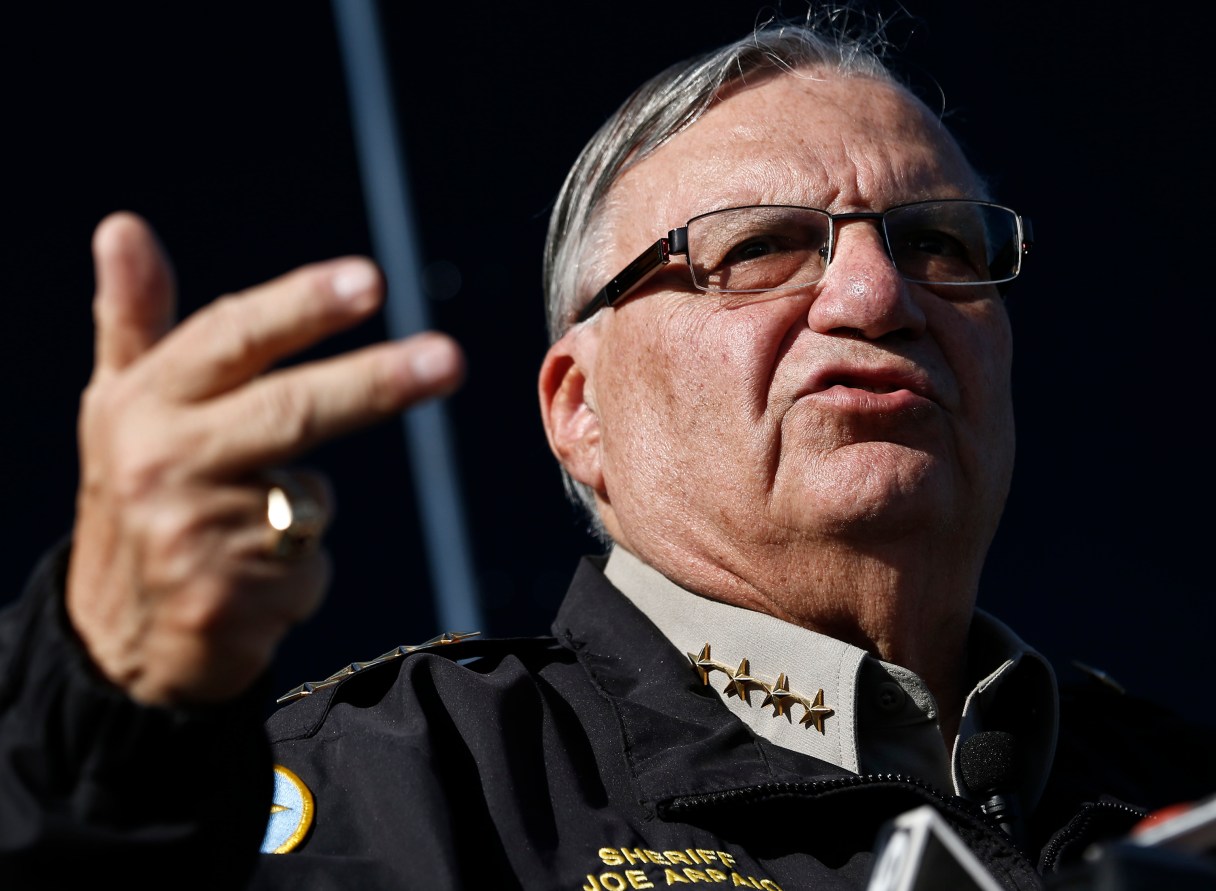
FILE - In this Jan. 9, 2013 file photo, Maricopa County Sheriff Joe Arpaio speaks with the media in Phoenix. Arpaio begins a four-day hearing Tuesday, April 21,  that could bring him fines, damage his credibility and make him politically vulnerable for his acknowledged violations of a judge's orders in a racial profiling case. (AP Photo/Ross D. Franklin,File)
FILE - In this Jan. 9, 2013 file photo, Maricopa County Sheriff Joe Arpaio speaks with the media in Phoenix. Arpaio begins a four-day hearing Tuesday, April 21, that could bring him fines, damage his credibility and make him politically vulnerable for his acknowledged violations of a judge's orders in a racial profiling case. (AP Photo/Ross D. Franklin,File) FILE - In this Jan. 9, 2013 file photo, Maricopa County Sheriff Joe Arpaio speaks with the media in Phoenix. Arpaio begins a four-day hearing Tuesday, April 21, that could bring him fines, damage his credibility and make him politically vulnerable for his acknowledged violations of a judge's orders in a racial profiling case. (AP Photo/Ross D. Franklin,File)

PHOENIX (AP) – The self-proclaimed “America’s Toughest Sheriff” will return to the stand in federal court Thursday after the Arizona lawman delivered unusually meek responses to questions about why he defied a judge’s orders to stop carrying out his signature immigration patrols.

Maricopa County Sheriff Joe Arpaio testified Wednesday that he accepts responsibility for disobeying a 2011 order in a racial profiling case, but he repeatedly said he delegated its enforcement to his lawyers and staff.

When asked whether he remembered getting an attorney’s opinion on carrying out the order’s key section, Arpaio said, “Not that I can recall.”

The sheriff could face fines if he’s found in contempt of court for violating orders issued after a judge found the agency racial profiled Latinos. Rank-and-file deputies were never told to stop the immigration patrols, leaving them to violate the order for about 18 months.

The sheriff also has accepted responsibility for his agency’s failure to turn over traffic-stop videos in the profiling case and bungling a plan to gather such recordings from deputies once some videos were discovered.