
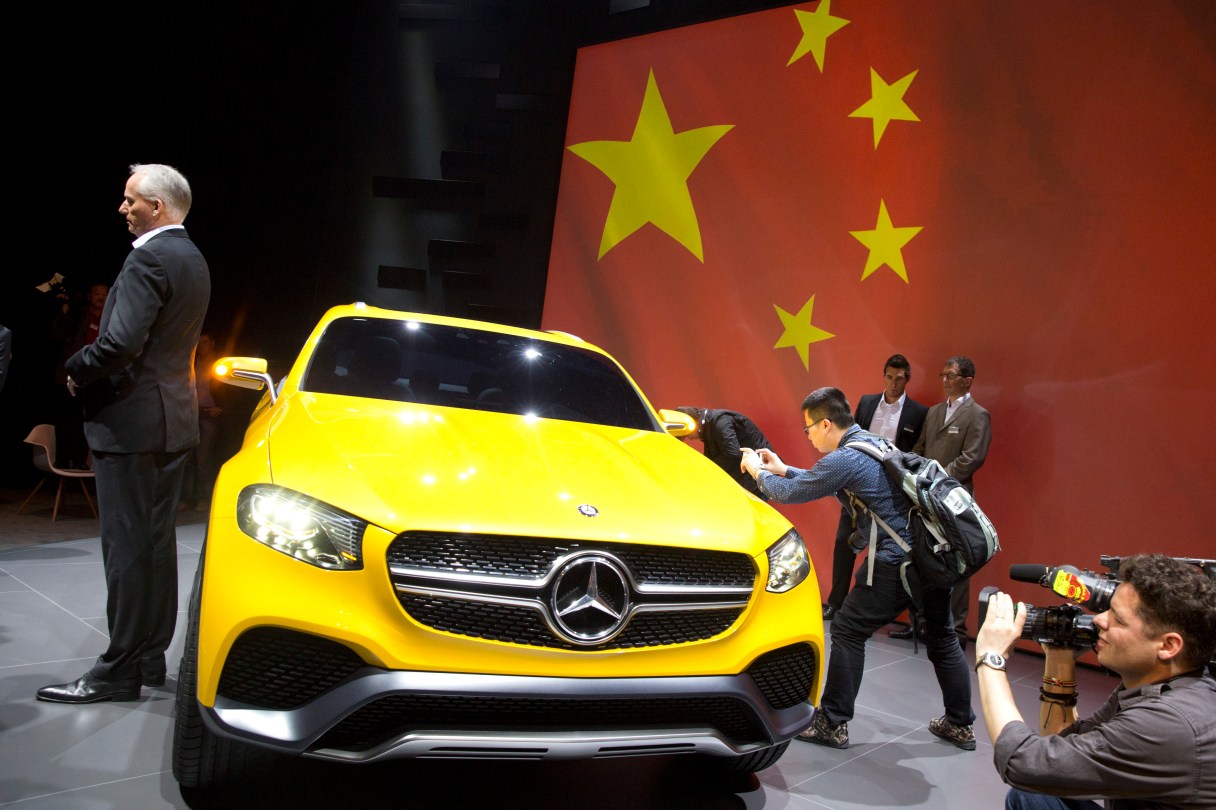
BEIJING (AP) – A Chinese regulator said Thursday it has fined Mercedes Benz 350 million yuan ($57 million) on price-fixing charges in a wide-ranging probe of the auto industry that has prompted complaints foreign automakers are being treated unfairly.
The unit of Germany’s Daimler AG was fined for violating anti-monopoly law by enforcing minimum prices dealers were required to charge for vehicles and replacement parts, according to the price bureau of the eastern province of Jiangsu. Setting minimum retail prices is common in other countries but Chinese regulators reject it as a violation of free market competition.
Regulators have targeted automakers, technology suppliers and dairies in a series of anti-monopoly investigations over the past two years in an apparent effort to force down prices.
Business groups say the secretive and abrupt way the investigations are conducted is alienating foreign companies. The U.S. Chamber of Commerce said last year that Beijing might be violating its free-trade commitments.
The ruling Communist Party under President Xi Jinping has promised to make China’s economy more productive by opening more industries to private and foreign competition. But at the same time Beijing is trying to create “national champions” in fields from autos to telecoms to aerospace. Business groups say that has led regulators to use the anti-monopoly law and other regulations to shield domestic companies from competition.