
Thursday, November 12, 2026Nov 12

History trailing Japanese leader on his upcoming US visit

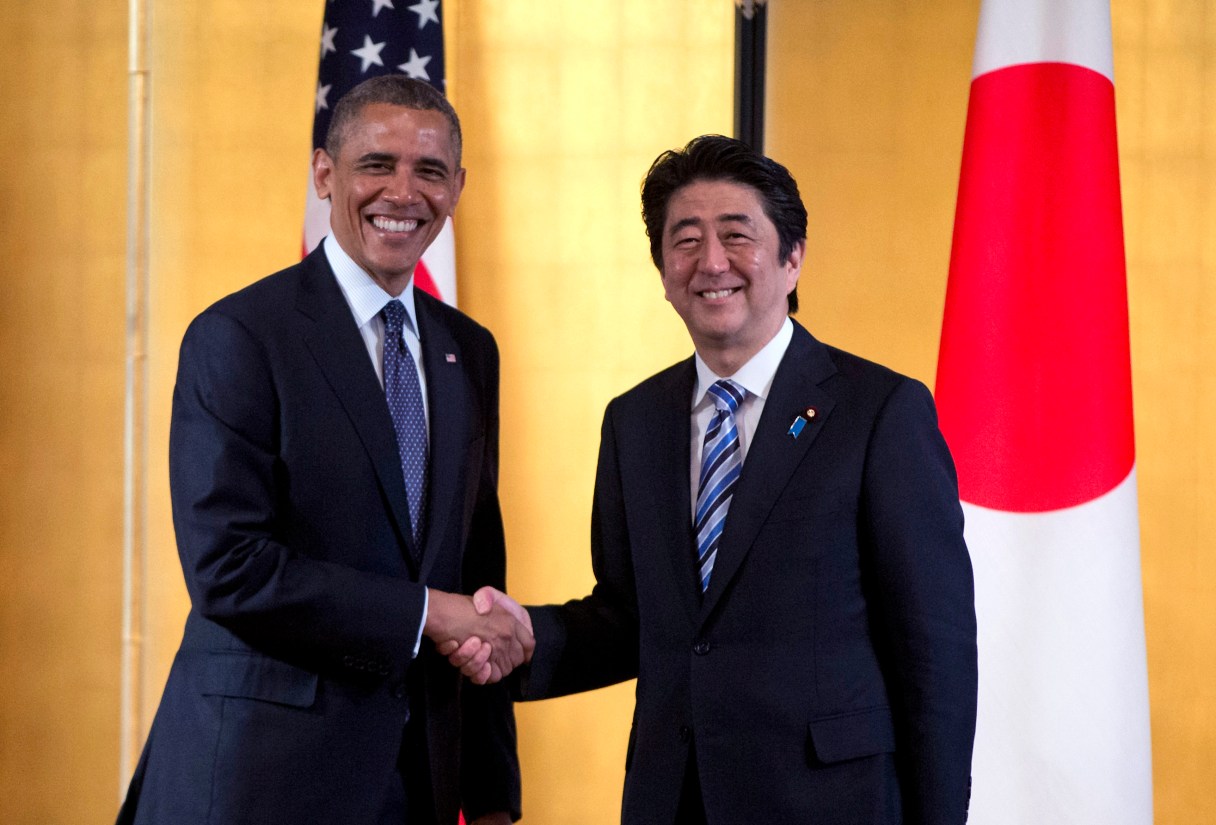
FILE - In this April 24, 2014 file photo, President Barack Obama shakes hands with Japanese Prime Minister Shinzo Abe as they arrive to participate in a bilateral meeting at the Akasaka State Guest House in Tokyo. Seventy years after the end of World War II, Japan wants to look to the future but can't shake off its past. When Prime Minister Shinzo Abe visits the U.S. next week, he will be promoting a regional free trade pact and stronger defense ties with America as his government loosens the shackles of Japan's pacifist constitution. (AP Photo/Carolyn Kaster, File)
FILE - In this April 24, 2014 file photo, President Barack Obama shakes hands with Japanese Prime Minister Shinzo Abe as they arrive to participate in a bilateral meeting at the Akasaka State Guest House in Tokyo. Seventy years after the end of World War II, Japan wants to look to the future but can't shake off its past. When Prime Minister Shinzo Abe visits the U.S. next week, he will be promoting a regional free trade pact and stronger defense ties with America as his government loosens the shackles of Japan's pacifist constitution. (AP Photo/Carolyn Kaster, File) FILE - In this April 24, 2014 file photo, President Barack Obama shakes hands with Japanese Prime Minister Shinzo Abe as they arrive to participate in a bilateral meeting at the Akasaka State Guest House in Tokyo. Seventy years after the end of World War II, Japan wants to look to the future but can't shake off its past. When Prime Minister Shinzo Abe visits the U.S. next week, he will be promoting a regional free trade pact and stronger defense ties with America as his government loosens the shackles of Japan's pacifist constitution. (AP Photo/Carolyn Kaster, File)

WASHINGTON (AP) – History will be trailing Japanese Prime Minister Shinzo Abe during his visit to the United States.

Abe intends to promote a free trade pact and stronger defense ties as his government loosens the shackles of Japan’s pacifist constitution 70 years after the end of World War II.

But while Japan wants to look to the future, it cannot seem to shake off its past.

Korean-Americans who have championed the cause of former sex slaves of the imperial Japanese military will be watching what Abe says during his trip this coming week. So, too, will the shrinking ranks of American veterans who were prisoners of war.

In an unusual step, 25 House members wrote Japan’s ambassador to the U.S. to urge Abe to address sensitive issues of history when he becomes the first Japanese leader to address a joint meeting of Congress. Abe’s speech Wednesday comes a day after his scheduled meeting with President Barack Obama.