
Sunday, November 15, 2026Nov 15

Q&A: Issues, possible legal outcomes in gay marriage cases

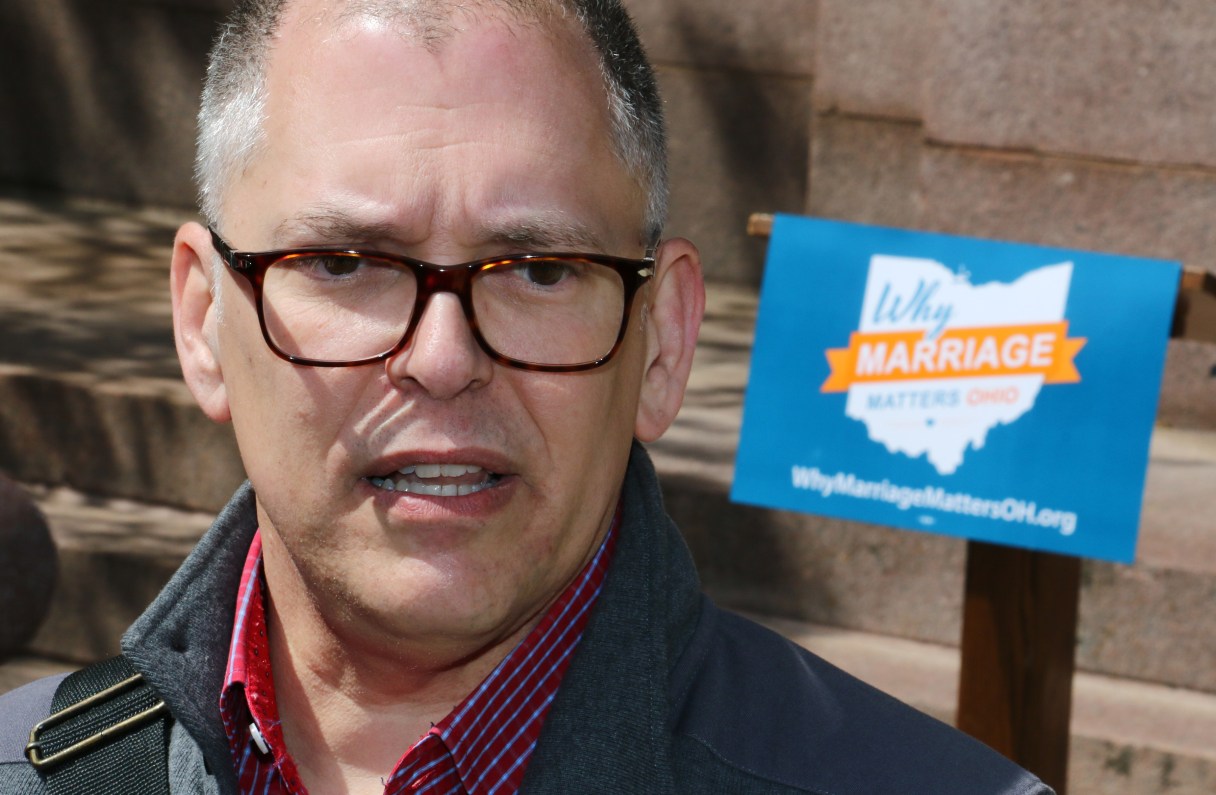
Jim Obergefell, center, speaks to a group of supporters during an an official send-off event in support of plaintiffs in gay marriage cases that will be argued Tuesday, April 28 before the U.S. Supreme Court, on the steps of City Hall in Cincinnati Friday, April 24, 2015. When Obergefell's husband Arthur died at age 48, Obergefell was listed on the death certificate as his surviving spouse; the couple had won a court order before Arthur's death to make it so. That victory was overturned by the federal appeals court in Cincinnati, which upheld the same-sex marriage bans in Kentucky, Michigan and Tennessee as well. (AP Photo/Tom Uhlman)

WASHINGTON (AP) – Just two years ago, the Supreme Court struck down part of the federal anti-gay marriage law that denied a range of government benefits to legally married same-sex couples.

The decision in United States v. Windsor did not address the validity of state marriage bans, but courts across the country, with few exceptions, said its logic compelled them to invalidate state laws that prohibited gay and lesbian couples from marrying.

The number of states allowing same-sex marriage has grown rapidly. As recently as October, just over one-third of the states permitted same-sex marriage. Now, same-sex couples can marry in 36 states and the District of Columbia. A look at what is now before the Supreme Court, and the status of same-sex marriage around the country:

___

WHAT’S LEFT FOR THE SUPREME COURT TO DO AMID ALL THIS CHANGE?