
Tuesday, November 10, 2026Nov 10

Former US commander: Take nuclear missiles off high alert

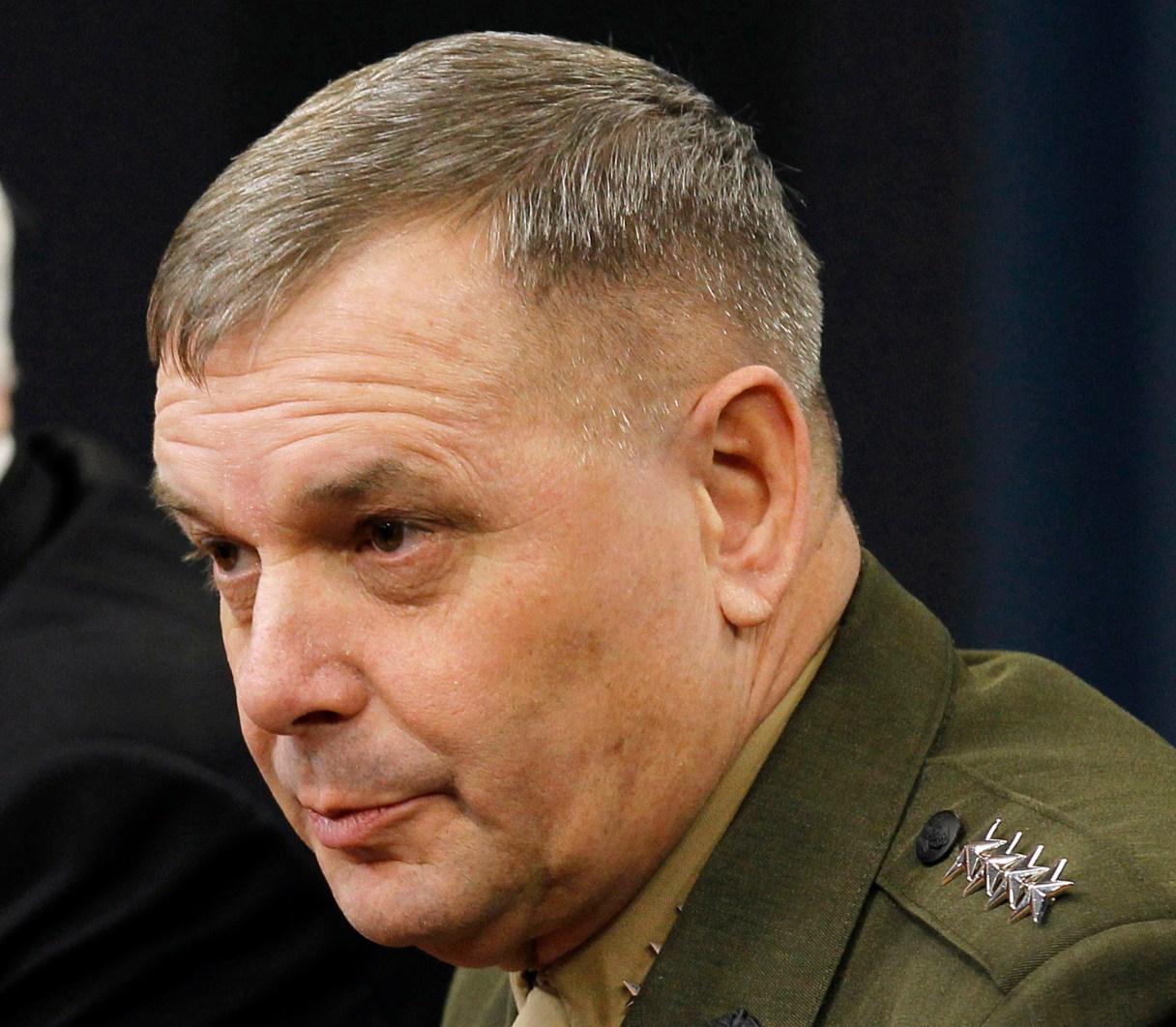
FILE - In this April 21, 2011, file photo, Gen. James Cartwright takes part in a news conference at the Pentagon. A former commander of U.S. nuclear forces is leading a call for taking U.S. and Russian nuclear missiles off high alert, arguing that a longer fuse could keep a possible cyberattack from starting a nuclear war and would mean less risk of miscalculation in a crisis. Cartwright, who headed Strategic Command from 2004-07 and served as vice chairman of the Joint Chiefs of Staff before retiring in 2011, said in an interview that “de-alerting” nuclear arsenals would foil hackers by reducing the chance of launching a missile in response to a false warning of attack. He says this can be accomplished without eroding the weapons’ deterrent value.  (AP Photo/Alex Brandon, File)
FILE - In this April 21, 2011, file photo, Gen. James Cartwright takes part in a news conference at the Pentagon. A former commander of U.S. nuclear forces is leading a call for taking U.S. and Russian nuclear missiles off high alert, arguing that a longer fuse could keep a possible cyberattack from starting a nuclear war and would mean less risk of miscalculation in a crisis. Cartwright, who headed Strategic Command from 2004-07 and served as vice chairman of the Joint Chiefs of Staff before retiring in 2011, said in an interview that “de-alerting” nuclear arsenals would foil hackers by reducing the chance of launching a missile in response to a false warning of attack. He says this can be accomplished without eroding the weapons’ deterrent value. (AP Photo/Alex Brandon, File) FILE - In this April 21, 2011, file photo, Gen. James Cartwright takes part in a news conference at the Pentagon. A former commander of U.S. nuclear forces is leading a call for taking U.S. and Russian nuclear missiles off high alert, arguing that a longer fuse could keep a possible cyberattack from starting a nuclear war and would mean less risk of miscalculation in a crisis. Cartwright, who headed Strategic Command from 2004-07 and served as vice chairman of the Joint Chiefs of Staff before retiring in 2011, said in an interview that “de-alerting” nuclear arsenals would foil hackers by reducing the chance of launching a missile in response to a false warning of attack. He says this can be accomplished without eroding the weapons’ deterrent value. (AP Photo/Alex Brandon, File)

WASHINGTON (AP) – Taking U.S. and Russian missiles off high alert could keep a possible cyberattack from starting a nuclear war, a former commander of U.S. nuclear forces says, but neither country appears willing to increase the lead-time to prepare the weapons for launch.

Retired Gen. James Cartwright said in an interview that “de-alerting” nuclear arsenals could foil hackers by reducing the chance of firing a weapon in response to a false warning of attack.

Essentially adding a longer fuse can be done without eroding the weapons’ deterrent value, said Cartwright, who headed Strategic Command from 2004 to 2007 and was vice chairman of the Joint Chiefs of Staff before retiring in 2011.

The Obama administration has considered and rejected the idea before of taking nuclear missiles off high alert. There appears to be little near-term chance that Moscow would agree to pursue this or any other kind of nuclear arms control measure, given the deteriorating U.S.-Russian relations after Russia’s intervention in eastern Ukraine.

The U.S. and Russia also are at odds over a U.S. accusation that Moscow is violating a treaty banning medium-range nuclear missiles.