
Monday, November 2, 2026Nov 2

This story is free to read.

Doomsday at Mercury: NASA craft close to falling into planet

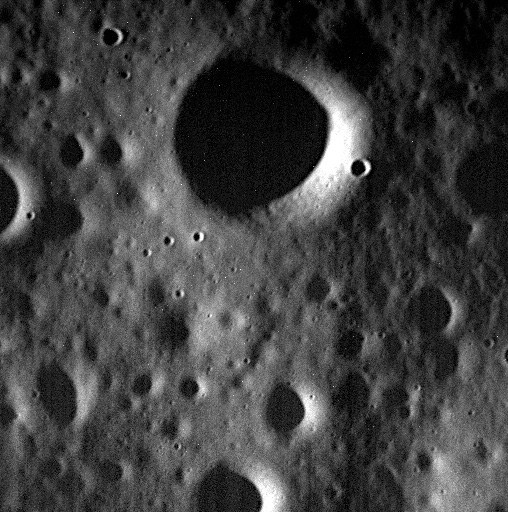
This Wednesday, April 29, 2015 photo provided by NASA shows one of the last images sent by the Messenger spacecraft which is expected to impact the surface of the planet Mercury on Thursday, April 30, 2015. The largest crater in this image has a diameter of 330 meters (0.2 miles). (NASA, Johns Hopkins University Applied Physics Laboratory, Carnegie Institution of Washington via AP)
This Wednesday, April 29, 2015 photo provided by NASA shows one of the last images sent by the Messenger spacecraft which is expected to impact the surface of the planet Mercury on Thursday, April 30, 2015. The largest crater in this image has a diameter of 330 meters (0.2 miles). (NASA, Johns Hopkins University Applied Physics Laboratory, Carnegie Institution of Washington via AP) This Wednesday, April 29, 2015 photo provided by NASA shows one of the last images sent by the Messenger spacecraft which is expected to impact the surface of the planet Mercury on Thursday, April 30, 2015. The largest crater in this image has a diameter of 330 meters (0.2 miles). (NASA, Johns Hopkins University Applied Physics Laboratory, Carnegie Institution of Washington via AP)

CAPE CANAVERAL, Fla. (AP) – NASA’s Messenger spacecraft is ending its four-year tour at Mercury with a crash landing.

Messenger is expected to slam into Mercury Thursday afternoon. It will be traveling more than 8,750 mph (14,081 kph) when it plunges from orbit, creating a crater an estimated 52 feet (16 meters) across.

Messenger became the first spacecraft to orbit hot, little Mercury, in 2011. Since then, it’s circled the solar system’s innermost planet 4,104 times and collected more than 270,000 images.

Flight controllers managed to keep the spacecraft going in recent weeks by using helium gas not originally intended as fuel. But now the gas is gone and gravity is tugging. The crash will occur on the side of Mercury facing away from Earth and telescopes.

___

Online:

NASA: http://www.nasa.gov/mission_pages/messenger/main/

Johns Hopkins University: http://messenger.jhuapl.edu/