
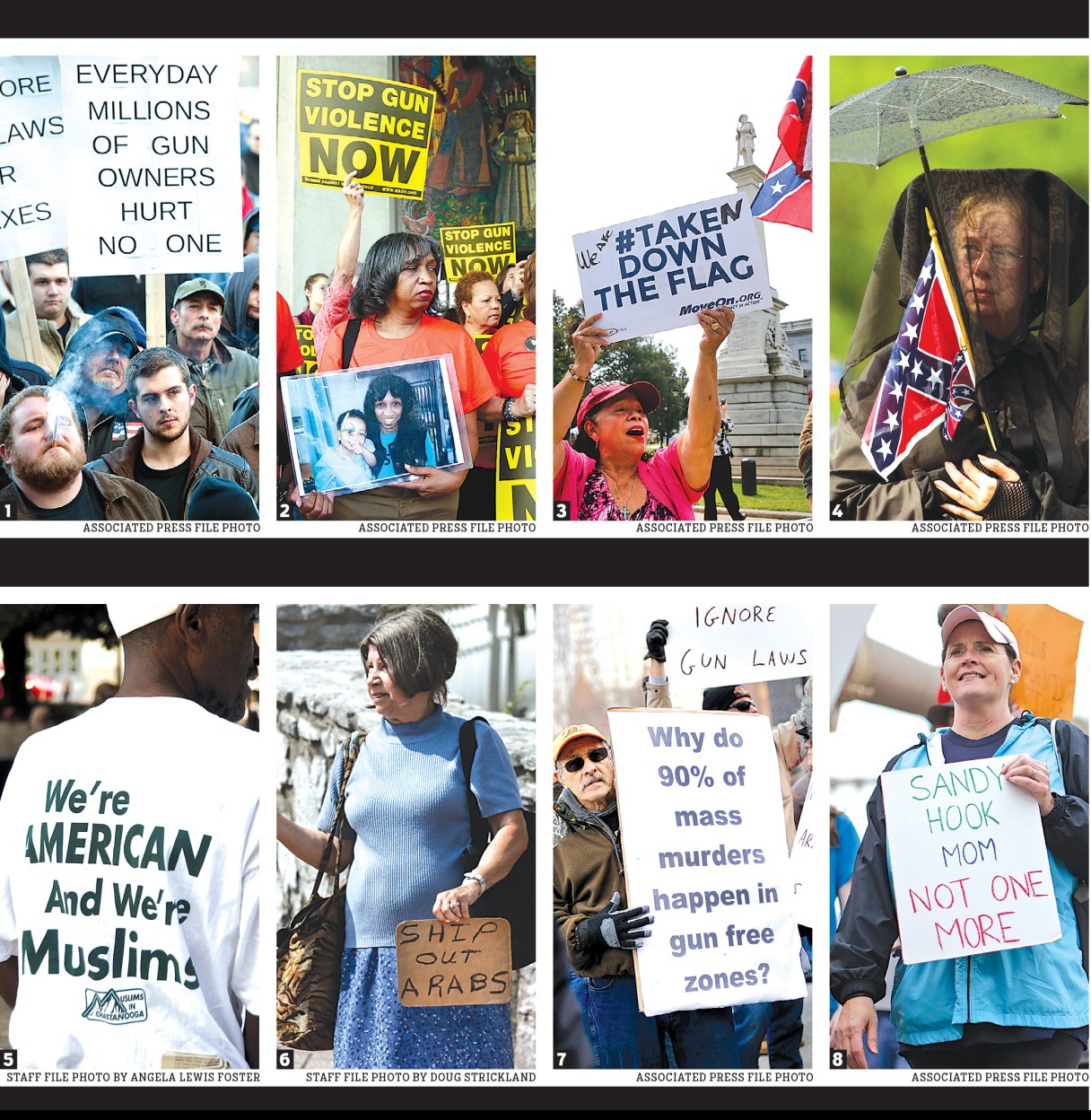
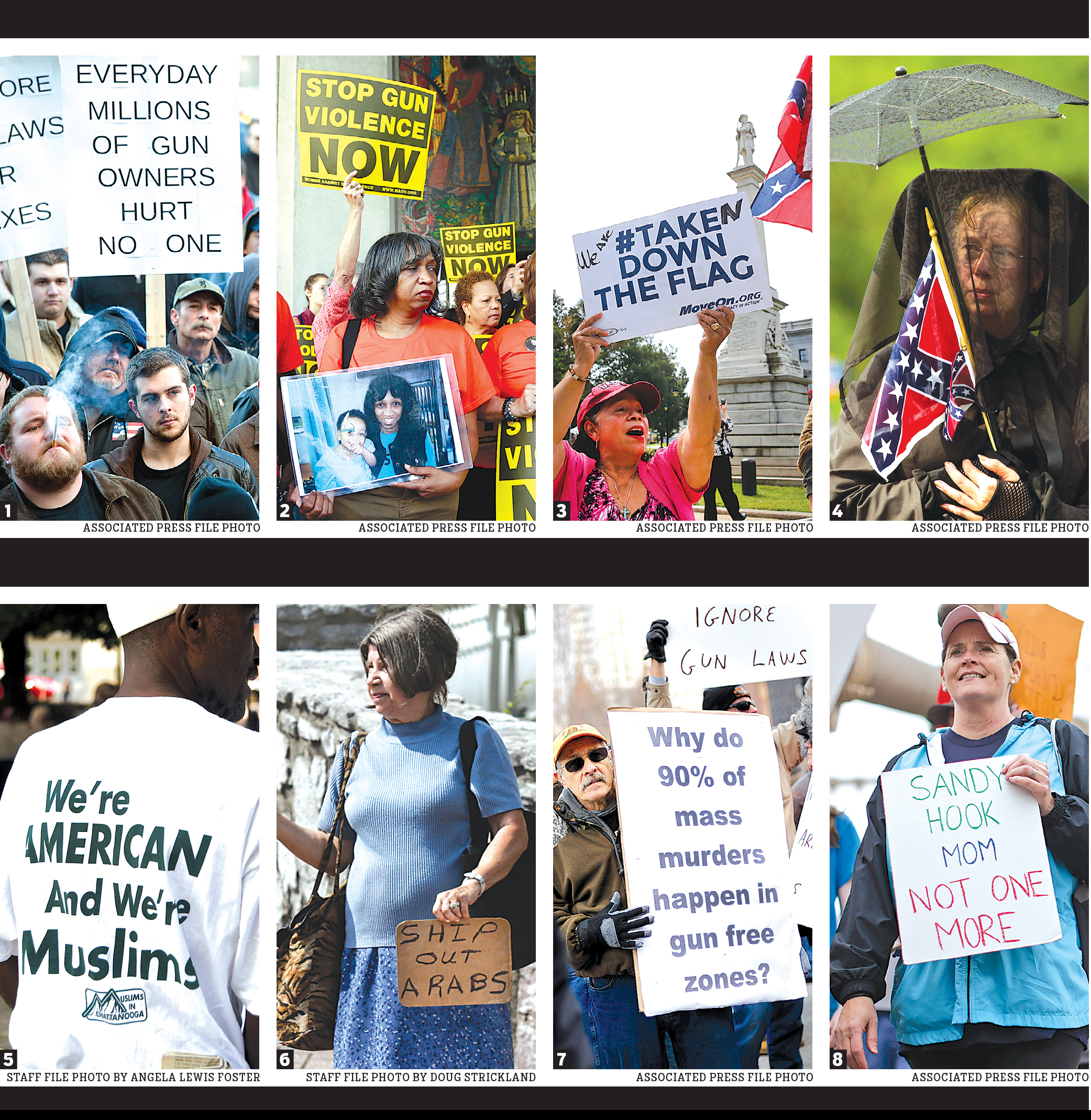
 People react to events in this combination picture.
Even before the dead servicemen were buried, there was a cognitive rush for reason.
The brains of the survivors and families and bystanders and public onlookers both in Chattanooga and abroad were filing the details and accounts of July 16, trying to make sense of the attack, condensing and folding information to complement personal bias, experts say.
The pioneering British psychologist Frederic Bartlett once called the phenomenon, which is so much more obvious in the era of social media, an “effort after meaning,” the unconscious work the mind does to fit recollections neatly into how an individual understands the world. And it explains, in part, why people can digest the same information, yet come away with completely different conclusions about what an event actually means.
People are “often unable to escape the pull of their prior attitudes and beliefs, which guide the processing of information in predictable and sometimes insidious ways,” wrote two researchers from the University of Kansas, who studied the public response on social media after three recent mass shootings in the United States.

In Chattanooga, there seemed to be the same script.