
WASHINGTON — The U.S. and its allies, after several years of missteps, finally seem to be framing a strategy for combating the Islamic State militarily in Syria, even as they continue to pursue a political settlement with Damascus.
The Syrian nightmare is far from over, and supporters of President Bashar al-Assad continue to insist that the regime will survive the turmoil. But U.S. policy now appears to be working in tandem with Russia, Saudi Arabia and Turkey, a rare alignment – although Iran remains a potential spoiler.
The biggest change is the U.S.-Turkish agreement on a plan for closing the Syrian border, with a safe zone tens of miles deep that will be secured mainly by Turkish troops. Officials believe this will cut off supplies for the Islamic State’s “capital” of Raqqa, while U.S. and Turkish warplanes pound the group’s fighters from air bases in Turkey.
 This image made from video broadcast on Press TV, Iran’s English language state-run channel shows Syrian President Bashar Assad delivering a speech in Damascus, Syria, Sunday, July 26, 2015. Assad says he supports any political dialogue to end his country’s civil war even if its effects are limited. But he says any initiative that is not based on fighting “terrorism” will be “hollow” and “meaningless.” (Press TV via AP video)
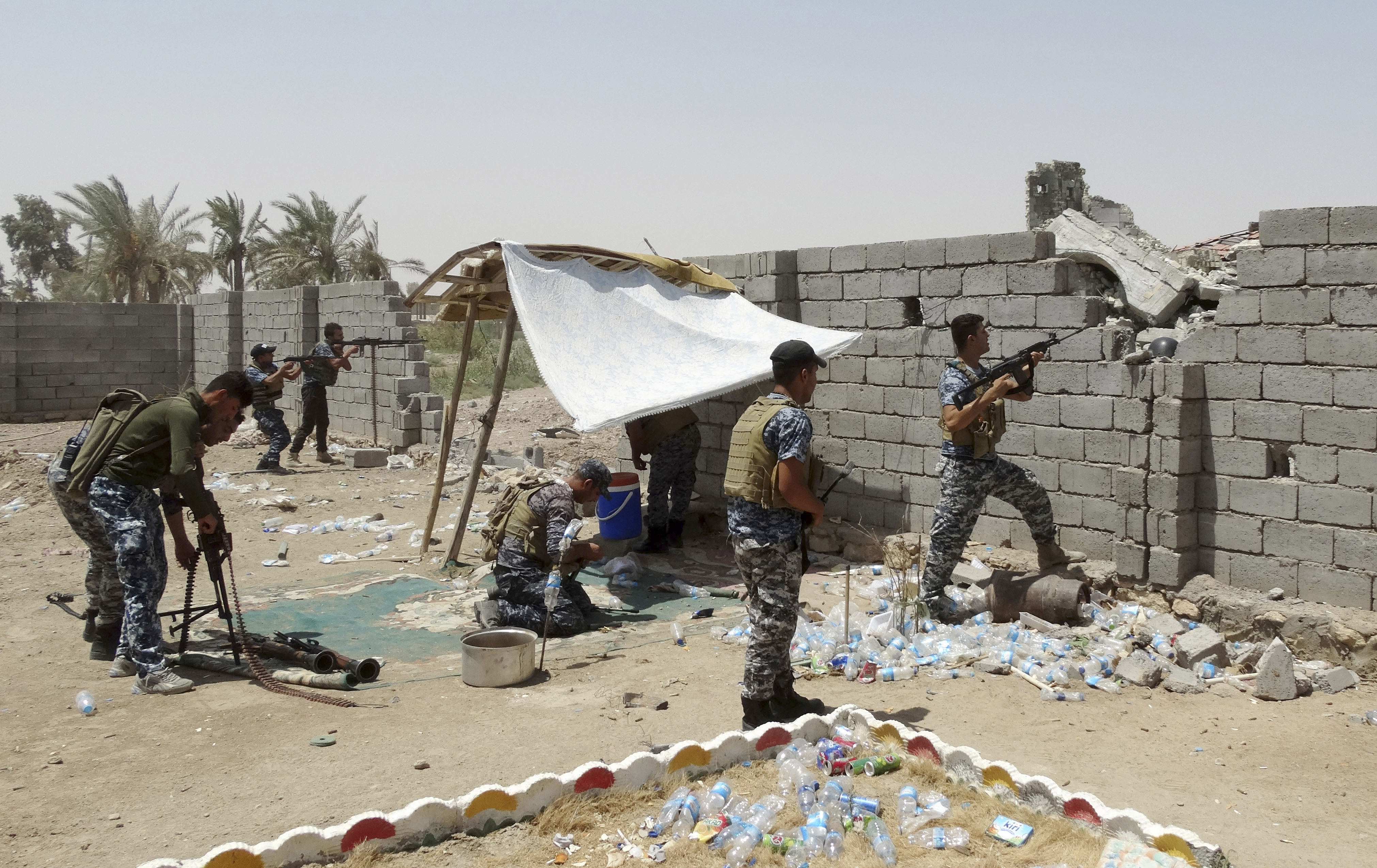 Iraqi security forces backed by Shiite and Sunni pro-government fighters clash with Islamic State group militants at the front line in the eastern suburbs of Ramadi, Anbar province, Iraq, Tuesday, Aug. 4, 2015. (AP Photo)
The border gap that must be closed is a roughly 60-mile stretch from the Euphrates River to Kilis, north of Aleppo.
The U.S. has quietly warned Syria that it will repel any attack on the forces gathering for the assault on the Islamic State. That’s not the same as a formal “no-fly zone,” but it could become one if Assad’s air force strikes.