
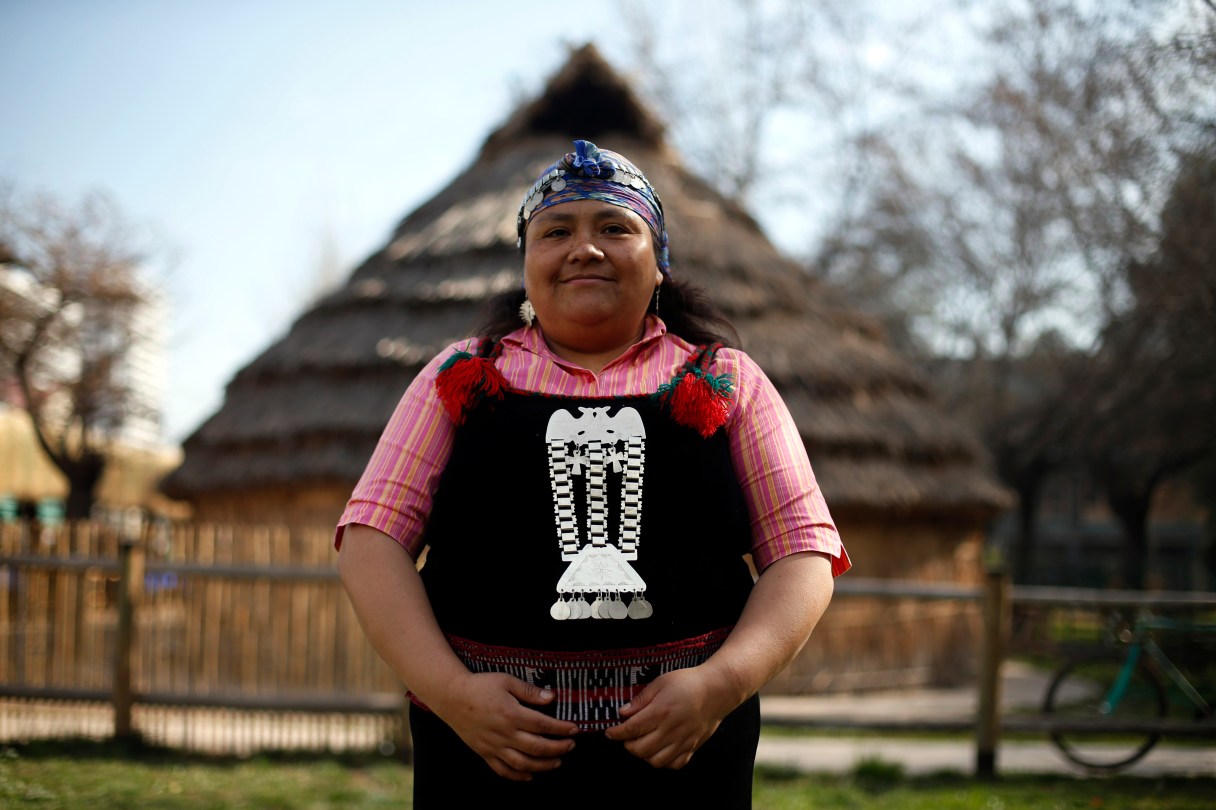
SANTIAGO, Chile (AP) – Nestled between high-rise buildings on a busy street in Chile’s modern capital is a straw hut that’s a sign of growing respect for the Andean country’s long-disdained indigenous past.
Ailing patients, many referred by a hospital across the street, line up to see the Mapuche herbalist inside as part of a government initiative to incorporate pre-Hispanic knowledge into Chile’s public health system.
Mapuche culture, long looked down upon in Chile, is slowly becoming chic.
“I’m not Mapuche but I believe in their culture,” said Elba Soto, 56, who often comes to the ruka – a traditional Mapuche thatched home – looking for herbs and ointments to ease the pain in her bones. “And I love all of it.”
The geometrical designs of the Mapuche have made their way into fashion shows from New York to Paris, their food is inspiring high-end cuisine and popular singer Ana Tijoux waves the multicolored Mapuche flag during her concerts and raps about their struggle in her Grammy-nominated albums. Television stations even compete for ratings with shows about the country’s largest indigenous group.