
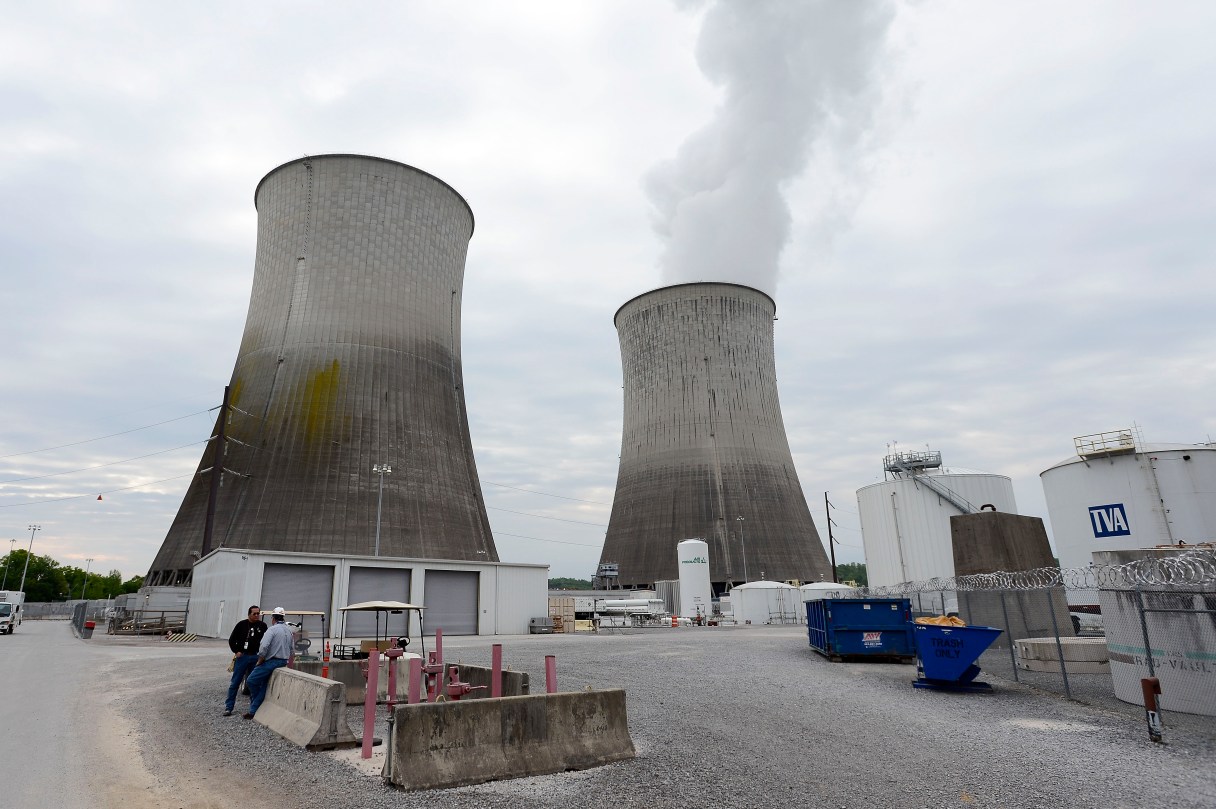
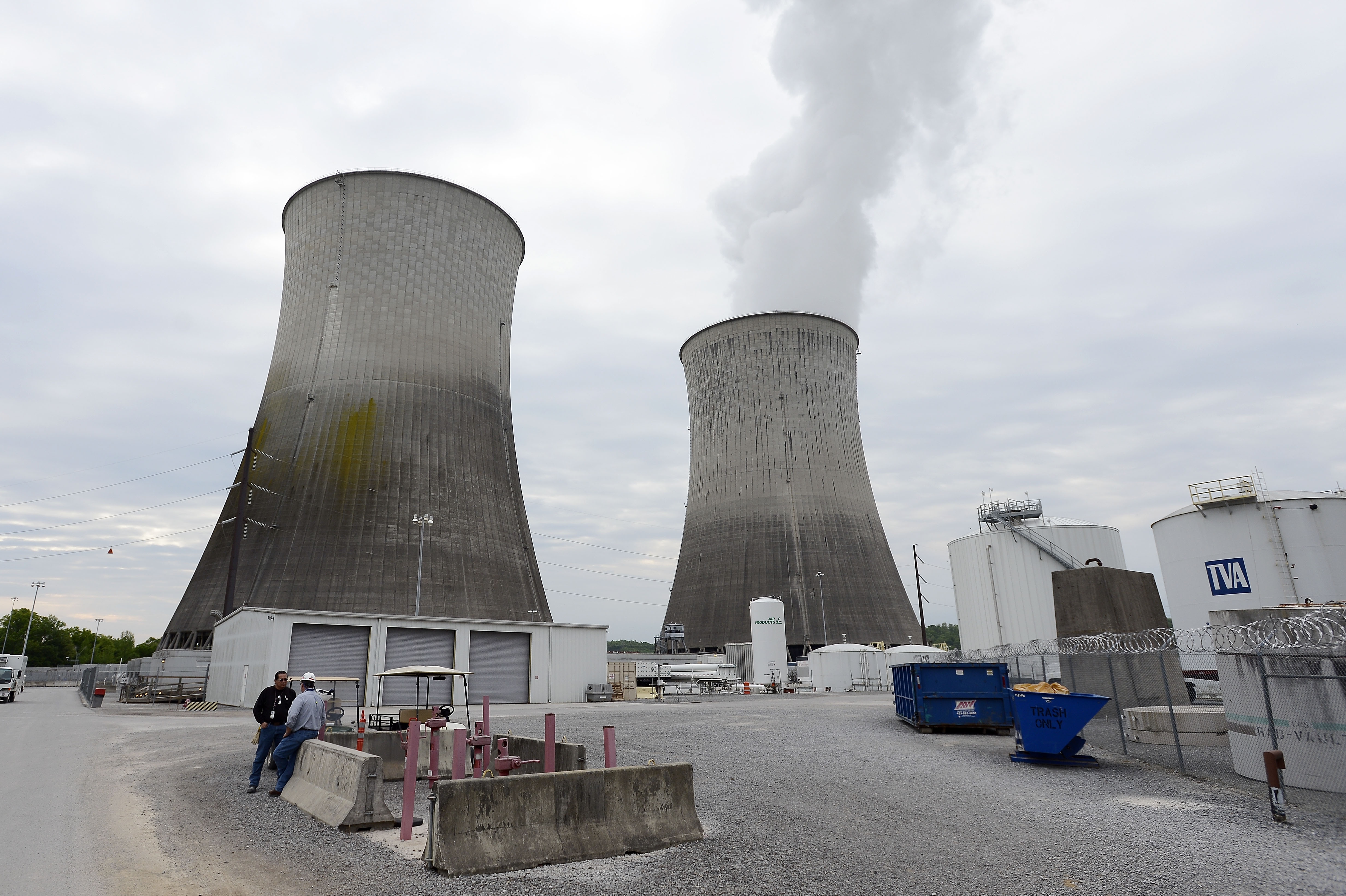
 Cooling towers for Unit 1, right, and Unit 2, left, are shown at the Watts Bar Nuclear Plant near Spring City, Tenn., in this April 29, 2015 photo.
By the numbers
* $10.7 billion – TVA budget for next year* 1.5 percent – Average base rate increase planned next year* 9.03 cents – Average retail price for kilowatthour of TVA-generated electricity, 7 percent less than U.S. median* 5.68 cents – Average industrial price for kilowathour of TVA-generated electricity, 18 percent less than U.S. medianSources: TVA, Electric Information Administration
KNOXVILLE – The average household in the Tennessee Valley will pay about $1.50 more a month for electricity next year as TVA shifts to more nuclear, natural gas and renewable power to replace aging coal plants it is shutting down.
TVA directors on Friday adopted a $10.7 billion spending plan for fiscal 2016 that will raise electricity rates by 1.5 percent. The rate hike, the same as in each of the past two years, will raise an extra $200 million from customers in TVA’s seven-state territory.
TVA President Bill Johnson said the rate increase is less than the average of most utilities but still will allow TVA to stick to its plan to reduce debt more than $6 billion over eight years and cut carbon emissions by 40 percent from 2005 levels by 2020 to comply with EPA’s new Clean Power Plan requirements.
But even with better profits this year and a projected 1 percent increase in power sales next year, Johnson said higher rates are needed in fiscal 2017 to absorb the expense of adding the first new nuclear reactor to America’s grid in the 21st century.