
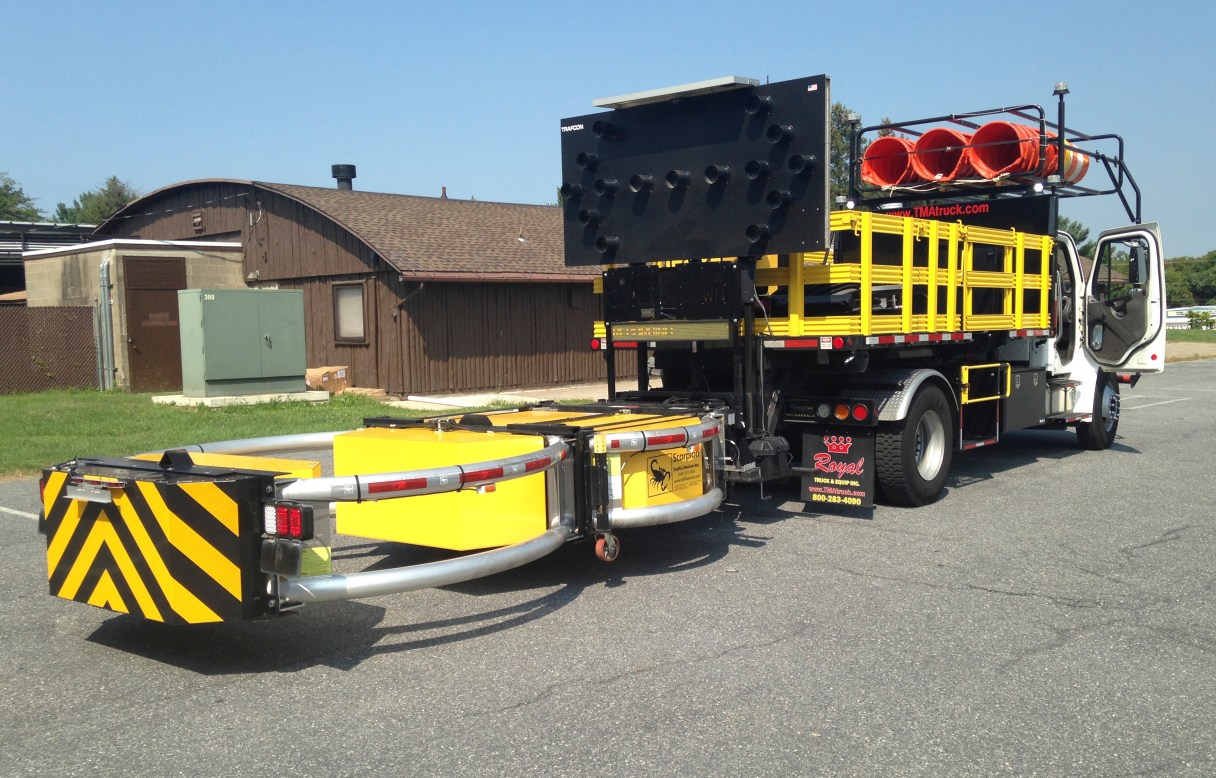
BETHLEHEM, Pa. (AP) – Roving construction crews – the kind you see blacktopping a road, painting lines, inspecting a bridge or installing a traffic signal – are often protected from oncoming traffic by a specialized truck outfitted with a crash barrier.
The crash trucks, fitted with a device called a truck-mounted attenuator, have been credited with saving lives. But the workers who drive them are inevitably placed in harm’s way, “literally waiting to be struck,” said Robert Roy, president of Royal Truck & Equipment Inc. in Coopersburg.
On Monday, Royal demonstrated its new driverless crash truck that it hopes will some day improve safety at work zones around the country. Two of the autonomous vehicles will make their debut at highway construction sites in Florida by the end of the year under a state Department of Transportation demonstration program.
“Any time a driver can be removed from these vehicles in a very dangerous situation, and if the vehicle’s struck, there’s nobody inside of it to receive the damage or the injuries, that’s measuring success,” Roy said.
Truck-mounted attenuators have been around for 30 years. One study, published this year in the Journal of the Transportation Research Board, found they cut work-zone injuries and fatalities from rear-end crashes nearly in half.