
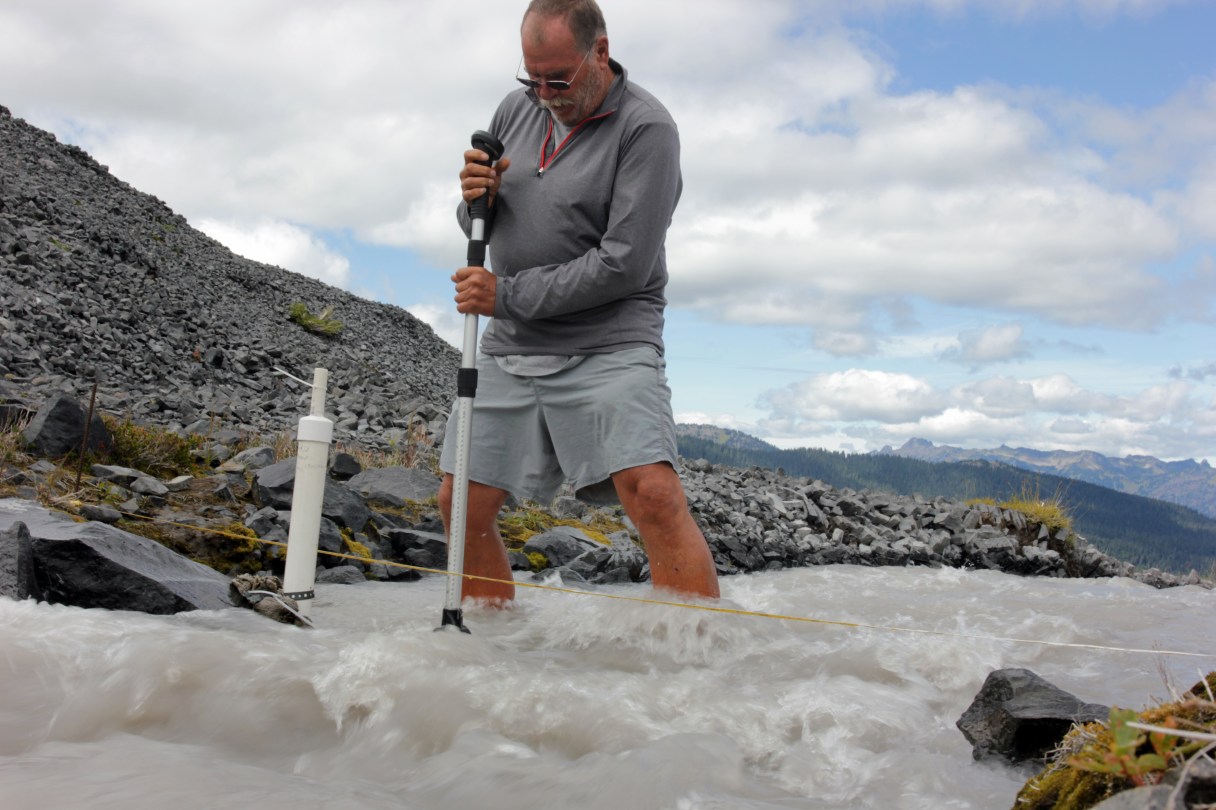
MOUNT BAKER, Wash. (AP) – Mauri Pelto digs his crampons into the steep icy slope on Mount Baker in Washington state and watches as streams of water cascades off the thick mass of bare, bluish ice. Every 20 yards, the water carves vertical channels in the face of the glacier as it rushes downstream.
What little snow from last winter is already gone, so ice is melting off the glacier at a rate of nearly three inches a day this summer, he said.
“At the rate it’s losing mass, it won’t make it 50 years,” said Pelto, a glaciologist who returned this month for the 32nd year to study glaciers in the North Cascades range. “This is a dying glacier,” he said.
Glaciers on Mount Baker and other mountains in the North Cascades are thinning and retreating. Seven have disappeared over the past three decades, and the overall volume of glaciers in the range have lost about one-fifth of their volume.
The shrinking glaciers here mirror what is happening around the U.S. and worldwide: As the planet warms, glaciers are losing volume, some faster than others.