
Read more
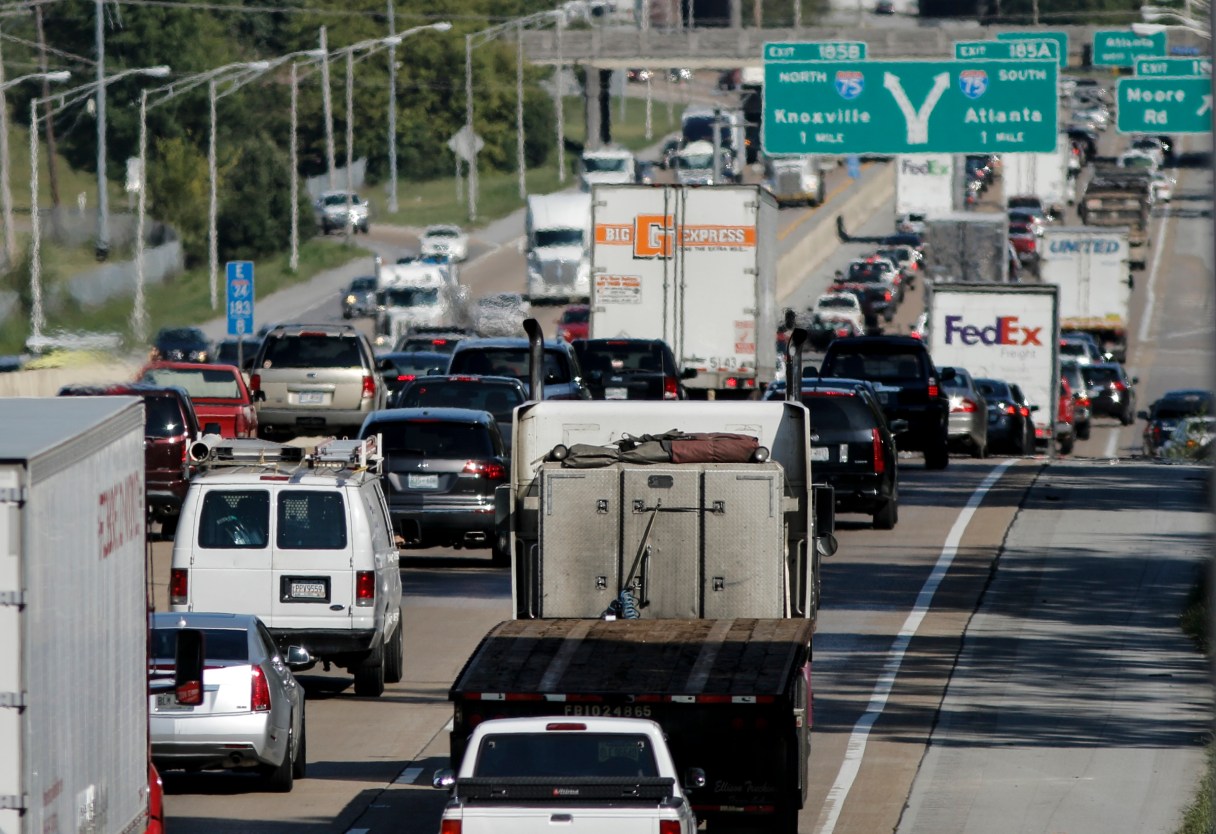
Chattanooga traffic gridlock sets new records
We knew traffic was bad and getting worse. We just didn’t know how bad until we read the news about a new nationwide traffic congestion study by the Texas A&M Transportation Institute.
The study shows traffic congestion across America is growing as the country regains nearly all of the 9 million jobs it lost in the recession.
Looking at it for its silver linings, we have bad news prompted by good news. But the fallout is travel delays that cause the nation’s drivers to waste more than 3 billion gallons of fuel and keep motorists in their cars for nearly 7 billion extra hours – 42 hours per rush-hour commuter, the study says.
Chattanooga still has it better than larger metros like Washington, D.C., Los Angeles, New York and Atlanta. But among mid-sized and small cities, we rank much worse than most.
In 2014, we idled away about 28 hours per commuter, according to the study. And that meant Chattanooga’s collective congestion cost was about $294 million – $730 per commuter.
And, yes. Trucks figure large locally, according to a Chattanooga area planning effort called Thrive 2055. Some 80 percent of freight traveling through Chattanooga is going somewhere else, a figure that tops any metro area nationwide. It’s little wonder given that we are both a crossroads of the Southeast and the home of at least two major trucking firms.
Already there is a plan to improve truck movement throughout the region with a rail port expected to open by 2018 for truck trailers in Murray County, Ga. That is expected to take 50,000 long-haul truck trips off of North Georgia highways. But where is similar rail relief to take trucks off of Interstate 75 North and Interstate 24 which runs east and west through our city?
Tim Lomex, a Texas A&M study co-author, said the nation’s growing traffic problem is too big for state and local agencies and planners to handle alone. He says business employers have to help by giving employees flexibility in where, when and how they work. He also suggests workers can adjust commuting patterns.
“This problem calls for a classic ‘all-hands-on-deck’ approach,” he said.
Maybe he should have said “pedal to the metal.”