
Thursday, November 12, 2026Nov 12

Slow-moving school finance case heads to Texas Supreme Court

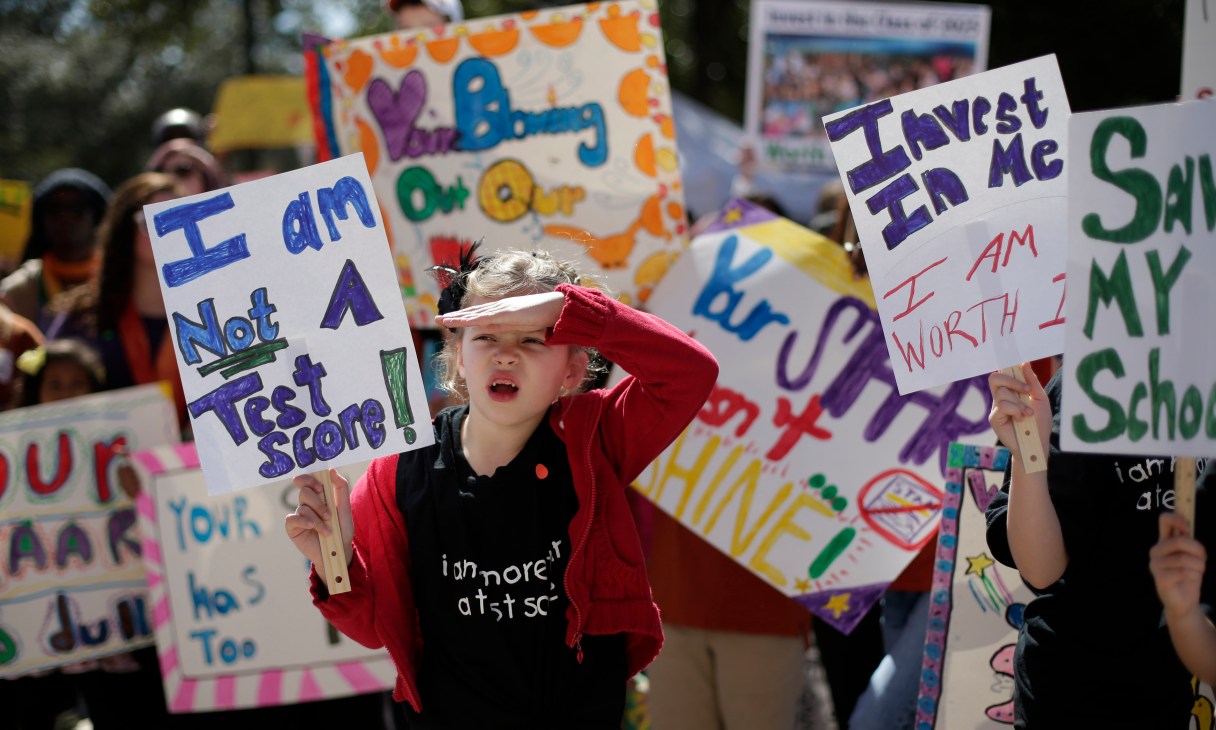
FILE - In this Feb. 23, 2013 file photo, Cate Foughty, 6, of Frisco, Texas, takes part in a rally for Texas public schools at the state Capitol, in Austin, Texas. Ninth-graders who were barely a month into high school when Texas’ latest school finance trial began in 2012 are now entering their senior year. There’s no end in sight for the case, in which oral arguments begin Tuesday in front of the state Supreme Court. (AP Photo/Eric Gay, File)
FILE - In this Feb. 23, 2013 file photo, Cate Foughty, 6, of Frisco, Texas, takes part in a rally for Texas public schools at the state Capitol, in Austin, Texas. Ninth-graders who were barely a month into high school when Texas’ latest school finance trial began in 2012 are now entering their senior year. There’s no end in sight for the case, in which oral arguments begin Tuesday in front of the state Supreme Court. (AP Photo/Eric Gay, File) FILE - In this Feb. 23, 2013 file photo, Cate Foughty, 6, of Frisco, Texas, takes part in a rally for Texas public schools at the state Capitol, in Austin, Texas. Ninth-graders who were barely a month into high school when Texas’ latest school finance trial began in 2012 are now entering their senior year. There’s no end in sight for the case, in which oral arguments begin Tuesday in front of the state Supreme Court. (AP Photo/Eric Gay, File)

AUSTIN, Texas (AP) – Kids who were barely a month into their first year of high school when Texas’ latest school finance trial began are now seniors – and there’s still no end in sight.

The next stop is the state Supreme Court, which hears oral arguments Tuesday.

Attorneys for more than 600 school districts suing Texas argue that the funding is inadequate and unfairly distributed, making it hard for students and schools to meet stringent academic standards. Attorney General Ken Paxton’s office counters that, while not perfect, public education money meets state constitutional requirements for an efficient system providing a “general diffusion of knowledge.”

Both sides agree that nothing about the case is simple. With no state income tax, school districts rely heavily on property taxes and a “Robin Hood” system mandating that those in wealthy areas share levies with poorer counterparts. In a public school system whose size is second only to California’s, more than 60 percent of the 5.2-plus million children now come from economically disadvantaged homes and the number continues to rise.

The all-Republican high court will decide whether to uphold Democratic District Judge John Dietz’s rulings that have declared the school finance system unconstitutional. There’s no timetable for the court’s decision in the state’s sixth school finance case since 1984.