
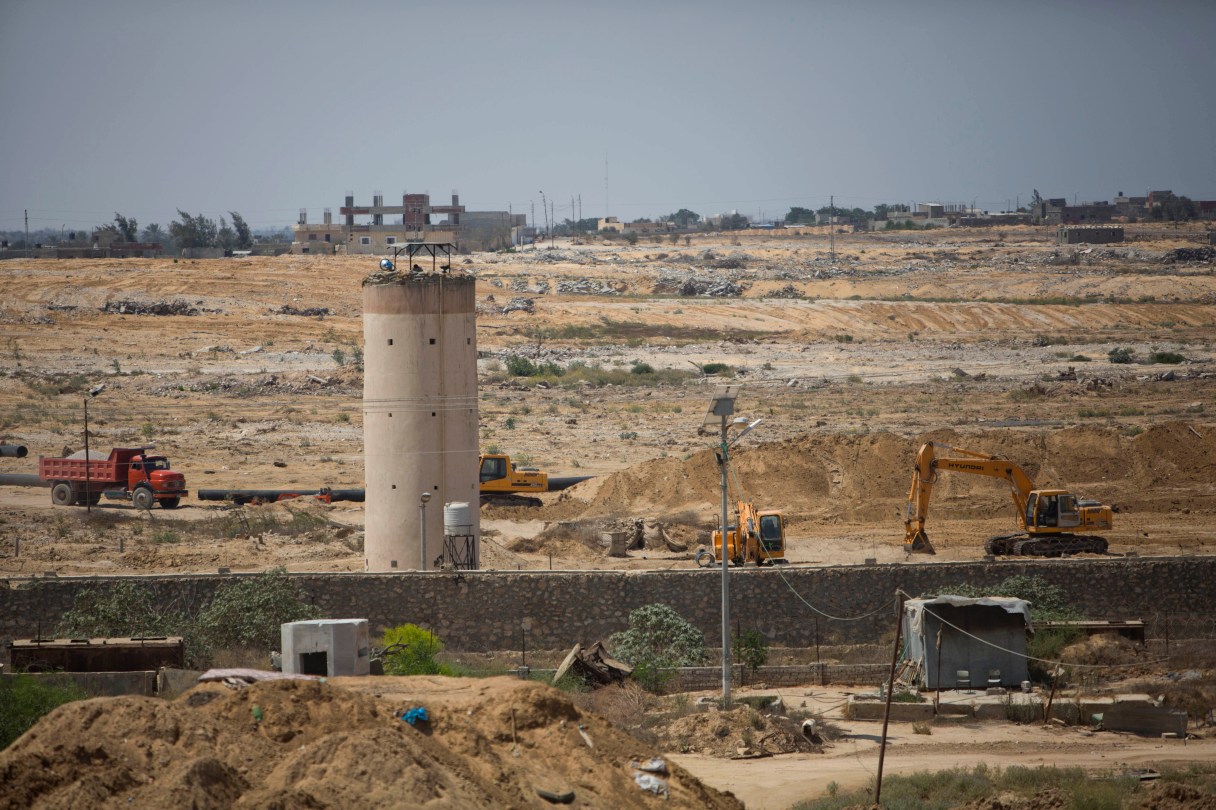
RAFAH, Gaza Strip (AP) – Egyptian military bulldozers are digging through the sand along Egypt’s border with the Gaza Strip in recent days, pressing ahead with what appears to be a renewed campaign to pressure Gaza’s Hamas rulers and stamp out militant activity along the border.
The project, billed as an Egyptian military-operated fish farm, effectively would fill the border area with water and is designed to put an end to the last remaining cross-border underground smuggling tunnels, Egyptian military officials said. Hamas accuses Egypt of further isolating the beleaguered Palestinian territory.
The new excavations seem to be “a tightening of the grip of siege on Gaza,” Hamas official Mushir al-Masri said. Egypt “should not slide into this cliff that agrees with the Israeli policies of siege.”
Israel and Egypt have maintained a blockade of the territory since the Islamic militant group Hamas seized control of Gaza in 2007. For several years, Egypt tolerated a smuggling industry, allowing hundreds of tunnels to bring in goods like cigarettes and spare motorbike parts, as well as weapons. These tunnels were a lifeline for Hamas, which collected millions of dollars in taxes and revenues from the smuggled goods. They continued to thrive after longtime autocrat Hosni Mubarak was ousted in 2011 and the Islamist Mohammed Morsi won the country’s first free presidential election.
But things changed after the Egyptian army ousted Morsi, a key ally of Hamas, in 2013. The military-backed government accused Islamic militants of using smuggling tunnels to move between Gaza and Egypt’s Sinai Peninsula. Hamas denies militants move in and out of its territory.