
Thursday, November 12, 2026Nov 12

AP PHOTOS: Editor selections from Latin America for 2015

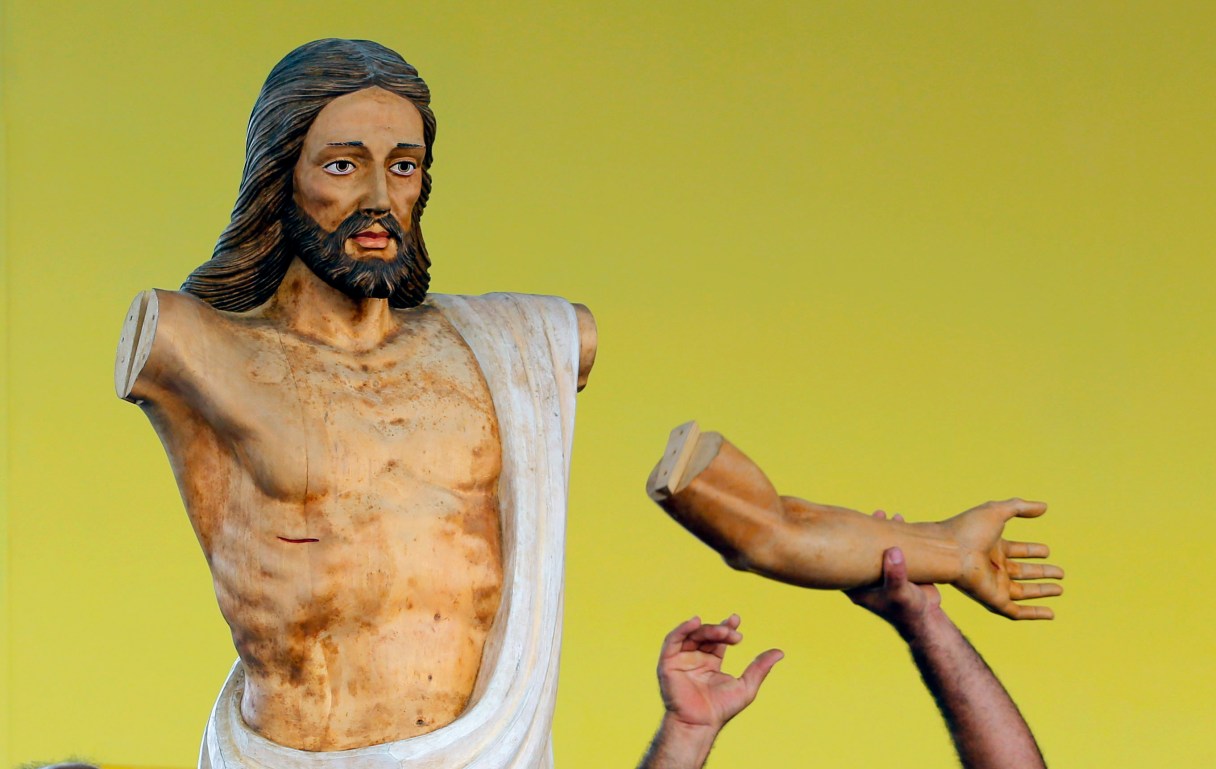
FILE - In this Sept. 17, 2015, file photo, a worker prepares to fit a wooden arm onto a Christ statue during preparations of the altar where Pope Francis will celebrate Mass in the Plaza of the Revolution, in Havana, Cuba. When Francis arrives in Havana on Sept. 19, he'll find his church ministering to more Cubans than at any time since the 1959 revolution that brought Fidel Castro to power. (AP Photo/Desmond Boylan, File)
FILE - In this Sept. 17, 2015, file photo, a worker prepares to fit a wooden arm onto a Christ statue during preparations of the altar where Pope Francis will celebrate Mass in the Plaza of the Revolution, in Havana, Cuba. When Francis arrives in Havana on Sept. 19, he'll find his church ministering to more Cubans than at any time since the 1959 revolution that brought Fidel Castro to power. (AP Photo/Desmond Boylan, File) FILE - In this Sept. 17, 2015, file photo, a worker prepares to fit a wooden arm onto a Christ statue during preparations of the altar where Pope Francis will celebrate Mass in the Plaza of the Revolution, in Havana, Cuba. When Francis arrives in Havana on Sept. 19, he'll find his church ministering to more Cubans than at any time since the 1959 revolution that brought Fidel Castro to power. (AP Photo/Desmond Boylan, File)

As Latin America and the Caribbean say goodbye to another year, The Associated Press offers a look back at some of the most interesting happenings of 2015 through the eyes of the region’s photojournalists.

One of the most important developments throughout the year was the thaw of relations between Cuba and the United States, with a visit to the island by Pope Francis sandwiched in.

The Argentine-born Francis, who is the first Roman Catholic pontiff from the Western Hemisphere, also toured several South American countries.

Latin America’s political spectrum nudged to the right with big election losses by left-of-center governments in Argentina and Venezuela. First, market-friendly candidate Mauricio Macri was elected president in Argentina, where government intervention and regulation have been the norm more than a decade, then the Venezuelan opposition scored its first major election victory in 17 years of socialist rule by winning control of congress.

In Mexico, a national uproar over 43 college students who went missing after being detained by police in the city of Iguala put a spotlight on the country’s problem of disappeared people, emboldening other families in the same area to come forward to tell the stories of their missing relatives.