
Tuesday, November 10, 2026Nov 10

New laws to ease doctor shortage see long delays, criticism

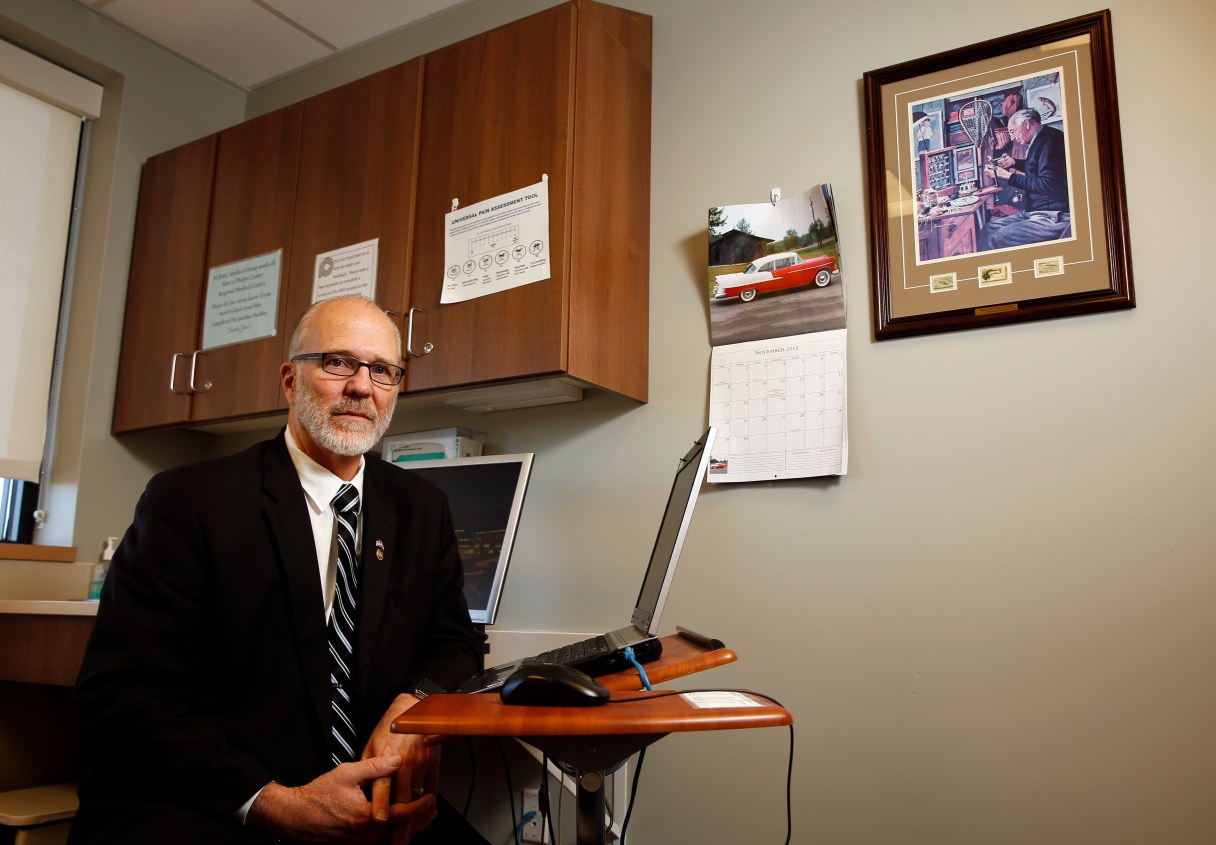
In this photo made Thursday, Nov. 19, 2015, Dr. Keith Frederick poses for a photo in his medical office in Rolla, Mo. Frederick is a Missouri House member who sponsored a law allowing medical school graduates to start treating patients immediately, without wading through years of traditional residency in an effort to fill the gaps where there aren’t enough doctors to meet health care needs. (AP Photo/Jeff Roberson)
In this photo made Thursday, Nov. 19, 2015, Dr. Keith Frederick poses for a photo in his medical office in Rolla, Mo. Frederick is a Missouri House member who sponsored a law allowing medical school graduates to start treating patients immediately, without wading through years of traditional residency in an effort to fill the gaps where there aren’t enough doctors to meet health care needs. (AP Photo/Jeff Roberson) In this photo made Thursday, Nov. 19, 2015, Dr. Keith Frederick poses for a photo in his medical office in Rolla, Mo. Frederick is a Missouri House member who sponsored a law allowing medical school graduates to start treating patients immediately, without wading through years of traditional residency in an effort to fill the gaps where there aren’t enough doctors to meet health care needs. (AP Photo/Jeff Roberson)

JEFFERSON CITY, Mo. (AP) – A new Missouri law offered a first-of-its-kind solution to the physician shortage plaguing thousands of U.S. communities: Medical school graduates could start treating patients immediately, without wading through years of traditional residency programs.

Following Missouri’s lead, similar measures were enacted in Arkansas and Kansas and considered in Oklahoma. The idea appeared to be a new model for delivering medical care in regions with too few physicians to meet needs.

Yet more than 18 months after that first law passed, Missouri regulators are still trying to make it work. And not a single new doctor has gone into practice in any of the three states as a result of the new laws.

“You’ve got the need for services on one hand, and you’ve got a group of people that are capable of providing those services. But we’re not making it happen,” said Dr. Keith Frederick, an orthopedic surgeon and Missouri House member who is frustrated by the delays in implementing the legislation he sponsored.

There are more than 6,200 places nationwide with a shortage of primary care physicians, ranging from urban neighborhoods to entire rural counties, according to statistics from the U.S. Department of Health and Human Services.