

It must be amusing to people of faith to read how “the church” is losing its influence – until it is needed by those who previously delighted in any perceived lessening of its inspiration.
The most recent example is the Paris climate talks, where officials would love to conflate the politics of climate change with the biblical mandate to care for the Earth.
“The environment movement, which has primarily been a secular one, has realized that over the last 30 years or so it’s not been that successful in achieving its goals,” Joe Ware of Christian Aid wrote in an email from the Paris talks, according to the Associated Press. “Increasingly it has looked to faith groups for help in mobilizing a broader movement of people calling for action on climate change.”
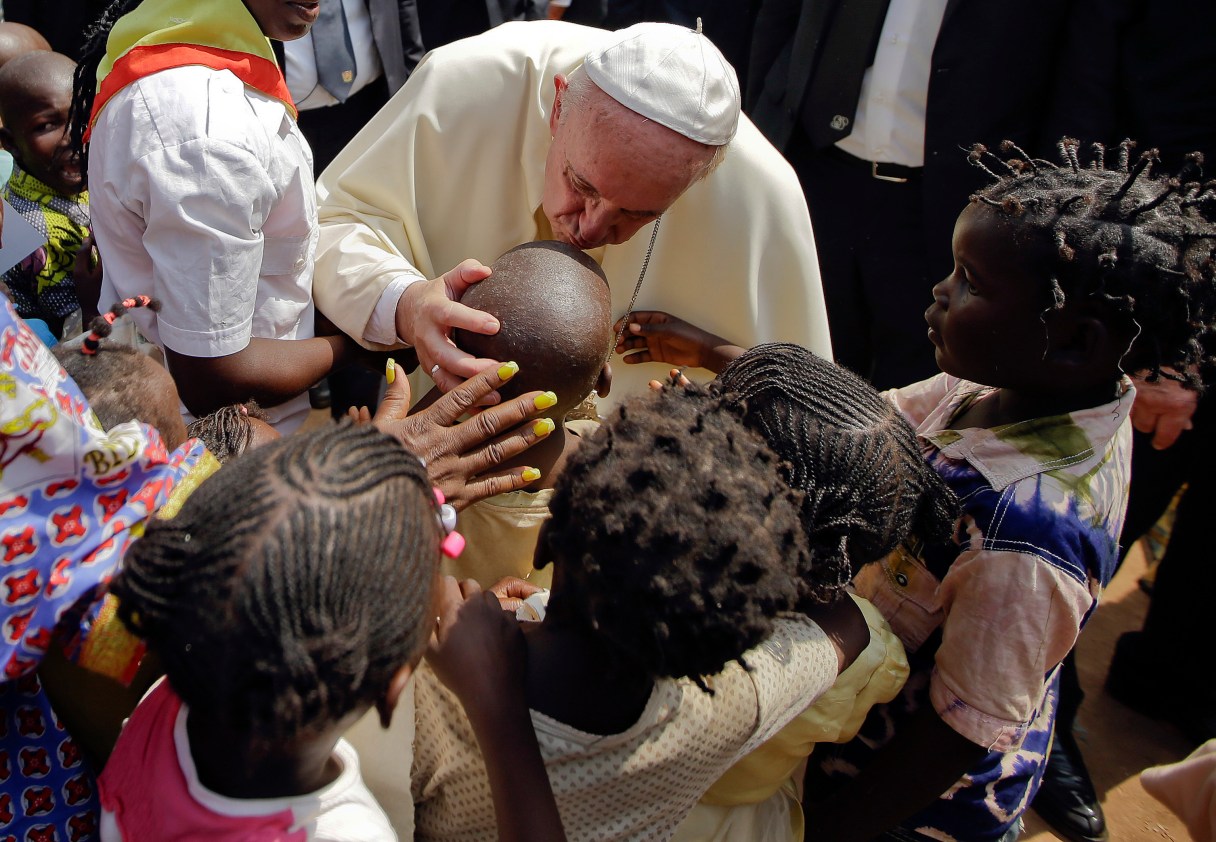
Indeed, late last week, talk centered on whether climate change extremists would need to bring in their big gun – Pope Francis. If talks stalled, the argument went, a message from the man even many with no religious faith have treated like a rock star would tip the direction of negotiations and “show the gravity of the situation and highlight what’s at stake,” the director of a climate-related institute said.
Similarly, an analysis by the Associated Press-NORC Center for Public Affairs Research and Yale University, coincidentally released during the climate talks, revealed that nine out of 10 distinct segments of the United States population believe global warming is happening and seven of 10 believe the environmental crisis is more serious than people think.
But the significant group the climate extremists must reach is the segment called “Religious Greens,” those who are likely to attend church at least once a week but who trust their religious beliefs over scientific explanations when the two conflict.
The non-Catholic scientist who advised Pope Francis on climate, Veerabhadran Ramanathan of Scripps Institution of Oceanography, admitted that enlisting the faith movement is a sign of scientists’ desperation but said the climate change argument must be taught “in every church, every mosque, every synagogue, every temple.”
The charitable community, likewise, hopes “the church” is not losing its influence. Indeed, according to a 2013 study by Jumpstart, a nonprofit research group, and researchers at the Indiana University Lilly Family School of Philanthropy, the more important religion is to a person, the more likely that person is to give to a charity of any kind.
About 75 percent of people who frequently attend religious services, the study said, gave to congregations, and 60 percent gave to religious charities or nonreligious ones. However, fewer than half of people who said they didn’t attend faith services regularly supported any charity, even a even secular one.
“If your goal is to connect with donors,” said Shawn Landres, Jumpstart’s chief executive and a co-author of the report, “it’s clear that one of the things that matters to them is their religious orientation.”
If, in fact, religion is losing its influence – and 72 percent of respondents to a 2014 Pew Research Center study say it is – most people say that’s not good.
Indeed, 56 percent of people in the study say it’s a negative development.
But Rodney Stark, who holds the title of distinguished professor of social science at Baylor University, says in the new book “The Triumph of Faith” and in an Intercollegiate Review article published last week that “The End of Christian America” – so proclaimed by a 2009 Newsweek cover – and religion’s falling influence in the world aren’t necessarily so.
Across the globe, he said, four of every five people say they belong to an organized faith, and many of the rest claim they attend religious services. Latin America, for instance, is seeing unprecedented numbers attending Mass and tens of millions of others converted by Pentecostal Protestant churches. Sub-Sahara Africa has more churchgoing Christians than anywhere in the world, he said, and Islam and Hinduism are seeing higher levels of commitment than they have for years.
In America, Stark said, nearly everyone believes in God, 80 percent say there’s a heaven and half pray daily. Further, he said, church attendance has held steady for 40 years, the rise in “Nones” in religious identification is attributable to “no actual membership” and not to a rise in irreligion, and any reporting of a lack of attendance by young people leaves out the fact “younger people, especially those under 30, have always been, and probably will continue to be, less likely than older Americans to attend church regularly.”
Ed Stetzer in Christianity Today puts it another way. He believes what looks like a decline in the church is more a defining of what the church and its people have been and are.
Instead, he argued, fewer people who once defined themselves culturally and congregationally as Christians are no longer doing so. But the number of convictional Christians in the last 40 years, as Stark mentioned, has remained “generally stable.”
Today, while some measure the decline in “the church” by the number of youth league soccer games on Sunday mornings and the increase in communities which vote to allow liquor by the drink, others see a wider mission field, a world that can’t do without the influence of faith, and the pervasive deep need for a personal foundation.