


The New Year holiday is a time for thinking about the future in most households, but for the Crawford family in Ringgold, Ga., it will have special meaning this year.
While many people may be making resolutions to change the way they live their lives, Mackenzie Crawford is hoping to hear he will get access to a medical treatment that could save his.
Crawford, who is 15 and a student at Chattanooga Christian School, has Duchenne (pronounced doo-SHIN) muscular dystrophy, a disease that causes muscles to deteriorate over time.
It is always fatal, generally by the time those who have it reach their mid-20s.
But for the past year, Crawford and several hundred other boys with Duchenne have been part of an investigatory treatment trying out a new drug, drisapersen, that some doctors believe may slow the progress of the disease. It has given Crawford and his parents hope he will live long enough for a cure to be found.
His father, Todd, testified before a panel of the U.S. Food and Drug Administration last month, arguing that the drug is his family’s only hope. Without it, “Eventually he will lose the ability to raise his arms to hug us goodnight,” the parent told FDA doctors.
“We’re very anxious,” Todd Crawford said shortly after testifying. “We have some hope it will be approved, but we’re very concerned at the same time. I think it is a 50-50 shot, whether it is approved and he can continue on treatments.”
The FDA said it would issue its decision in January.
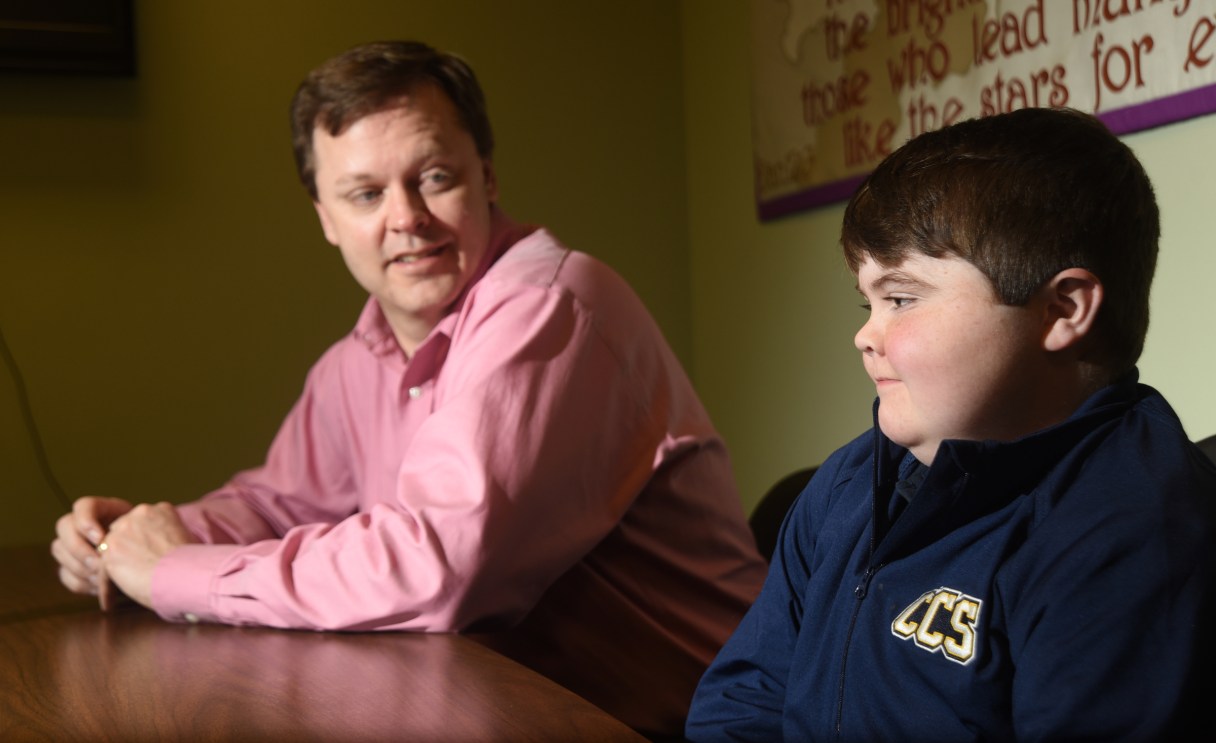
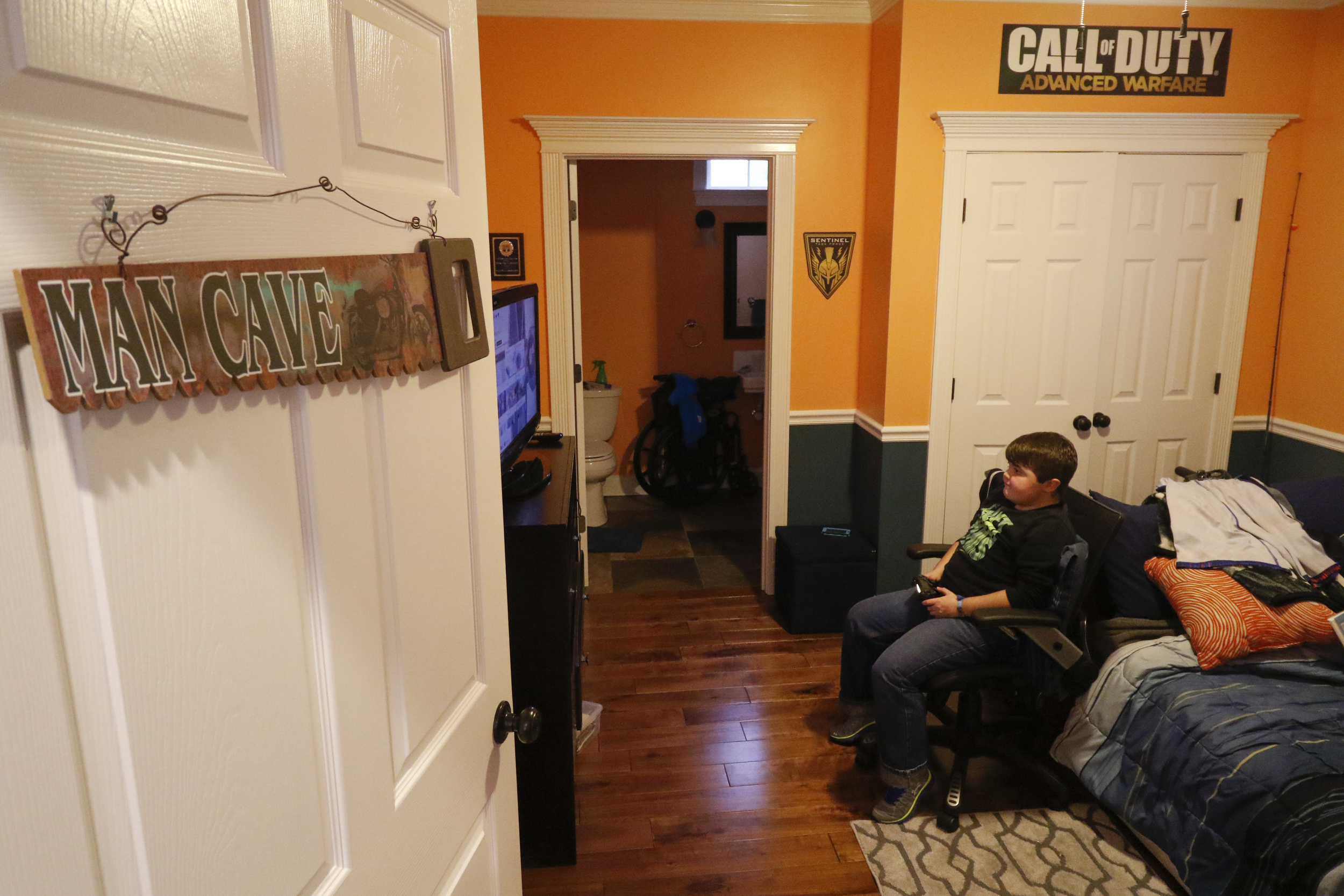
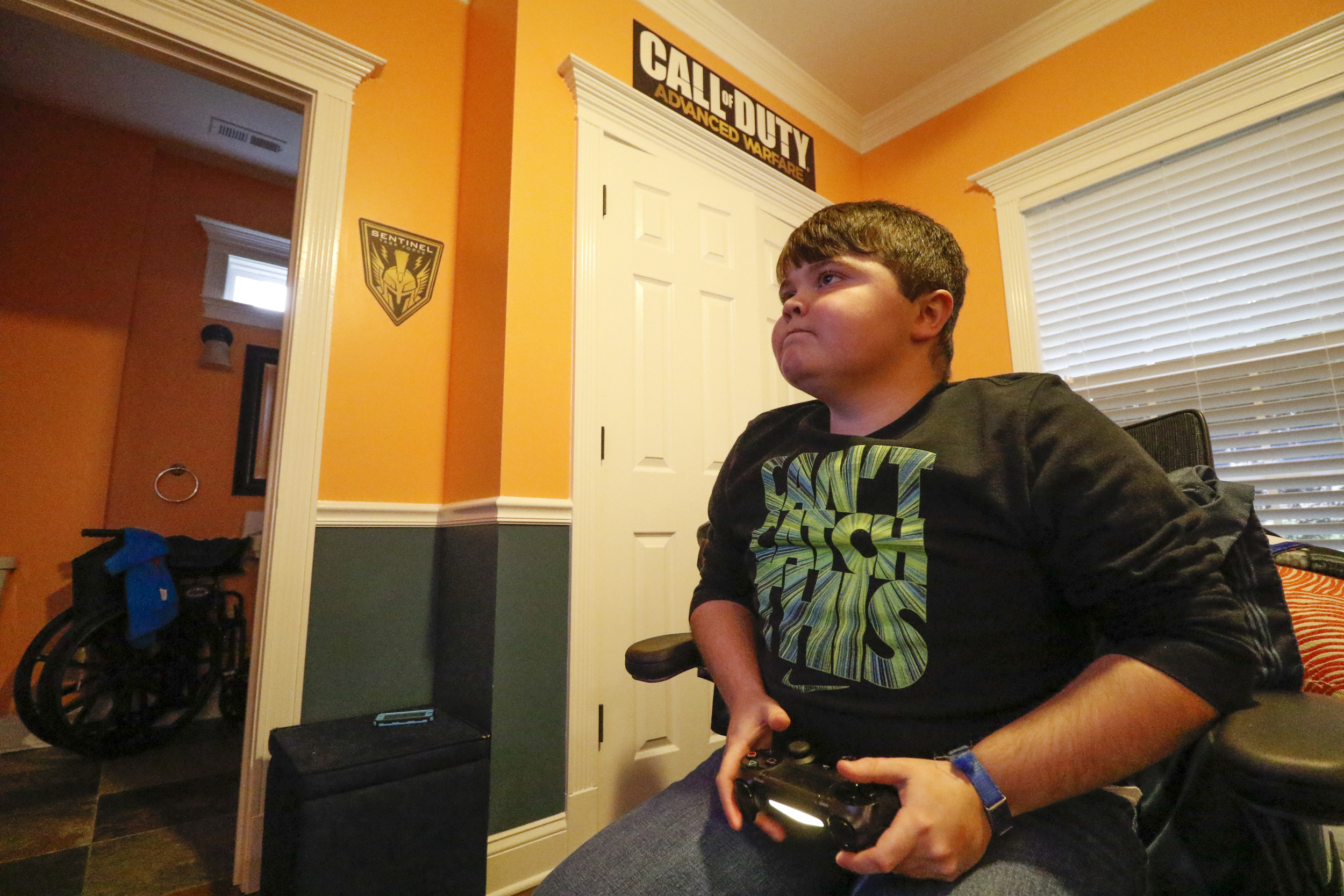
The younger Crawford is small for his age. He doesn’t appear to have difficulty walking, although he relies on a motorized scooter at school. As he comes into a conference room to talk with a reporter, he moves easily from the scooter into a chair. He’s shy, though, reluctant to answer questions. He enjoys playing video games and making things, he said, with a little prodding from his dad. The drug treatments “make me feel good.”
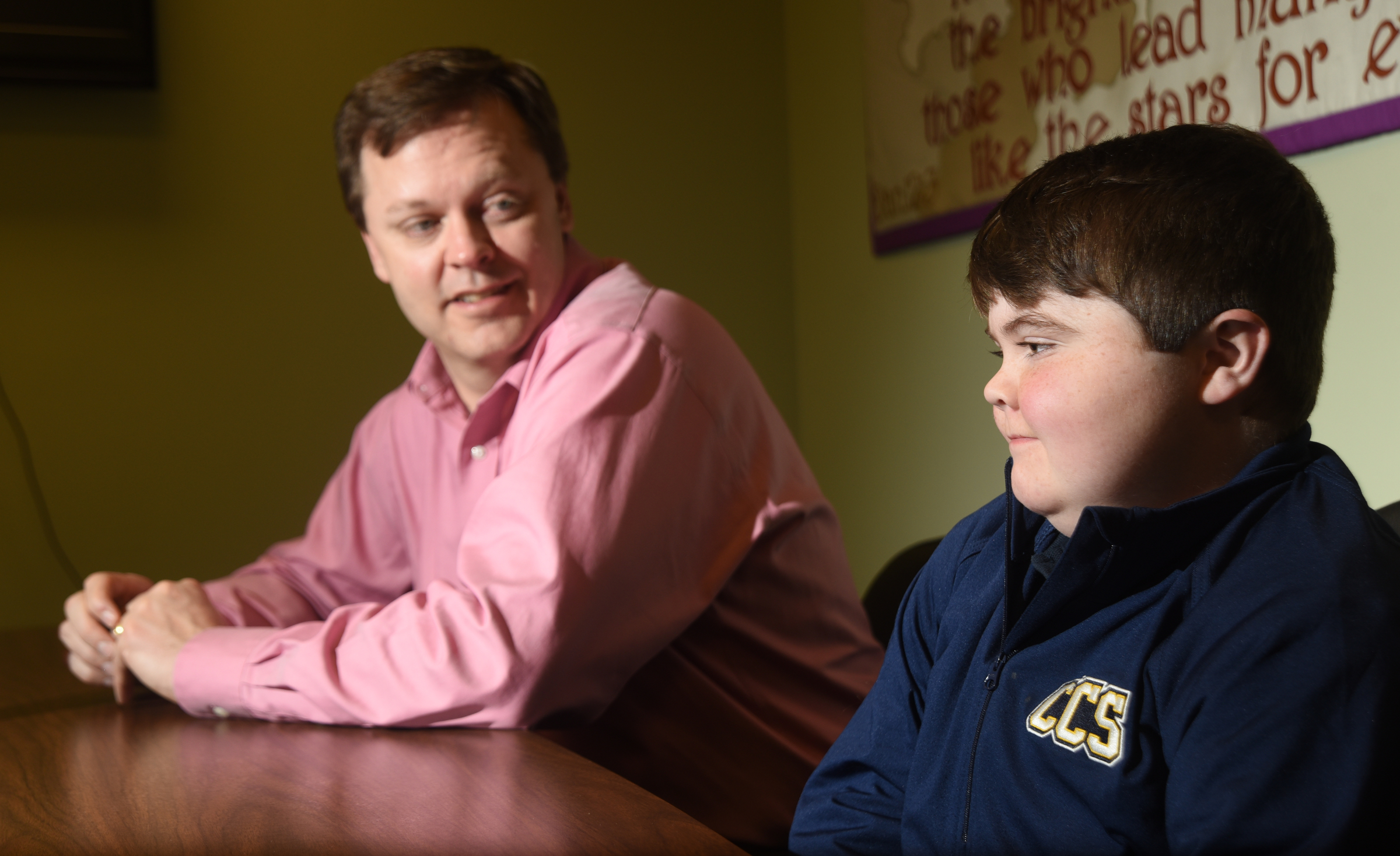
“This basically slows down the progression until we can get to a cure,” said Todd Crawford, who works as a service manager in the information technology department at Unum. But some of the boys in the test actually seemed to get better, Crawford said.
“When you look at what some of the younger boys were doing, they were running and swimming,” he said. “One boy came over from Belgium, and he was fully independent.”
Ultimately, a combination of several different drugs may be required to halt the progress of the disease or even reverse its course, Todd Crawford believes.
Duchenne is the most common form of muscular dystrophy. The disorder is caused by a mutation in the X chromosome in a gene that guides production of a protein that helps with muscle growth.
In some boys, such as Mackenzie, one segment of the gene, called an exon, is missing. In others a portion is duplicated and in still others the gene just stops halfway. If an exon is missing or out of order, the protein is not produced, and the muscles start deteriorating, said Debra Miller, president of CureDuchenne, whose only son suffers from Duchenne.
Although females carry the mutation, Duchenne almost always affects boys, about one in 3,500. The first signs are difficulty in walking or getting up from a prone position. Over time, the boys’ muscles weaken until they are forced to use a wheelchair. Eventually the muscles in the lungs and heart are too weak to continue working.
In the drug test, Mackenzie Crawford and a group of 326 other boys with Duchenne from around the world were injected with drisapersen, which is manufactured by BioMarin Pharmaceutical. Drisapersen is an “exon-skipping” compound – it allows the body to ignore the damaged portions of the gene and produce enough dystrophin to keep the muscles healthy.
That’s what the company argued to the FDA. While the drug does not cure the disease, it at least slows its progress, researchers from BioMarin testified, with little evidence of side effects. Some boys, including Mackenzie, reported pain and a rash around the spot where they were injected, but nothing life-threatening.
The FDA scientists took a less optimistic view, however, Todd Crawford said.
“BioMarin, the drug company, made their presentation and showed results they said were very positive, encouraging – they were in awe of how great it was,” he said. “But then the FDA presents their data and it is all doom and gloom, a complete opposite interpretation.”
The FDA researchers conceded some of the results were positive, but pointed out that the drug did not seem to produce results in all of the boys.
When the families of the boys got a chance to make their pitch, they urged the FDA to err on the side of their children.
Todd Crawford told the panel he believed he saw the benefits of drisapersen firsthand. In September, his son fell and broke his leg. Todd was out of town when his wife told him the news.
“I sat in my room and cried,” he said.
Broken bones don’t heal for boys with Duchenne, and boys who are forced to use a wheelchair often gain weight rapidly and die, he said.
But Mackenzie’s leg healed.
“Mackenzie was standing three weeks after his fall,” Crawford told the FDA panel, “and in week seven, he walked 500 feet.”
“The drug let him maintain his muscle stability long enough to recover,” Crawford testified.
Other parents made their most important argument – there is no other treatment for the disease, and even if the drug does not work for everyone, the alternative is no treatment at all, and certain death.
And if the FDA says no?
“That would be devastating to a big group of people,” said CureDuchenne’s Miller.
“The side effects are not bad, the benefit is definite, and if it is not used, there is a definite consequence,” she said. “These kids die.”
Crawford knows FDA approval may be too late for his teenage son. The benefits of drisapersen appear to be greater the longer it is administered, he said, so it may be most effective when treatment starts at an early age.
“Mack may never get help from it,” he said. “But we owe it to the next group of boys coming through to participate in the trial.”
Contact reporter Steve Johnson at sjohnson@timesfreepress.com, 423-757-6673, on Twitter @stevejohnsonTFP, or on Facebook at facebook.com/noogahealth.