
Wednesday, November 11, 2026Nov 11

Some Japanese see slain hostages, Abe as troublemakers

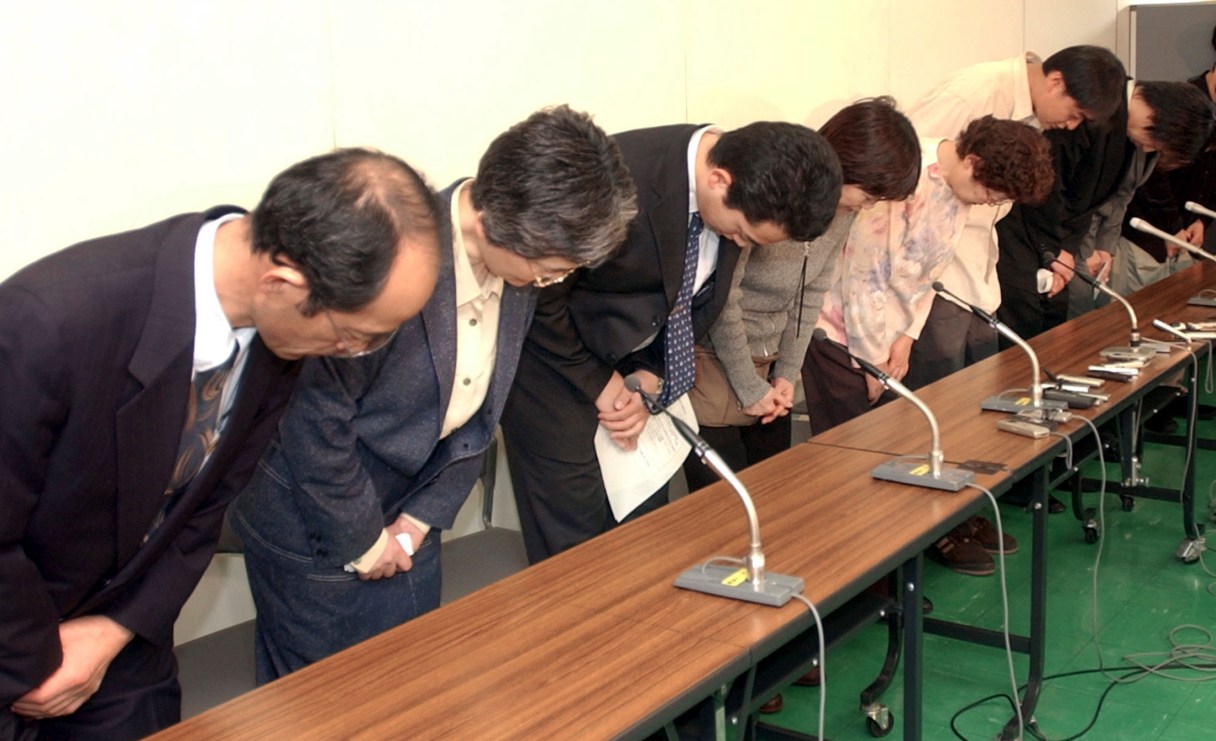
FILE - In this April 12, 2004 file photo, relatives of the three Japanese hostages being held in Iraq bow before reporters in Tokyo. When the young Japanese anti-war activists were taken hostage in Iraq and later freed in 2004, they faced nationwide bashing as troublemakers and had to cover their own medical check and part of chartered flight home. Behind the sympathy Japanese are voicing over their two countrymen, Kenji Goto and Haruna Yukawa, purportedly slain by the Islamic State group is a widespread view that they were “troublemakers.” Many feel that they wouldn’t have had to face this new sense of insecurity, unwelcomed attention from the Islamic State group and elsewhere in the world on the Japanese, if the two men had not ignored warnings against travel to Syria and were taken hostage by the militant and then purportedly beheaded. (AP Photo/Koji Sasahara, File)
FILE - In this April 12, 2004 file photo, relatives of the three Japanese hostages being held in Iraq bow before reporters in Tokyo. When the young Japanese anti-war activists were taken hostage in Iraq and later freed in 2004, they faced nationwide bashing as troublemakers and had to cover their own medical check and part of chartered flight home. Behind the sympathy Japanese are voicing over their two countrymen, Kenji Goto and Haruna Yukawa, purportedly slain by the Islamic State group is a widespread view that they were “troublemakers.” Many feel that they wouldn’t have had to face this new sense of insecurity, unwelcomed attention from the Islamic State group and elsewhere in the world on the Japanese, if the two men had not ignored warnings against travel to Syria and were taken hostage by the militant and then purportedly beheaded. (AP Photo/Koji Sasahara, File) FILE - In this April 12, 2004 file photo, relatives of the three Japanese hostages being held in Iraq bow before reporters in Tokyo. When the young Japanese anti-war activists were taken hostage in Iraq and later freed in 2004, they faced nationwide bashing as troublemakers and had to cover their own medical check and part of chartered flight home. Behind the sympathy Japanese are voicing over their two countrymen, Kenji Goto and Haruna Yukawa, purportedly slain by the Islamic State group is a widespread view that they were “troublemakers.” Many feel that they wouldn’t have had to face this new sense of insecurity, unwelcomed attention from the Islamic State group and elsewhere in the world on the Japanese, if the two men had not ignored warnings against travel to Syria and were taken hostage by the militant and then purportedly beheaded. (AP Photo/Koji Sasahara, File)

TOKYO (AP) – In Japan, where conformity takes precedence over individuality, one of the most important values is to avoid “meiwaku” – causing trouble for others. And sympathy aside, the two Japanese purportedly slain by the Islamic State group are now widely viewed as troublemakers.

So is Prime Minister Shinzo Abe. Many Japanese feel that if the hostages had not ignored warnings against travel to Syria, or if Abe had not showcased Tokyo’s support for the multinational coalition against the Islamic State militants, Japan wouldn’t have been exposed to this new sense of insecurity and unwelcomed attention from Islamic extremists.

“To be honest, they caused tremendous trouble to the Japanese government and to the Japanese people. In the old days, their parents would have had to commit hara-kiri (ritual suicide) to apologize,” said Taeko Sakamoto, a 64-year-old part-time worker, after first expressing sympathy over the deaths of Kenji Goto and Haruna Yukawa.

Sakamoto also sees Abe as part of the problem, for not being more mindful of the risks at a time when he had already been pushing to expand Japan’s military role, which is limited to its own self-defense under the U.S.-drafted pacifist constitution after its defeat in World War II.

“I don’t want Mr. Abe to do anything else that may be seen as provocation, because that’s what would put us at a greater risk,” Sakamoto said.