
Tuesday, November 10, 2026Nov 10

Former Guantanamo detainee in Argentina, calls for asylum

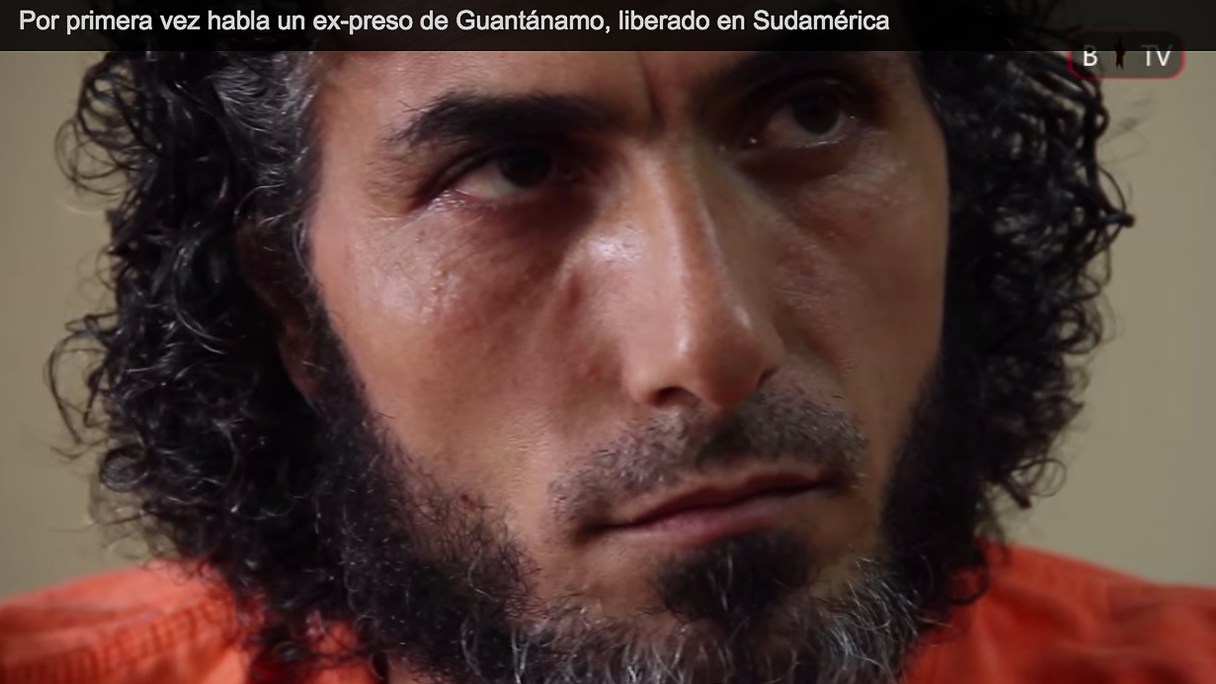
In this frame grab taken from Barricada TV, former Guantanamo detainee Abu Wa'el Dhiab, one of the Syrian refugees recently released from Guantanamo and now living in Uruguay speaks during an interview, in Buenos Aires Argentina, Wednesday Feb. 11, 2015. Dhiab said he was there to ask the the Argentine government to grant asylum to his former fellow inmates still being held at the U.S. prison facility in Cuba. (AP Photo/Barricada TV)
In this frame grab taken from Barricada TV, former Guantanamo detainee Abu Wa'el Dhiab, one of the Syrian refugees recently released from Guantanamo and now living in Uruguay speaks during an interview, in Buenos Aires Argentina, Wednesday Feb. 11, 2015. Dhiab said he was there to ask the the Argentine government to grant asylum to his former fellow inmates still being held at the U.S. prison facility in Cuba. (AP Photo/Barricada TV) In this frame grab taken from Barricada TV, former Guantanamo detainee Abu Wa'el Dhiab, one of the Syrian refugees recently released from Guantanamo and now living in Uruguay speaks during an interview, in Buenos Aires Argentina, Wednesday Feb. 11, 2015. Dhiab said he was there to ask the the Argentine government to grant asylum to his former fellow inmates still being held at the U.S. prison facility in Cuba. (AP Photo/Barricada TV)

BUENOS AIRES, Argentina (AP) – A former Guantanamo detainee who was resettled in Uruguay has appeared in neighboring Argentina, wearing a prison-style orange jumpsuit, to ask the country to grant asylum for detainees still at the U.S. detention facility.

Abu Wa’el Dhiab told Barricada TV that he believed “the Argentine government could receive the prisoners at Guantanamo here in a humanitarian way.” The 19-minute interview was published by several local websites on Thursday.

Speaking in Arabic with a Spanish translator, Dhiab said he would formally request asylum for other detainees, but did not elaborate. Calls to the Foreign Ministry seeking comment were not returned.

During the interview, shot on Wednesday, Dhiab recounted hunger strikes he participated in and criticized the U.S. government for not closing Guantanamo.

While at Guantanamo, Dhiab was at the center of a legal battle in U.S. courts over the military’s use of force-feeding. When he arrived in Uruguay in December, he was reportedly weak as a result of repeated hunger strikes. In the video, Dhiab appears thin but overly so.