
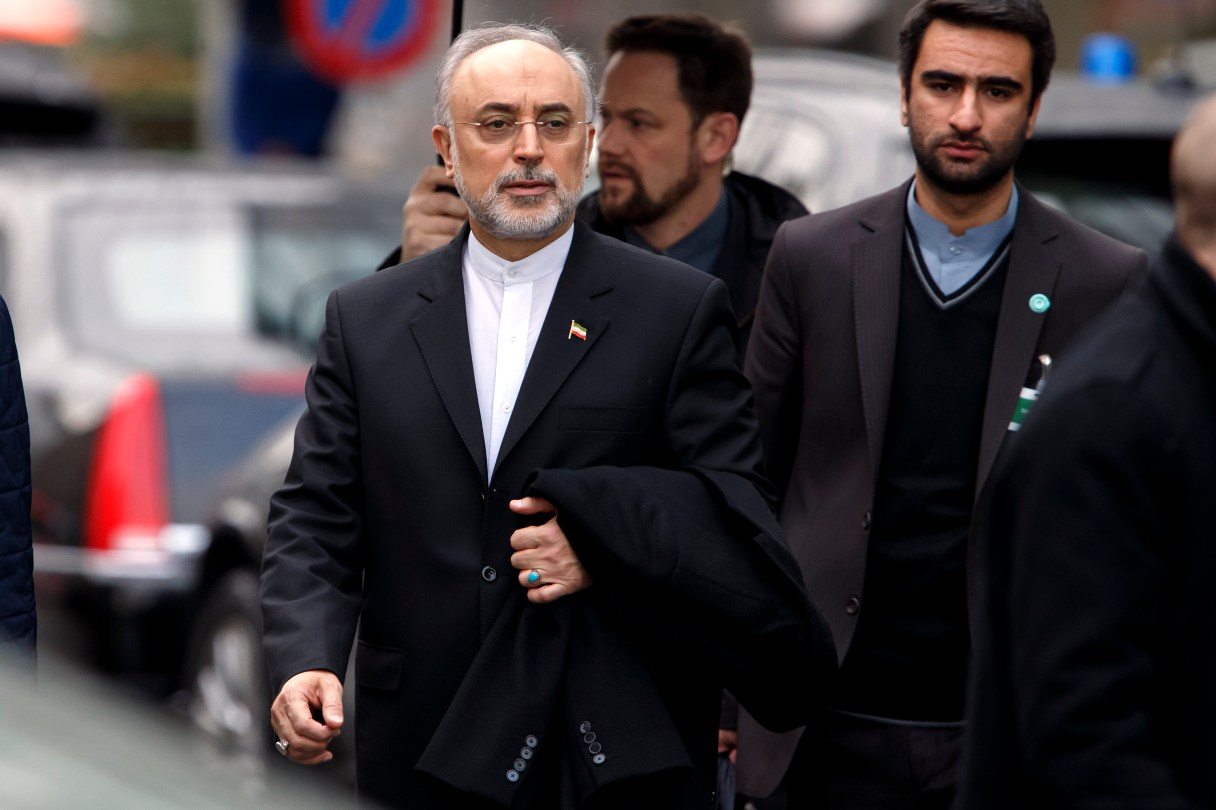
GENEVA — Edging toward a historic compromise, the U.S. and Iran reported progress Monday on a deal that would clamp down on Tehran’s nuclear activities for at least 10 years but then slowly ease restrictions on programs that could be used to make atomic arms.
Officials said there were still obstacles to overcome before a March 31 deadline, and any deal will face harsh opposition in both countries. It also would be sure to further strain already-tense U.S. relations with Israel, whose leaders oppose any agreement that doesn’t end Iran’s nuclear ambitions.
Israeli Prime Minister Benjamin Netanyahu is expected to strongly criticize the deal in an address before Congress next week.
Still, a comprehensive pact could ease 35 years of U.S-Iranian enmity — and seems within reach for the first time in more than a decade of negotiations.
“We made progress,” U.S. Secretary of State John Kerry said as he bade farewell to members of the American delegation at the table with Iran. More discussions between Iran and the six nations engaging it were set for next Monday, a senior U.S. official said.