
Tuesday, November 10, 2026Nov 10

Japan’s tug-of-war over World War II statement

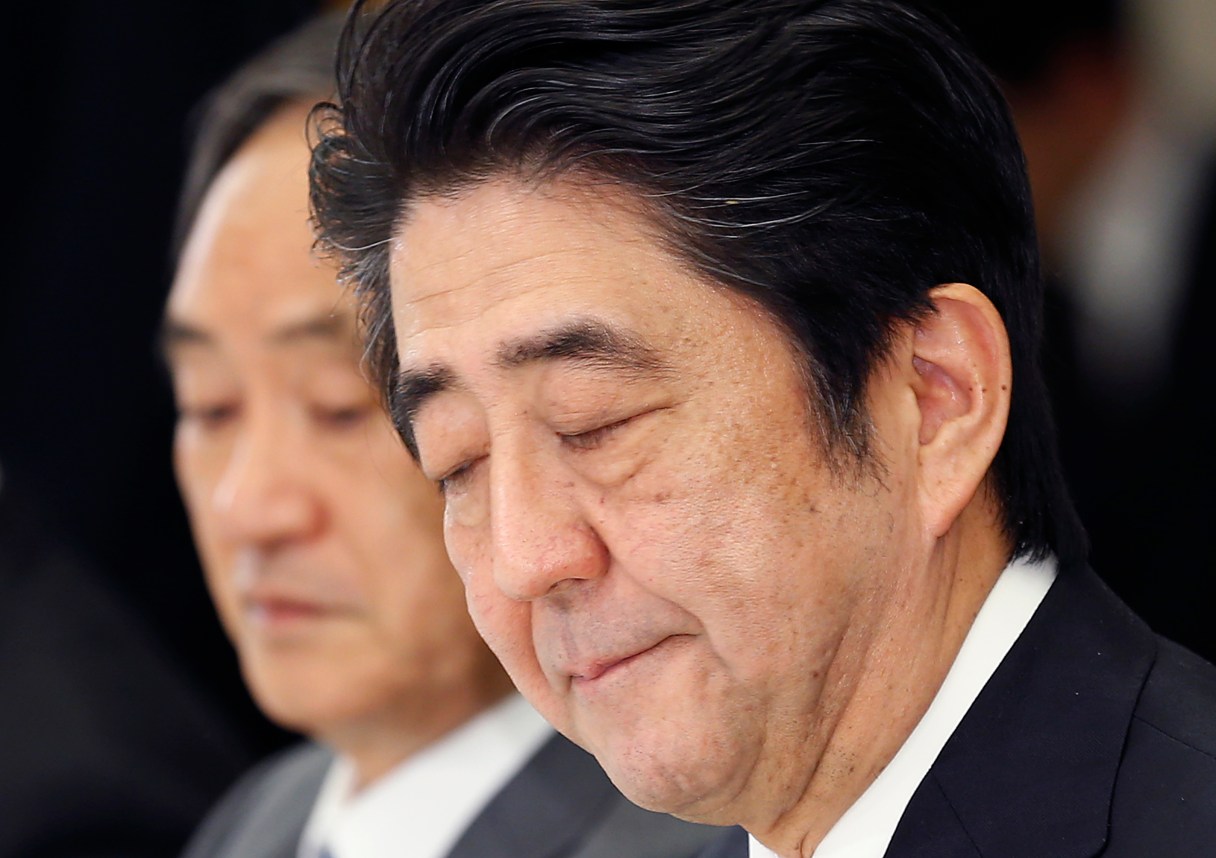
In this Wednesday, Feb. 25, 2015 photo, Japanese Prime Minister Shinzo Abe bites his lips during a meeting with a panel of experts at his official residence in Tokyo. Abe convened the experts to advise him on what to say to mark the 70th anniversary of the end of World War II on Aug. 15. A tug-of-war has emerged between those who want Abe to stick to the apologies made by past prime ministers for Japan's wartime aggression and colonial rule, and those who say such accounts are exaggerated or even fabricated. Abe, known for harboring revisionist views, must strike a balance, as any statement viewed as watering down past apologies would anger China and South Korea and displease the United States too. Behind Abe is government spokesman Chief Cabinet Secretary Yoshihide Suga. (AP Photo/Shizuo Kambayashi)
In this Wednesday, Feb. 25, 2015 photo, Japanese Prime Minister Shinzo Abe bites his lips during a meeting with a panel of experts at his official residence in Tokyo. Abe convened the experts to advise him on what to say to mark the 70th anniversary of the end of World War II on Aug. 15. A tug-of-war has emerged between those who want Abe to stick to the apologies made by past prime ministers for Japan's wartime aggression and colonial rule, and those who say such accounts are exaggerated or even fabricated. Abe, known for harboring revisionist views, must strike a balance, as any statement viewed as watering down past apologies would anger China and South Korea and displease the United States too. Behind Abe is government spokesman Chief Cabinet Secretary Yoshihide Suga. (AP Photo/Shizuo Kambayashi) In this Wednesday, Feb. 25, 2015 photo, Japanese Prime Minister Shinzo Abe bites his lips during a meeting with a panel of experts at his official residence in Tokyo. Abe convened the experts to advise him on what to say to mark the 70th anniversary of the end of World War II on Aug. 15. A tug-of-war has emerged between those who want Abe to stick to the apologies made by past prime ministers for Japan's wartime aggression and colonial rule, and those who say such accounts are exaggerated or even fabricated. Abe, known for harboring revisionist views, must strike a balance, as any statement viewed as watering down past apologies would anger China and South Korea and displease the United States too. Behind Abe is government spokesman Chief Cabinet Secretary Yoshihide Suga. (AP Photo/Shizuo Kambayashi)

TOKYO (AP) – Diplomatically speaking, they may be the most important words Japanese Prime Minister Shinzo Abe utters this year.

So much so that he convened a panel of experts this week to advise him on what to say to mark the 70th anniversary of the end of World War II on Aug. 15.

A tug-of-war has emerged between those who want Abe to stick to the apologies made by past prime ministers for Japan’s wartime aggression and colonial rule, and those who say such accounts are exaggerated or even fabricated.

Abe, known for harboring revisionist views, must strike a balance, as any statement viewed as watering down past apologies would anger China and South Korea and displease the United States too.

Here are some views on the issue: