
Thursday, November 12, 2026Nov 12

California breaks ground on bullet train as climate solution

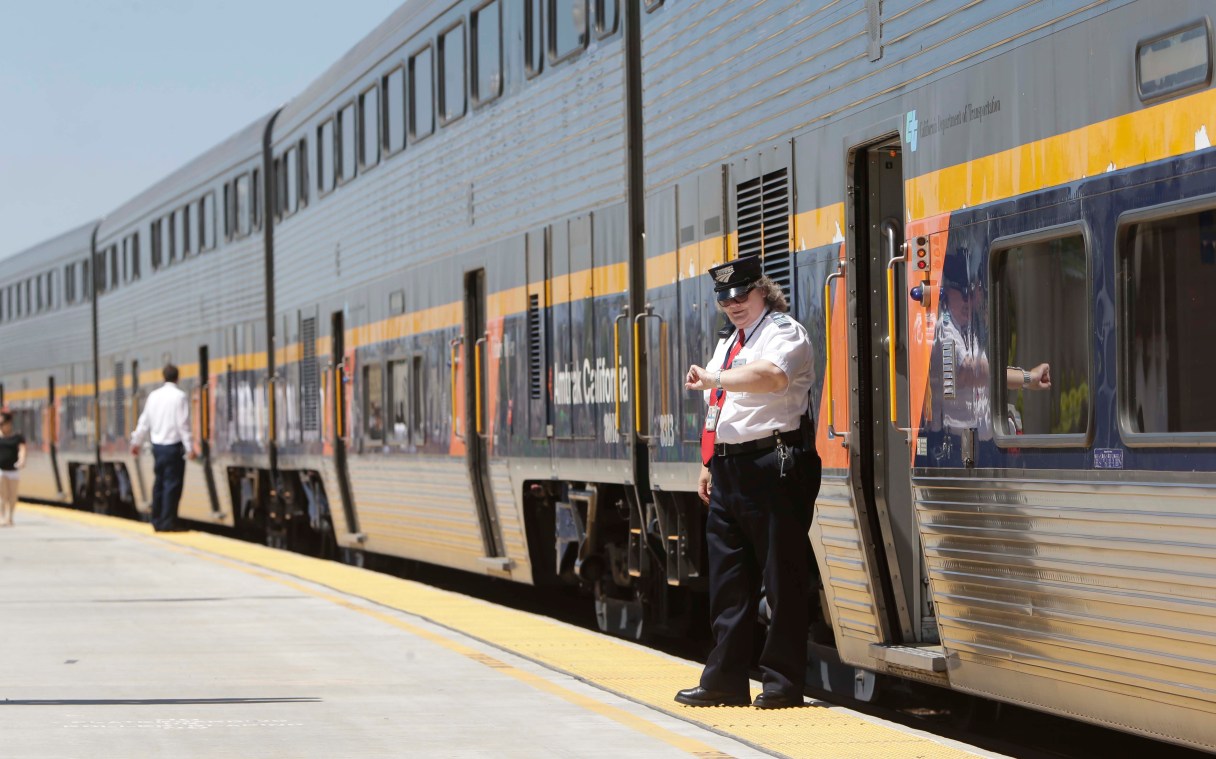
FILE - In this Tuesday, July 16, 2013, file photo, an Amtrak conductor checks the time as the passenger train takes on passengers in Hanford, Calif. California's high-speed rail project reaches a milestone Tuesday, Jan. 6, 2015, as officials mark the start of work on the nation's first bullet train, which is designed to whisk travelers at 200 mph between Los Angeles and San Francisco in less than three hours. (AP Photo/Rich Pedroncelli, File)
FILE - In this Tuesday, July 16, 2013, file photo, an Amtrak conductor checks the time as the passenger train takes on passengers in Hanford, Calif. California's high-speed rail project reaches a milestone Tuesday, Jan. 6, 2015, as officials mark the start of work on the nation's first bullet train, which is designed to whisk travelers at 200 mph between Los Angeles and San Francisco in less than three hours. (AP Photo/Rich Pedroncelli, File) FILE - In this Tuesday, July 16, 2013, file photo, an Amtrak conductor checks the time as the passenger train takes on passengers in Hanford, Calif. California's high-speed rail project reaches a milestone Tuesday, Jan. 6, 2015, as officials mark the start of work on the nation's first bullet train, which is designed to whisk travelers at 200 mph between Los Angeles and San Francisco in less than three hours. (AP Photo/Rich Pedroncelli, File)

FRESNO, Calif. (AP) – California’s high-speed rail project became the first in the nation to break ground on Tuesday, aiming to whisk travelers at 200 mph between Los Angeles and San Francisco in less than three hours.

The $68 billion project faces challenges from Republicans in Congress eager to reduce government spending and Central Valley farmers suing to block the train from crossing their fields. Others doubt the state can deliver the sleek project as promised, and worry it will become an expensive failure.

But Gov. Jerry Brown said high-speed rail is essential to meeting his new challenge: Encouraging the nation’s most populous state to increase renewable energy use to 50 percent in the next 15 years.

“It’s not that expensive. We can afford it. In fact, we cannot NOT afford it,” Brown said before signing a symbolic section of rail for the network he hopes will reduce travel times and air pollution across the state into the next century.

Gina McCarthy, administrator of the U.S. Environmental Protection Agency, said the electric trains will clean up the environment by taking cars off highways and providing an effective alternative to air travel, which tends pumps far more greenhouse gas into the atmosphere.