
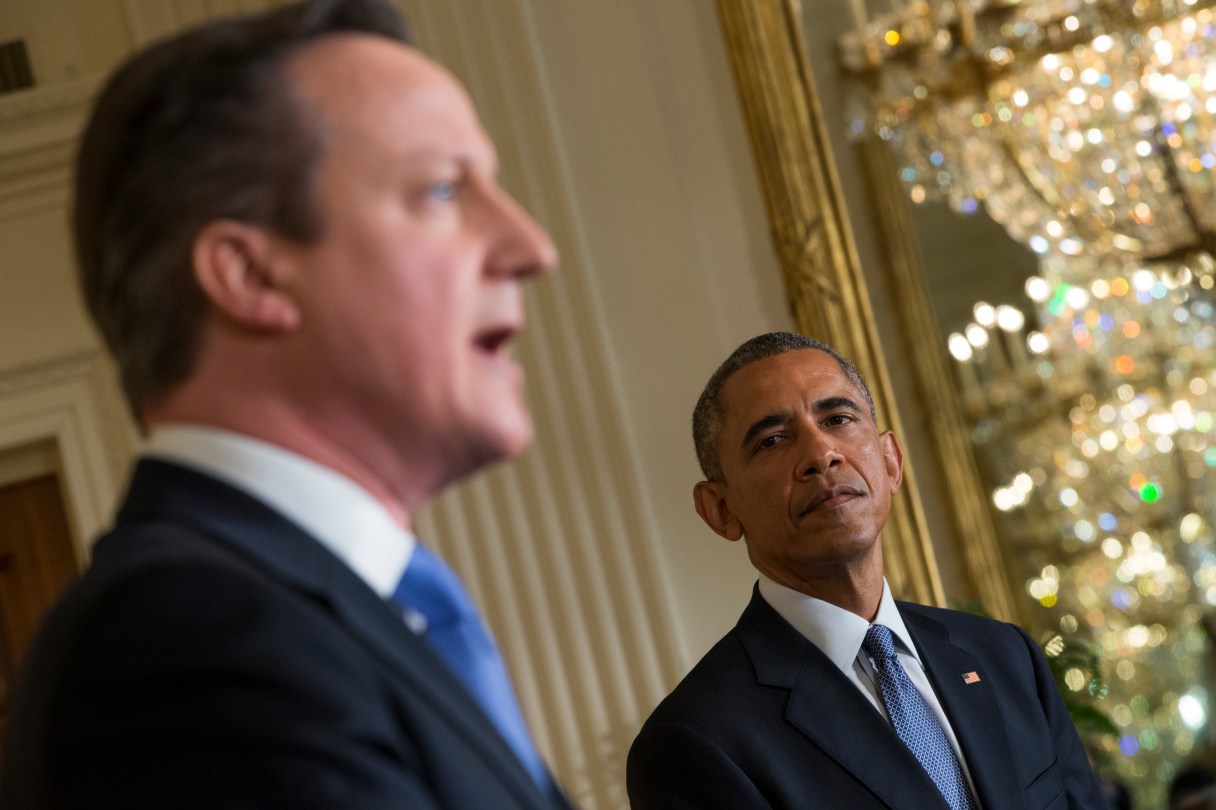
WASHINGTON (AP) – President Barack Obama argued Friday that a resurgent fear of terrorism across Europe and the United States should not lead countries to overreact and shed privacy protections, even as British Prime Minister David Cameron pressed for more government access to encrypted communications used by U.S. companies.
Obama and Cameron met at the White House just over a week after terror attacks in France left 17 people dead and stirred anxieties on both sides of the Atlantic. In the wake of the attacks, Cameron has redoubled efforts to get more access to online information, while the French government plans to present new anti-terrorism measures next week that would allow for more phone-tapping and other surveillance.
“As technology develops, as the world moves on, we should try to avoid the safe havens that could otherwise be created for terrorists to talk to each other,” Cameron said in a joint news conference with Obama.
The response to the Paris attacks could reinvigorate the debate over balancing privacy and security, even as governments and companies still grapple with the backlash against surveillance that followed the 2013 disclosures from former National Security Agency contractor Edward Snowden. With some in France calling the attacks their country’s Sept. 11, there are also fears that the government could respond with laws akin to the sweeping USA Patriot Act that the American Congress quickly approved after the 2001 attacks.
Obama avoided taking a public position on Cameron’s call for U.S.-based technology companies like Google, Facebook and Apple to give governments more access to encrypted communications. He urged caution, saying he did not believe the threat level was so great that the “pendulum needs to swing” toward more invasive security measures.