
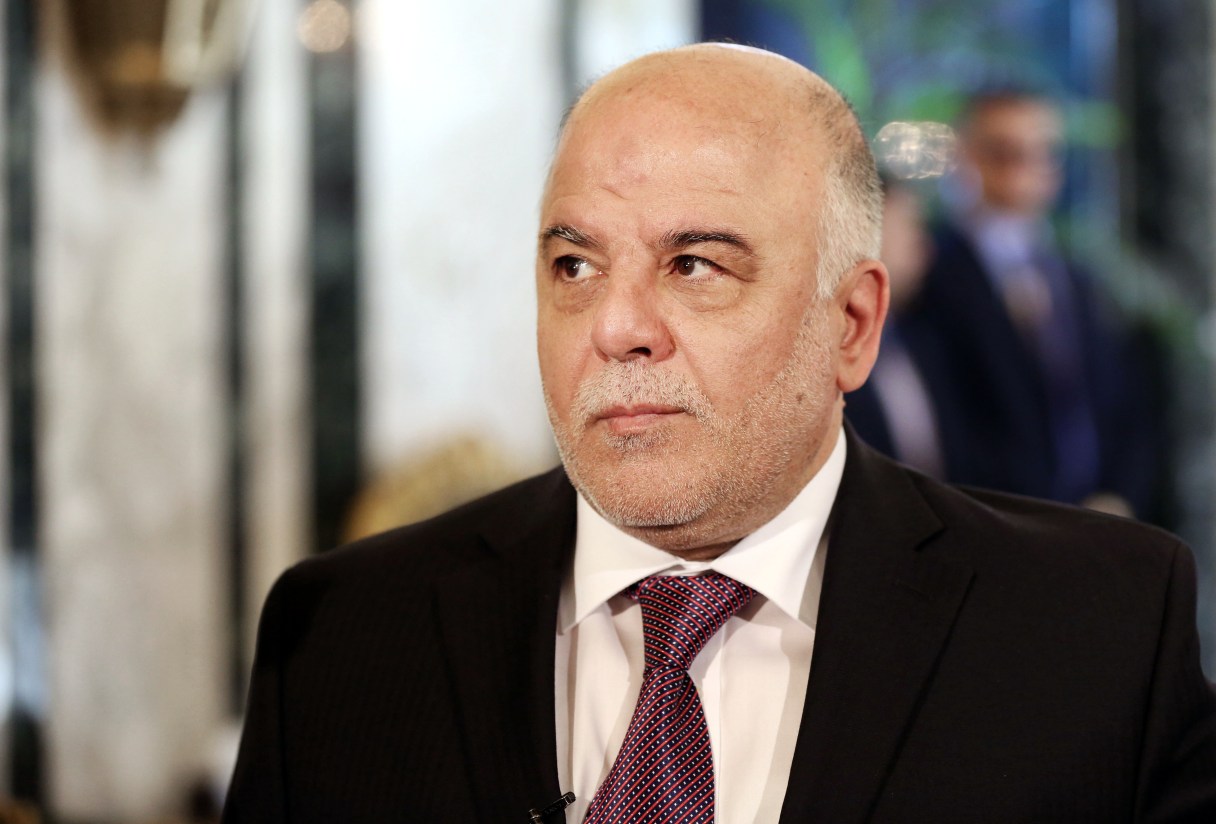
BAGHDAD (AP) – Iraq’s prime minister on Wednesday appealed to the U.S.-led coalition and the international community to do more to help his country win the war against the Islamic State group, saying the assistance pledged so far falls short of the nation’s urgent needs.
In an interview with The Associated Press on Wednesday, Haider al-Abadi said the coalition has stalled on key issues, particularly commitments on training Iraqi forces and weapons deliveries.
“We are in this almost on our own,” he said. “There is a lot being said and spoken, but very little on the ground.”
His comments came as he was leaving for London to take part in a one-day meeting Thursday on the anti-Islamic State war effort with foreign ministers from about 20 countries, including Arab states. U.S. Secretary of State John Kerry is also expected to attend.
The fall of the western city of Fallujah a year ago this month kicked off the Islamic State group’s dramatic blitz across Iraq. In June, the extremists captured Iraq’s second-largest city, Mosul, then swept south toward Baghdad in a march that put almost all the Sunni-majority regions of northern and western Iraq into its hands. The Iraqi military crumbled, with troops abandoning the battle and leaving heavy weapons, which were later seized by the militant group.