
Tuesday, November 10, 2026Nov 10

Strikes, attacks bring turbulent politics back to Bangladesh

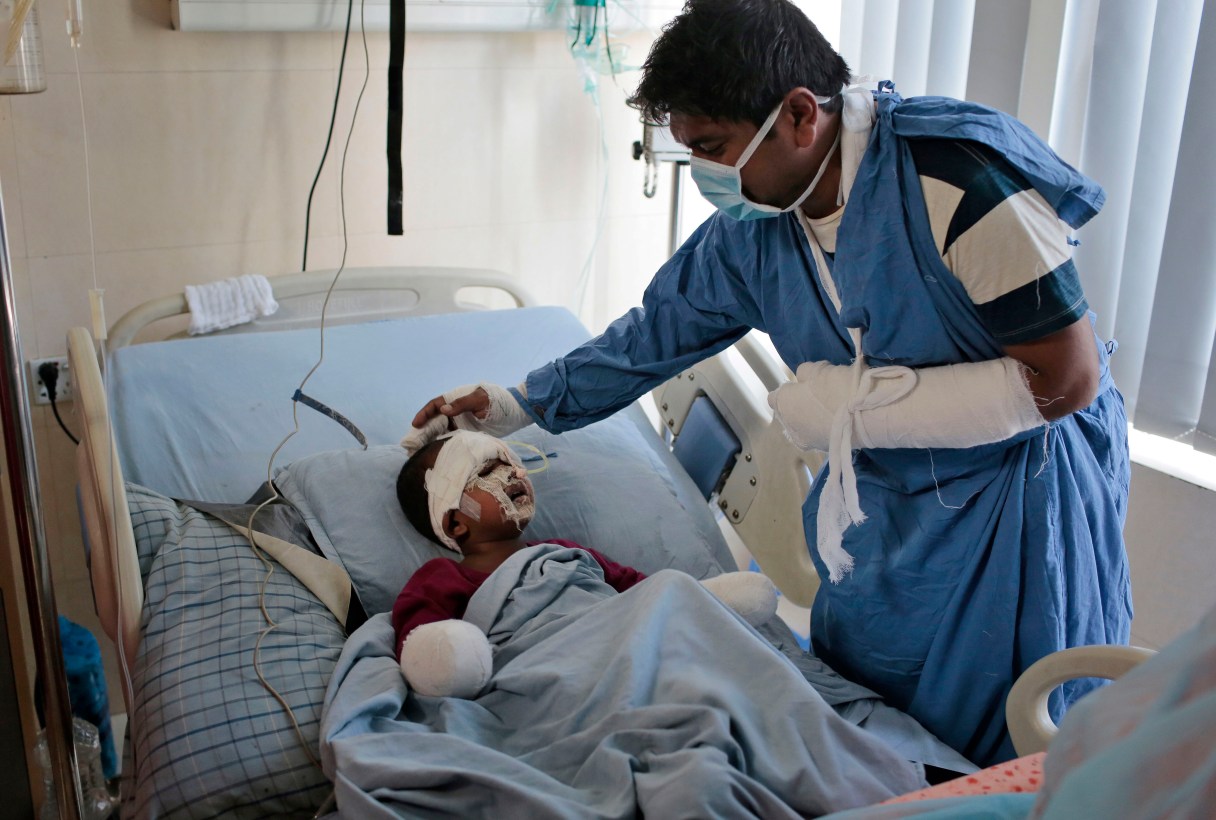
In this Jan. 21, 2015 photo, injured Saiful Islam, a doctor by profession and father of two-and-a-half-year-old Safir Islam, a victim of a homemade bomb stands as his son lies in an intensive care unit with burns to his face, head and other body parts, to receive treatment at a private hospital during the ongoing nationwide blockade called by the opposition Bangladesh Nationalist Party (BNP) in Dhaka, Bangladesh. Since Jan. 5 -  the one-year anniversary of the last election - at least 28 people have been killed, nearly 700 vehicles have been smashed or torched and much of the country’s transportation system has been at a standstill. Supporters of former Prime Minister Khaleda Zia, who boycotted the last vote, demand that the government resign and hold new elections immediately, but Prime Minister Sheikh Hasina says her government will remain in office until her term ends in 2019. (AP Photo/A.M. Ahad)
In this Jan. 21, 2015 photo, injured Saiful Islam, a doctor by profession and father of two-and-a-half-year-old Safir Islam, a victim of a homemade bomb stands as his son lies in an intensive care unit with burns to his face, head and other body parts, to receive treatment at a private hospital during the ongoing nationwide blockade called by the opposition Bangladesh Nationalist Party (BNP) in Dhaka, Bangladesh. Since Jan. 5 - the one-year anniversary of the last election - at least 28 people have been killed, nearly 700 vehicles have been smashed or torched and much of the country’s transportation system has been at a standstill. Supporters of former Prime Minister Khaleda Zia, who boycotted the last vote, demand that the government resign and hold new elections immediately, but Prime Minister Sheikh Hasina says her government will remain in office until her term ends in 2019. (AP Photo/A.M. Ahad) In this Jan. 21, 2015 photo, injured Saiful Islam, a doctor by profession and father of two-and-a-half-year-old Safir Islam, a victim of a homemade bomb stands as his son lies in an intensive care unit with burns to his face, head and other body parts, to receive treatment at a private hospital during the ongoing nationwide blockade called by the opposition Bangladesh Nationalist Party (BNP) in Dhaka, Bangladesh. Since Jan. 5 - the one-year anniversary of the last election - at least 28 people have been killed, nearly 700 vehicles have been smashed or torched and much of the country’s transportation system has been at a standstill. Supporters of former Prime Minister Khaleda Zia, who boycotted the last vote, demand that the government resign and hold new elections immediately, but Prime Minister Sheikh Hasina says her government will remain in office until her term ends in 2019. (AP Photo/A.M. Ahad)

DHAKA, Bangladesh (AP) – A 2½-year-old victim of a homemade bomb lies in an intensive care unit with burns to his face, head and other body parts. In another hospital, 17 people, including students and a teacher, are being treated for similar injuries. Another victim, a schoolboy, lost both his eyes.

That is just part of the toll from more than two weeks of attacks sparked by the latest clash between Bangladesh’s two main, long-feuding political factions. Since Jan. 5 – the one-year anniversary of the last election – at least 28 people have been killed, nearly 700 vehicles have been smashed or torched and much of the country’s transportation system has been at a standstill.

Supporters of former Prime Minister Khaleda Zia, who boycotted the last vote, demand that the government resign and hold new elections immediately, but Prime Minister Sheikh Hasina says her government will remain in office until her term ends in 2019.

The violence ended a year of relative calm and has raised fears it may escalate as it did in 2013, when political violence left nearly 300 people dead.

“It’s a terrible situation we are in. We are terrified,” said Abu Bakar Siddique, a businessman. “My kids’ schools are closed, I am afraid of going outside … pictures of burned bodies in newspapers. All very disturbing.”