
NEW DELHI (AP) – India and America’s declaration of a breakthrough in contentious nuclear energy cooperation has been met with a lukewarm response from industry and analysts. Few expect the potentially lucrative Indian market to suddenly become less complicated for U.S. nuclear companies.
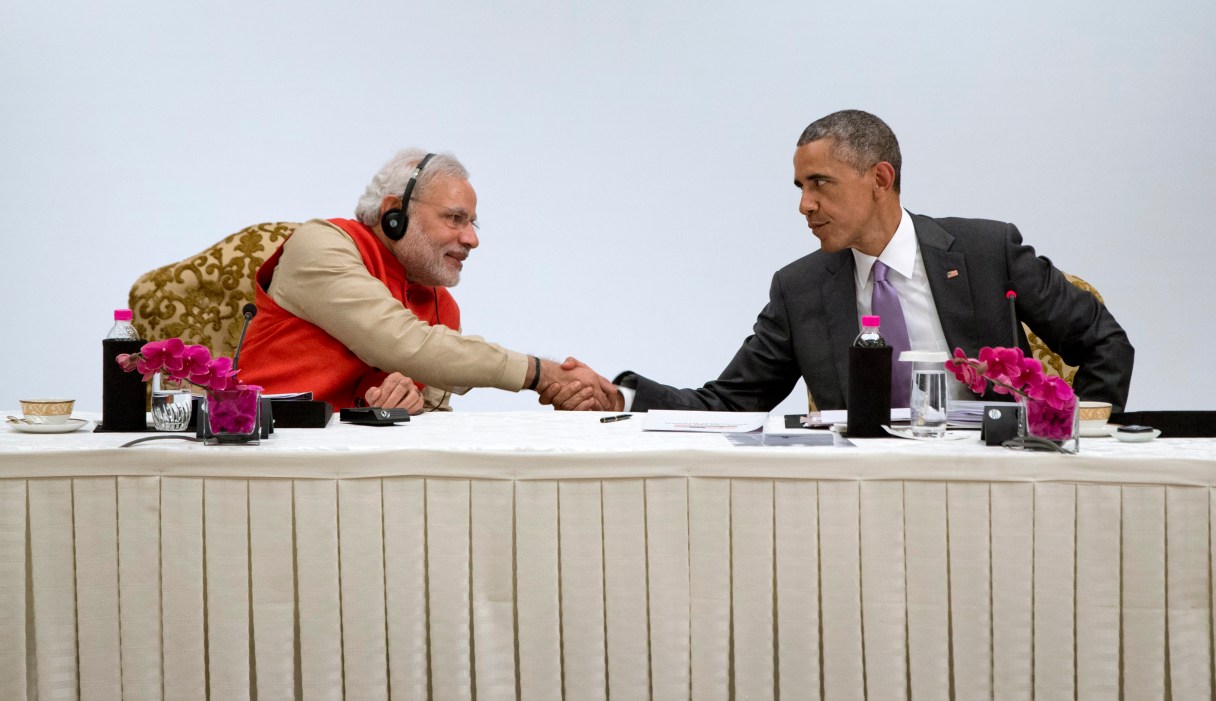
President Barack Obama’s three-day visit to New Delhi raised hopes for concrete plans to tackle India’s fossil fuel dependency and to resolve a four-year standoff over liability that prevented U.S. and Japanese nuclear energy development on Indian soil. Instead, there were vague commitments and public displays of chumminess between Obama and Prime Minister Narendra Modi.
The two leaders said they agreed to advance a 2008 civil nuclear deal long stalled by concerns about India’s reluctance to allow U.S. tracking of fissile material. It has also been held up by American concerns with an Indian law that makes U.S. nuclear suppliers, not operators of nuclear plants, liable for accidents.
Since India passed the liability law in 2010, only government-backed nuclear firms in Russia and France have discussed entering India’s market, annoying Washington which brokered India’s special status as a nuclear nation despite its refusal to sign the global treaty on the non-proliferation of nuclear weapons.
The apparent U.S.-India breakthrough this week was in narrowing differences on the liability issue. U.S. Ambassador Richard Verma said “it’s up to the companies what to do” after India gave an assurance the liability law would be interpreted consistent with international understanding.