
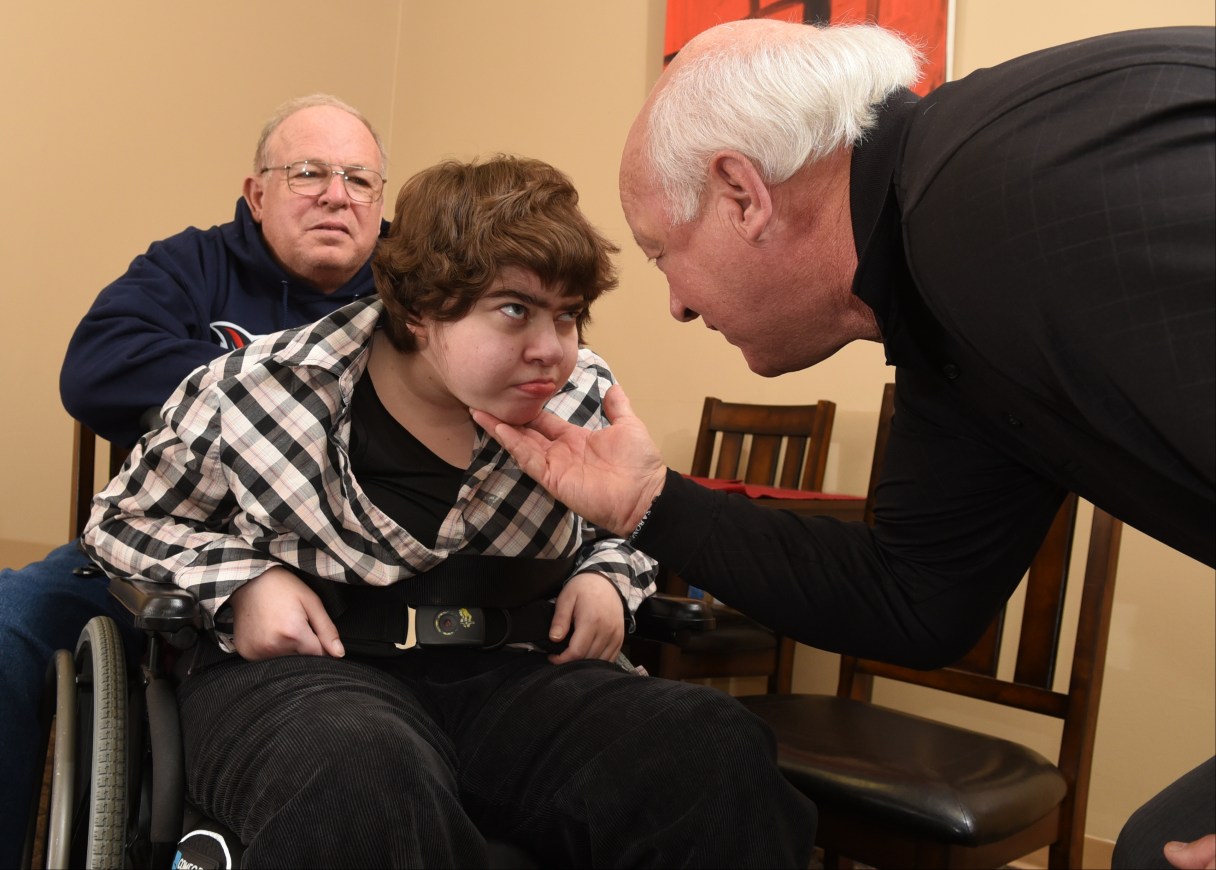
In the small building that houses the day center for Open Arms Care in Ooltewah, dozens of languages circulate every day.
Not all the languages are spoken. Some people tap messages into computers or boards. Others communicate their preferences and personalities through a particular wave or word, a special smile or frown. Some paint, or point lasers to show staff members where to put color on a canvas. Some are learning to speak aloud for the first time.
Each client at Open Arms communicates in a completely unique way. That’s because the center provides care for people with a wide range of developmental disabilities — severe autism, long-term brain damage, cerebral palsy, or those impacted by severe injuries. While many are non-verbal, Open Arms works to give them a voice in other ways.
But Director Lisa King worries that these voices will not be heard by state officials as budget season approaches.
Organizations that work with those developmental disabilities — places like Open Arms Care and Chattanooga’s Orange Grove Center — say they face “a critical threat” as budget season gets underway. Proposed state budget cuts to the Department of Developmental and Intellectual Disabilities (DIDD) amount to $21.9 million — with the potential to lose millions more in federal funding because of the match that comes through the state’s Medicaid waiver.