
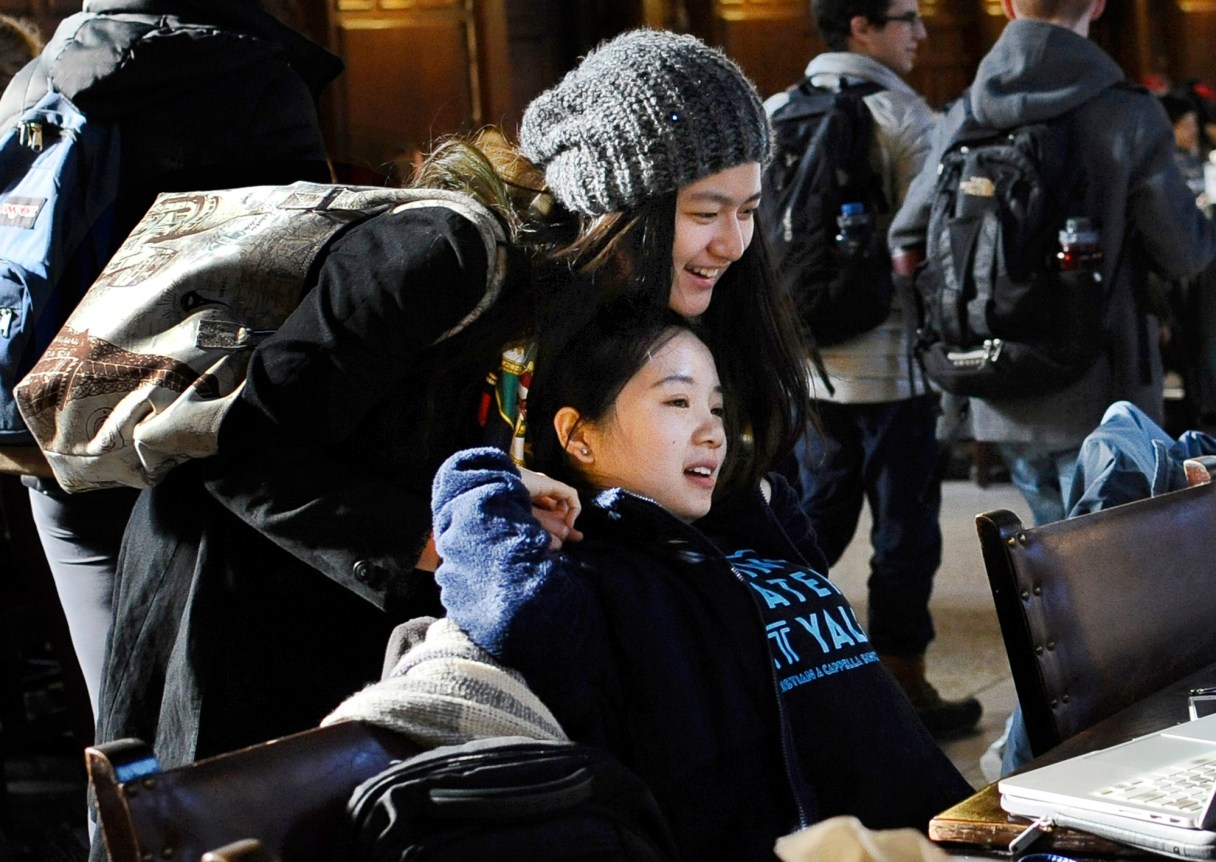
NEW HAVEN, Conn. (AP) – Yupei Guo does not fit the mold of the traditional Ivy League student from China: Her journalist parents are neither rich nor members of the governing elite.
Growing up, she thought the cost would make it impossible for her to attend one of the famed American universities. But by the time she applied to Yale, it was among the U.S. schools investing in more economic diversity among their growing ranks of international students.
Guo, 19, is now a Yale sophomore, happily settled among the school’s Gothic buildings. Most would never guess university grants cover much of the Beijing native’s tuition, at least not judging by the questions she gets around New Haven.
“I did get asked if I were some sort of distant royal family member, which I’m not,” she said.
Top U.S. universities that worked to overcome reputations for serving only children of the American elite are now pushing to do the same with their international students. With more undergraduates coming from overseas than ever, Yale, Harvard and other schools – with help from the U.S. State Department – are trying to attract students of more varied financial backgrounds.