
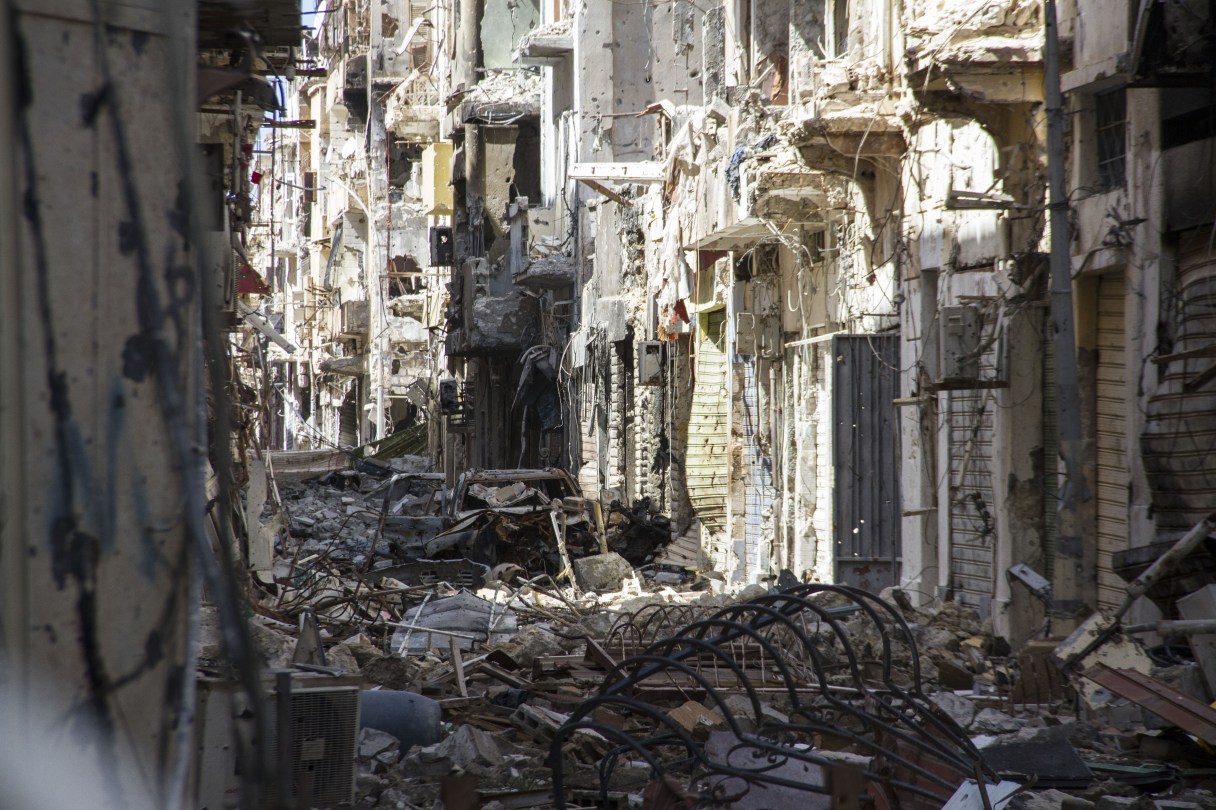
BENGHAZI, Libya (AP) – The old courthouse in central Benghazi, Libya’s second-largest city and the birthplace of the uprising against Moammar Gadhafi, is a shelled-out ruin – a testimony to the destruction and chaos that permeate this North African country four years after the civil war that ousted the longtime dictator.
The building is steeped in symbolism. It was here that the rallying cry first came against Gadhafi’s 42-year rule. It was here that pro-democracy protesters and rebels first raised the tri-colored Libyan flag, replacing Gadhafi’s green banner.
Now, the courthouse is ruin and rubble, like much of the rest of Benghazi.
Today, Libya is bitterly divided between an elected parliament and government that are cornered in the country’s east, with little power on the ground, and an Islamist militia-backed government in the west. Hundreds of militias are aligned with either side or on their own, battling for power and turf.
The U.N.-backed talks between rival factions have not yet managed to strike a power-sharing deal. Meanwhile, Libya’s Islamic State affiliate is fighting on different fronts, losing ground in its eastern stronghold of Darna while expanding along the country’s central northern coastline.