
BRUSSELS (AP) – With members of his own party openly denouncing a preliminary rescue deal struck with Greece’s European creditors, Prime Minister Alexis Tsipras must fight to cling to his government’s majority after he was forced to shred election promises and introduce punishing austerity measures in exchange for the bailout.
Tsipras, who flew home Monday from grueling night-long negotiations with European leaders, will chair an executive meeting of his Syriza party early Tuesday before lawmakers begin a two-day debate on the deal – set to heap more tax hikes and spending cuts on a country already suffering through six years of recession.
The deal ensures that Greece avoids an imminent financial catastrophe and an exit from the Eurozone. But Panos Kammenos, leader of the junior partner in Tsipras’ coalition government, called the bailout plan a German-led “coup.”
“This deal introduced many new issues … we cannot agree with it,” Kammenos said after meeting with Tsipras.
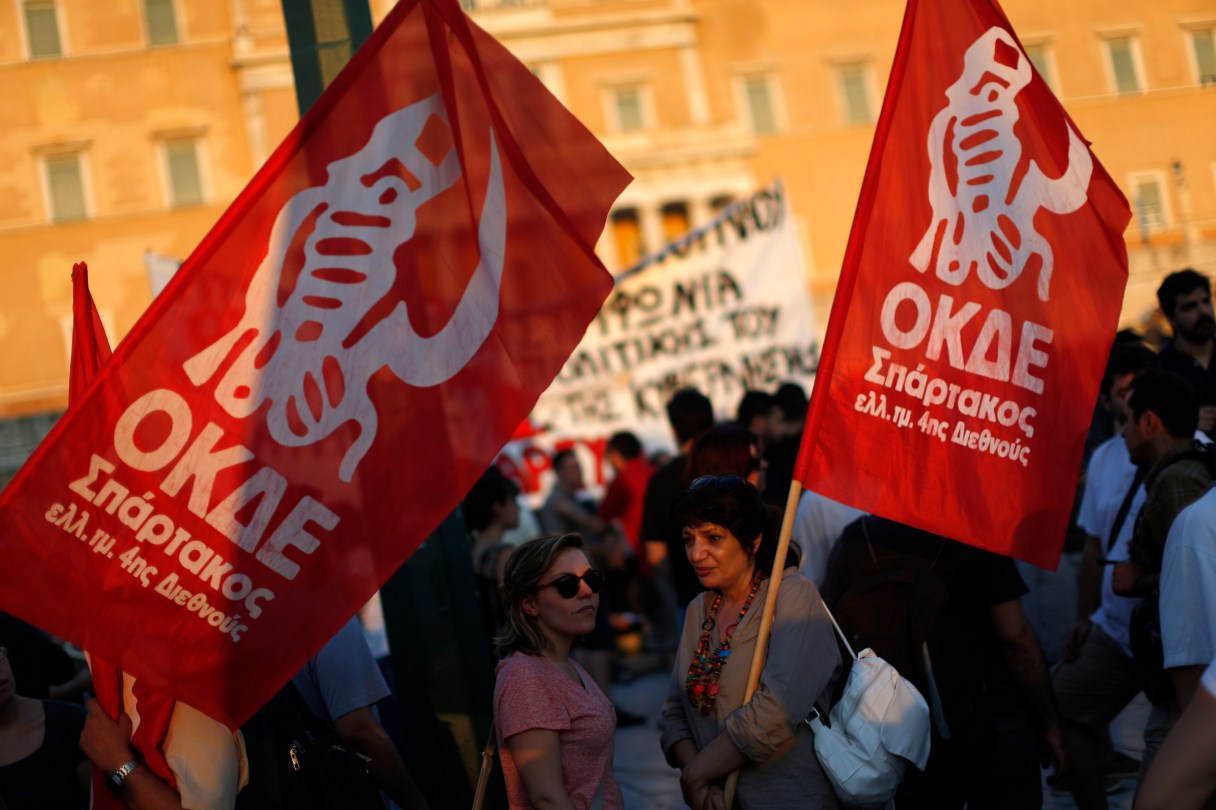
Other Greeks rallied Monday night outside Parliament in Athens, urging lawmakers to reject the new demands.