
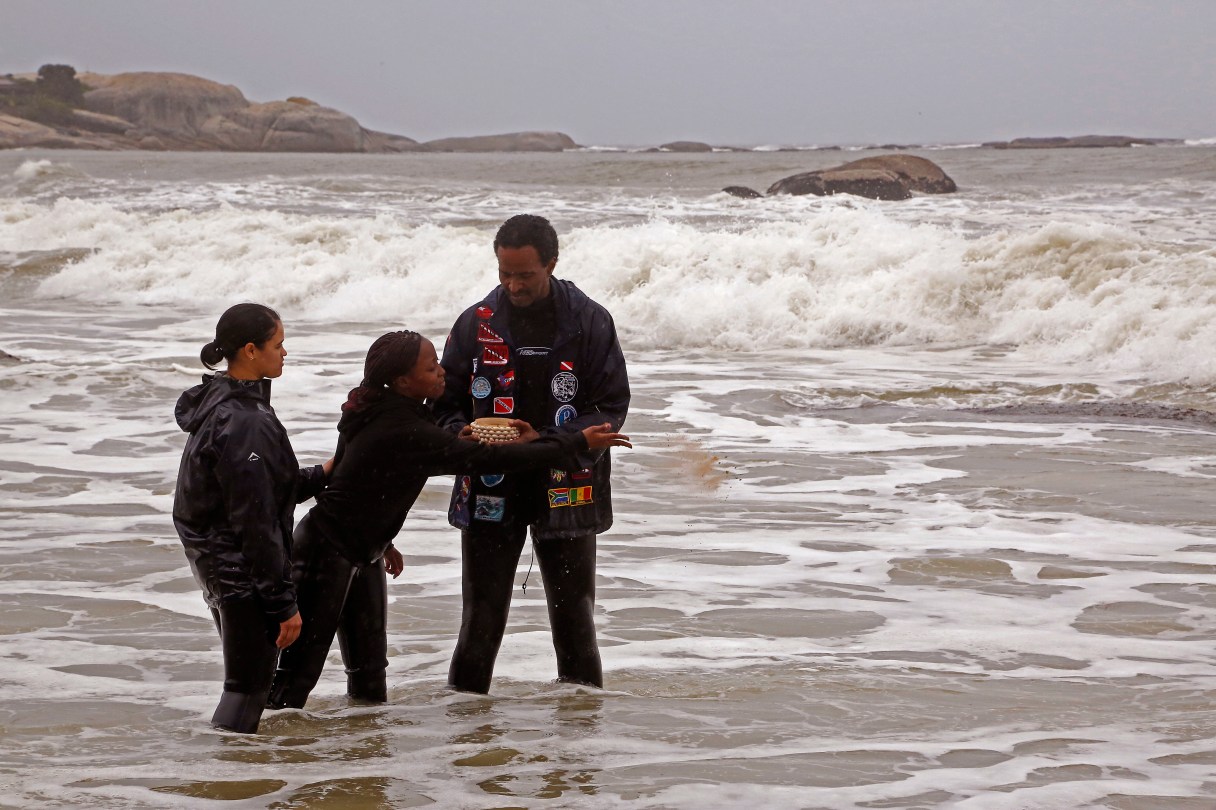
CAPE TOWN, South Africa (AP) – Against a backdrop of exclusive, sea-view apartments in Cape Town, South African and American researchers on Tuesday paid tribute at the spot where slaves died when the Portuguese ship that was carrying them into bondage sank in 1794.
Three divers, deterred by rain and wind that evoked the stormy conditions that wrecked the Sao Jose–Paquete de Africa slave ship, ventured a few feet (meters) into the surf of the Clifton suburb’s beach to scatter sand from Mozambique in honor of the doomed slaves, who were being transported from the former Portuguese colony. The divers hugged each other and one shed tears.
The memorial was the culmination of years of digging in historical archives and into the sea floor, casting new light on the century-spanning, Atlantic slave trade, in which millions from Africa were sent to labor in the Americas at the height of European colonialism.
The submerged remnants of the Sao Jose, which was starting a grueling journey to Brazil that would have lasted months and traversed thousands of kilometers (miles), are located near one of Cape Town’s most scenic beaches, in a country that emerged from white minority rule in 1994.
“It’s there and it happened, right in this spot of paradise,” said Albie Sachs, a former judge and anti-apartheid activist who opened his Clifton home to researchers, diplomats and journalists who attended the ceremony. “We have to look history in the face.”