
Tuesday, November 10, 2026Nov 10

State of fear: Survivors tell of life under IS rule

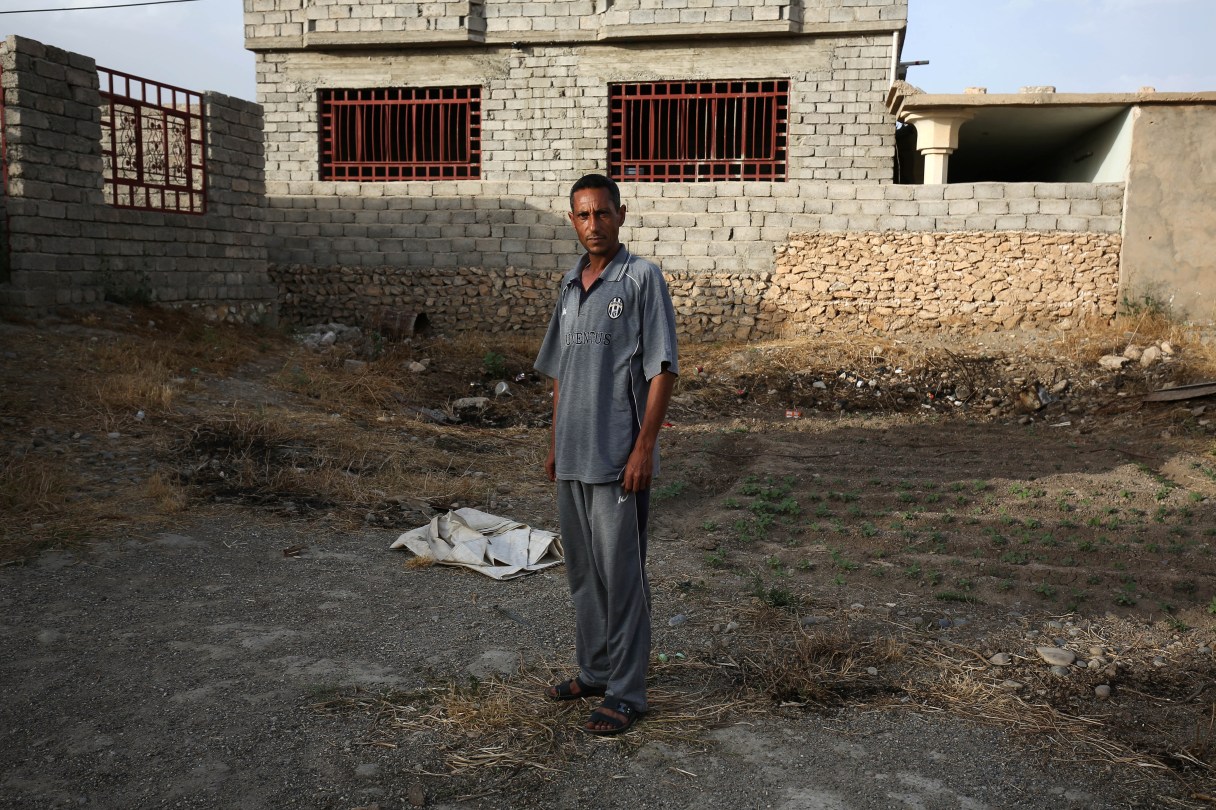
In this May 26, 2015 photo, Bilal Abdullah poses for a portrait in the village of Eski Mosul in northern Iraq, nearly a year after Islamic State militants took over the village. In the Islamic State's realm, a document testifying that one has "repented" from a heretical past must be carried at all times and it can mean the difference between life and death. Abdullah learned that not long after the extremists took over his home village. (AP Photo/Bram Janssen)
In this May 26, 2015 photo, Bilal Abdullah poses for a portrait in the village of Eski Mosul in northern Iraq, nearly a year after Islamic State militants took over the village. In the Islamic State's realm, a document testifying that one has "repented" from a heretical past must be carried at all times and it can mean the difference between life and death. Abdullah learned that not long after the extremists took over his home village. (AP Photo/Bram Janssen) In this May 26, 2015 photo, Bilal Abdullah poses for a portrait in the village of Eski Mosul in northern Iraq, nearly a year after Islamic State militants took over the village. In the Islamic State's realm, a document testifying that one has "repented" from a heretical past must be carried at all times and it can mean the difference between life and death. Abdullah learned that not long after the extremists took over his home village. (AP Photo/Bram Janssen)

ESKI MOSUL, Iraq (AP) – When the Islamic State fighters burst into the Iraqi village of Eski Mosul, Sheikh Abdullah Ibrahim knew his wife was in trouble.

Buthaina Ibrahim was an outspoken human rights advocate who had once run for the provincial council in Mosul. The IS fighters demanded she apply for a “repentance card.” Under the rule of the extremist group, all former police officers, soldiers and people whose activities are deemed “heretical” must sign the card and carry it with them at all times.

“She said she’d never stoop so low,” her husband said.

Buthaina Ibrahim was an outlier in her defiance of the Islamic State. It would cost her dearly.

The “caliphate,” declared a year ago, demands obedience. Untold numbers have been killed because they were deemed dangerous to the IS, or insufficiently pious; 5-8 million endure a regime that has swiftly turned their world upside down, extending its control into every corner of life to enforce its own radical interpretation of Islamic law, or Shariah.