
Tuesday, November 10, 2026Nov 10

Report: economic growth failing to help world’s poorest kids

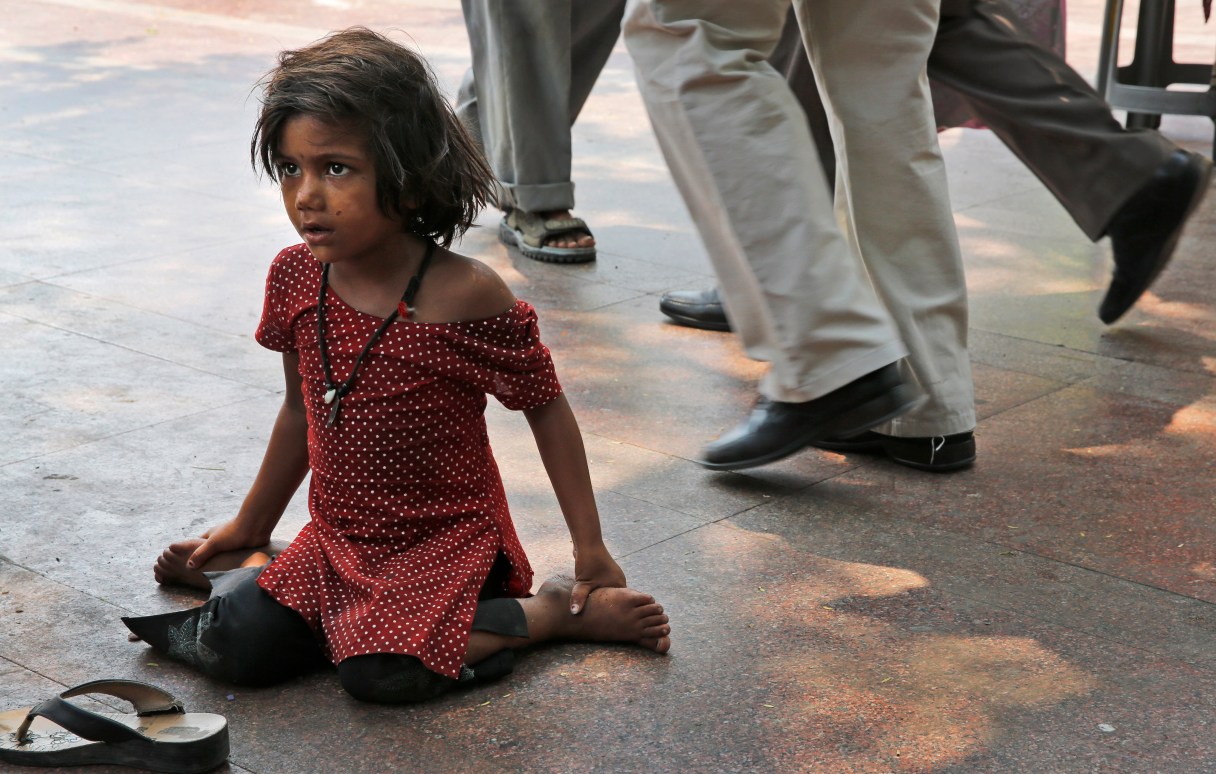
A homeless girl sits on a footpath as commuters walk past in New Delhi, India, Tuesday, June 23, 2015. A new report by UNICEF warns that economic growth is still failing to help millions of the world’s poorest children. In India, there are countless children living with grinding poverty, sleeping on sidewalks, begging at traffic intersections and relying on government-run lunch programs that often provide their only full meal for the day. (AP Photo/ Manish Swarup)
A homeless girl sits on a footpath as commuters walk past in New Delhi, India, Tuesday, June 23, 2015. A new report by UNICEF warns that economic growth is still failing to help millions of the world’s poorest children. In India, there are countless children living with grinding poverty, sleeping on sidewalks, begging at traffic intersections and relying on government-run lunch programs that often provide their only full meal for the day. (AP Photo/ Manish Swarup) A homeless girl sits on a footpath as commuters walk past in New Delhi, India, Tuesday, June 23, 2015. A new report by UNICEF warns that economic growth is still failing to help millions of the world’s poorest children. In India, there are countless children living with grinding poverty, sleeping on sidewalks, begging at traffic intersections and relying on government-run lunch programs that often provide their only full meal for the day. (AP Photo/ Manish Swarup)

NEW DELHI (AP) – Global resolve to rescue impoverished children from lives of squalor, disease and hunger has fallen short, with economic development in many countries still leaving millions of the most vulnerable behind, according to a UNICEF report released Tuesday.

The data show a bleak situation: The world’s poorest children are almost twice as likely to die before their 5th birthday as children from wealthier homes, and the proportion of those dying within days of being born is even increasing.

“This is outrageous,” UNICEF’s Executive Director Anthony Lake told reporters in a teleconference highlighting the report’s assessment of U.N. development goals laid out in 2000 for targeting poverty, hunger, gender inequality, illiteracy and other areas.

While the world has seen unprecedented economic growth in the last 25 years, the benefits have rolled out unevenly with nations focusing on national data averages that can obscure enormous inequalities between the rich and the poor, the report says.

So while the number of people living in extreme poverty has gone from 1.9 billion worldwide in 1990 to 1 billion today, 47 percent are still younger than 18. And while 46 million more children are in primary school, the 58 million still out of school are five times more likely to be poor, the report shows.