
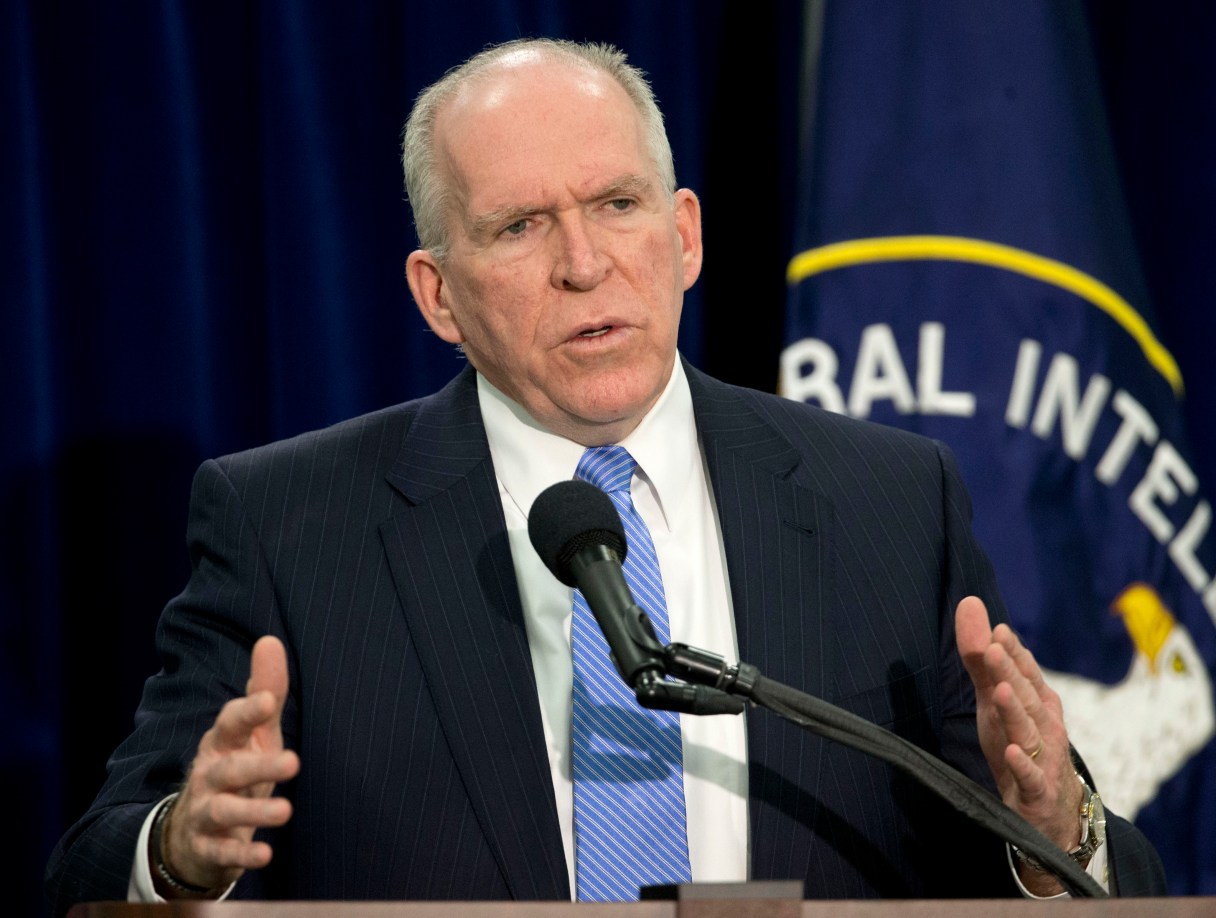
WASHINGTON (AP) – CIA Director John Brennan has ordered a sweeping reorganization of the spy agency, an overhaul designed to make its leaders more accountable, enhance the agency’s cyber capabilities and shore up espionage gaps exacerbated by a decade focused on counterterrorism.
Brennan announced the restructuring to the CIA workforce on Friday. He said the move comes after nine outside experts spent three months analyzing the agency’s management structure, including what deputy CIA director David Cohen called “pain points,” organizational areas where the CIA’s bureaucracy does not work efficiently.
Briefing reporters with Cohen at CIA headquarters this week, Brennan said the changes are necessary to address intelligence gaps that the CIA is not covering. He lamented that there is often no single person he can hold accountable for the spying mission in any given part of the world.
“There are a lot of areas that I would like to have better insight to, better information about, better access to,” Brennan said. “Safe havens, denied areas. Whether because we don’t even have a diplomatic presence in a country, or because there are parts of countries that have been overrun and taken over by terrorist groups and others.”
The changes come against a backdrop of widespread concern that the CIA’s focus on hunting and killing terrorists since the Sept. 11 attacks has led to an erosion of the espionage and analytic capabilities the agency built during the Cold War. The CIA, along with other U.S. intelligence agencies, wrongly assessed the presence of weapons of mass destruction in Iraq in 2002 and failed to anticipate the rapid collapse of Middle East governments during the Arab Spring in 2011, among other shortcomings.